Universal Jurisdiction Annual Review: New developments in 2025
Today, TRIAL International, in collaboration with Civitas Maxima, the Center for Justice and Accountability (CJA), the European Center for Constitutional and Human Rights (ECCHR), the International Federation for Human Rights (FIDH) and REDRESS, published the latest edition of the Universal Jurisdiction Annual Review (UJAR). The UJAR 2026 compiles developments in 91 extraterritorial and universal jurisdiction cases prosecuted in 20 countries. The figures, increasing year by year, show the growing importance of universal jurisdiction in the fight against impunity worldwide.
The effectiveness of universal jurisdiction
This year’s report demonstrates once again that universal and other forms of extraterritorial jurisdiction remain effective tools for pursuing accountability for international crimes. Between January and December 2025, 34 new cases were opened or made public, and 23 convictions were secured. This underscores the unique impact of universal jurisdiction within the international criminal justice ecosystem, both in the number of cases and perpetrators held accountable, and in the concrete access to justice it provides for victims.
In 2025, authorities in four new States – Kosovo, Peru, Poland and Türkiye – took steps to exercise universal and other forms of extraterritorial jurisdiction for the first time. Several cases also set important precedents: the first conviction for crimes committed in the context of the 2014 war in Eastern Ukraine; the first conviction for genocide through the transfer of children to another group; the first trial concerning the war crime of starvation; and the first conviction for crimes committed during the Second Congo War (1998-2003).
International justice at a crossroads
2025 was also marked by unprecedented attacks on international criminal justice. US-sanctions targeting the International Criminal Court (ICC) and other actors in relation to the situation in Palestine constitute direct attempts to shield the US and its allies, specifically Israel, from accountability, and risk depriving many people of what might be their last resort for justice.
A broader erosion of States’ commitment to universal accountability norms is also evident in the 2025 announcements by five States of their intention to withdraw from the ICC. This decline is also evident in the failure by certain States Parties to cooperate with the Court, specifically in executing ICC arrest warrants against individuals present on their territories.
The importance of synergies and of overcoming challenges
These developments risk entrenching double standards and eroding the credibility of international criminal justice. At a time where accountability mechanisms are strained, coordination and cooperation between different actors becomes more crucial than ever. This year’s UJAR demonstrates that, where such synergies exist, they can deliver concrete results.
At the same time, universal and other forms of extraterritorial jurisdiction’s effectiveness face limitations. Their effectiveness is shaped by power dynamics and depends on specialised units and adequate resources. Strengthening legal frameworks and capacities remains essential to closing widening accountability gaps.
Throughout 2025, a lack of prioritisation and coordination remained evident in the context of the Israeli military operation in Gaza. However, a few States took some initial steps, and civil society continued to be central in driving efforts to seek accountability.
Many contexts where international crimes continue to be committed on a mass scale remain largely absent in universal and extraterritorial jurisdiction practice. As pressure grows, States committed to the international rule of law must strengthen their capacity to act.
About the UJAR 2026
The UJAR 2026 was researched and written by UpRights. It is produced as part of the “Global Initiative against Impunity for International Crimes and Serious Human Rights Violations: Making Justice Work” (GIAI). The GIAI is a global civil society-led programme, co-funded by the European Union, that promotes inclusive, integrated, comprehensive justice and accountability for serious human rights violations worldwide.
The UJAR 2026 has been produced with the financial support of the City of Geneva, the European Union, Oak Foundation and the Taiwan Foundation for Democracy. The contents of this publication are the sole responsibility of TRIAL International and can under no circumstances be regarded as reflecting the positions of the above-mentioned donors.
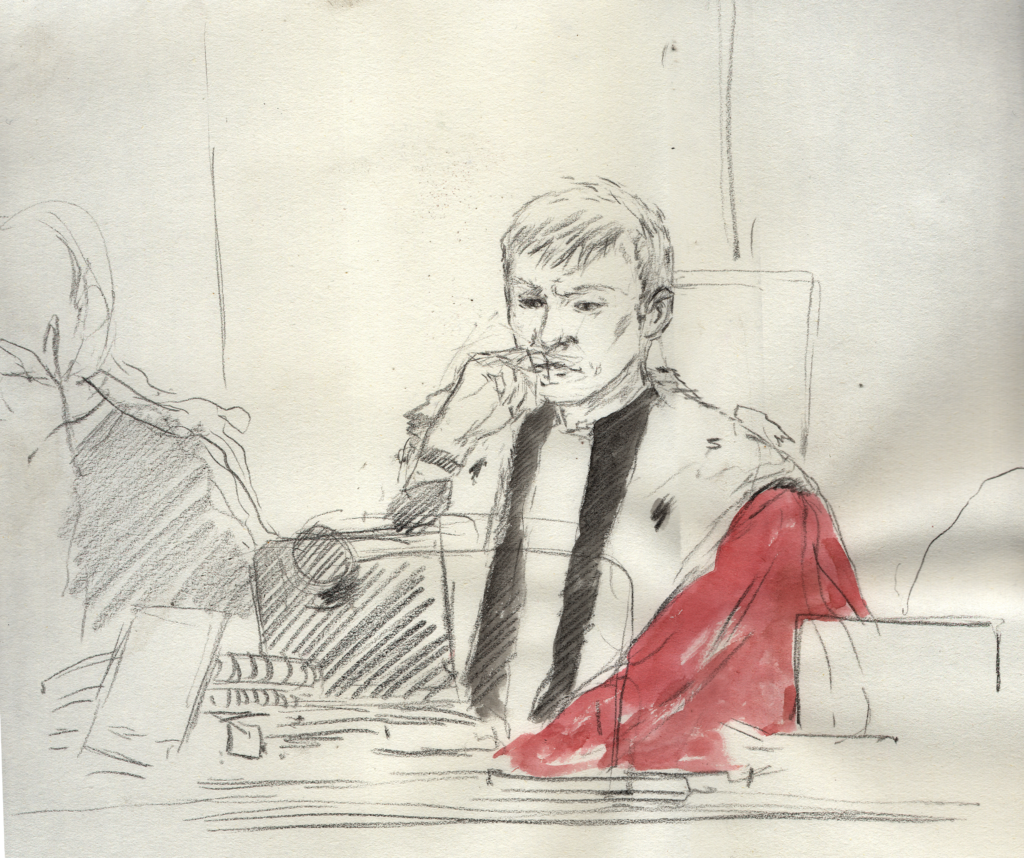
The artwork featured on the cover is part of a series of court sketches created by Augustin Guichot for TRIAL International during the trial of former Congolese rebel leader Roger Lumbala, which took place in Paris from 12 November to 19 December 2025.
Read and download the UJAR 2026:
For this and previous editions of the UJAR, please click here.
For a more visual presentation of universal jurisdiction cases worldwide, please visit our Universal Jurisdiction Interactive Map (UJIM).