Landmark Verdict of Former Congolese Minister Ends Decades of Impunity
Roger Lumbala Convicted of Complicity in Crimes Against Humanity
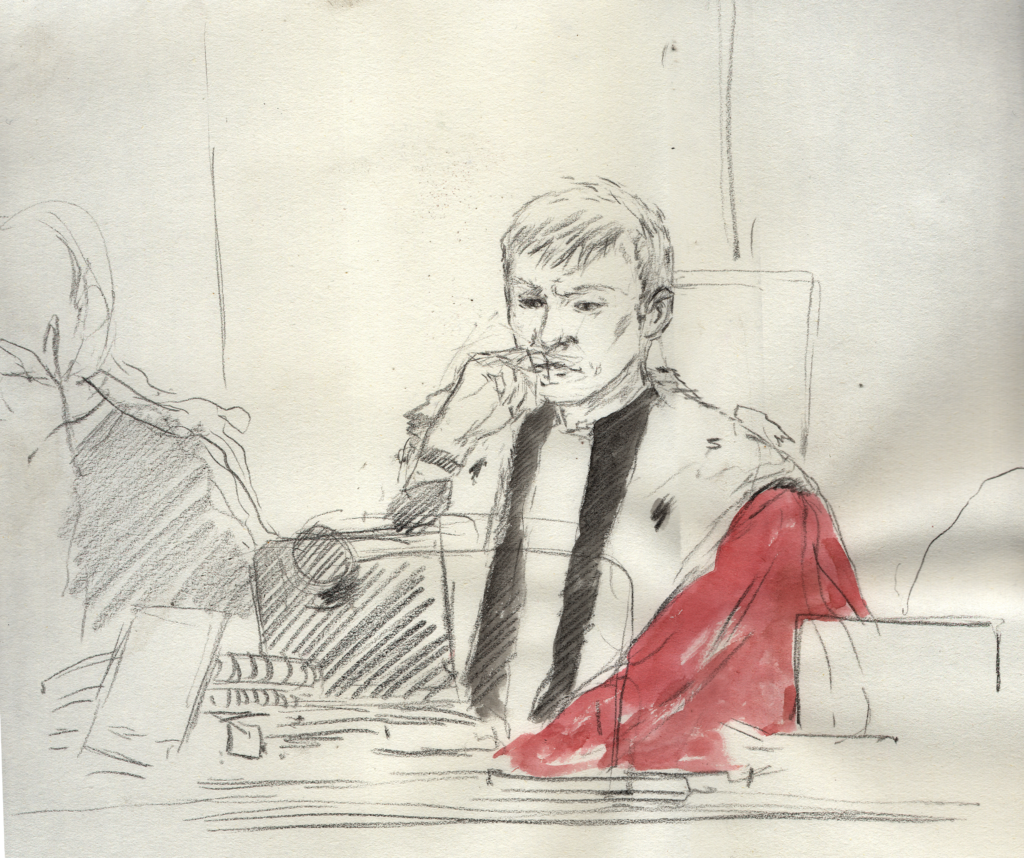
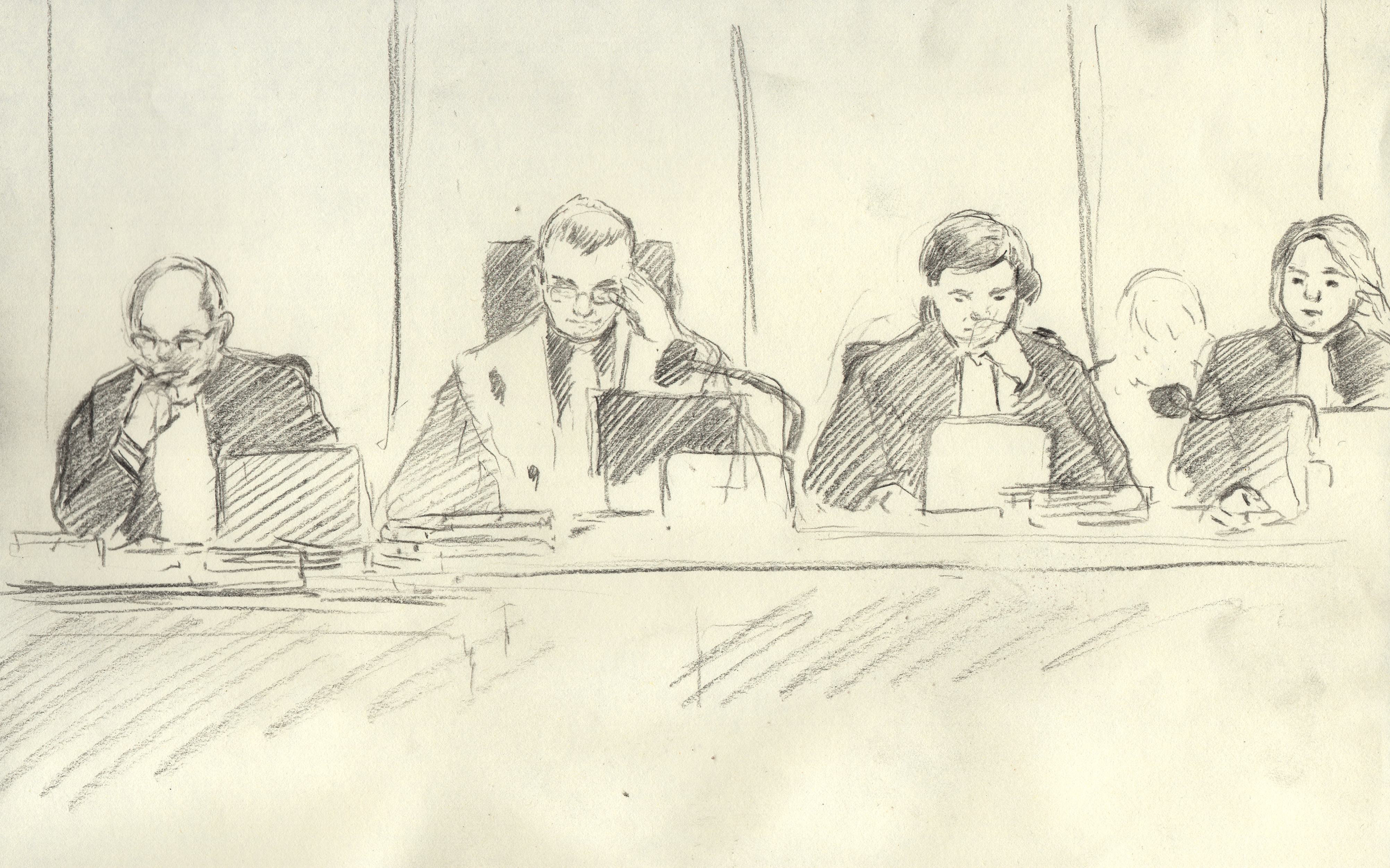
Paris, France 15 December 2025 – The groundbreaking decision to convict former Congolese Minister Roger Lumbala marks a watershed moment in the global fight against impunity for mass atrocities committed during the Second Congo War (1998-2003), TRIAL International, the Clooney Foundation for Justice (CFJ), Minority Rights Group (MRG), Justice Plus, and PAP-RDC said today. The Paris cour d’assises sentenced Lumbala to 30 years imprisonment on charges of complicity in crimes against Humanity.
“This verdict is historic. For the first time, a national court has dared to confront the atrocities of the Second Congo War and show that justice can break through even after decades of impunity,” said Daniele Perissi of TRIAL International, one of the civil parties in the case. “Today the Court made one thing unmistakably clear: architects of mass violence will be held to account. Neither time nor political power will shield them.”
The five organizations are all civil parties in the case. They also supported more than 20 survivors of Lumbala’s crimes and their families who shared their stories in court throughout the trial. 65 survivors, witnesses, and experts described the unprecedented scale and brutality of the extortions, especially during the military operation “Effacer le Tableau,” conducted by Roger Lumbala’s troops toward the end of 2002 in eastern Democratic Republic of Congo (DRC). Many of the attacks targeted specific ethnic communities, including the minority Nande and the indigenous Bambuti peoples. The exceptional levels of human, psychological, and material destruction were also noted by observers on the ground; their consequences remain deeply felt today.
“The indigenous Bambuti survivors rose above daily discrimination and, with strength and courage, gave detailed and convincing testimonies at particularly great personal risk. For more than 20 years, Lumbala has enjoyed impunity for his attempted campaign of extermination against the Bambuti. That ends today,” said Claire Thomas, Minority Rights Group Executive Director.
This verdict is the first of its kind and finally challenges more than two decades of impunity for crimes committed between 1998 and 2003 in the DRC. It was reached thanks to the principle of universal jurisdiction, as crimes committed during this conflict have never been prosecuted in the DRC. It also comes at a time when violence continues to devastate communities in the DRC despite the recent Washington Accords, highlighting the urgent need for accountability for both past and ongoing abuses.
Civil society played a decisive and coordinated role throughout the proceedings. NGOs admitted as civil parties pooled their expertise to participate in hearings, submit evidence, and request expert analyses. Their combined efforts helped build a coherent evidentiary record and ensured survivors received the psychological support needed to testify safely, demonstrating the power of coordinated action in pursuing accountability. The work of local organizations was particularly important:
“For years, we have been documenting abuses in places still marked by fear and violence,” said Xavier Macky, Justice Plus DRC country director. “We collected testimonies that might have never reached a courtroom if not for this trial. Today’s verdict shows that documentation rooted in the lived realities of survivors can break through decades of impunity.”
The spokesperson for PAP-RDC, a Congolese organisation working with Bambuti, added:
“PAP-RDC thanks the French justice system for making it possible for the truth to finally be heard, thanks to the courage of the Bambuti survivors who agreed to testify despite the risks. For our communities, this moment marks the end of a long silence and the recognition of suffering that has been ignored for far too long.”
Despite Lumbala’s refusal to be present in the courtroom, survivors’ voices stood at the heart of the proceedings. Many traveled to Paris even as they faced intimidation, logistical barriers, and personal risks. Their testimony constituted an essential act of courage, determination, and proof. David Karamay Kasereka and Pisco Sirikivuya Paluku, survivors who testified during the trial and witnessed today’s verdict, stated:
“We were scared but came all the way here because the truth matters. For years, no one heard us. Today, the Court did. We would have preferred to face Roger Lumbala, to look him in the eyes. But this verdict marks a first step toward reclaiming pieces of ourselves that were taken from us. We are thankful it could happen here in France, and hope justice will soon also be possible at home. May this serve as a strong signal to other warlords who continue to spread terror in the Democratic Republic of Congo.”
Holding senior commanders such as Lumbala, a high-ranking political and military leader and former government minister, responsible for organizing and enabling atrocities is essential to dismantling entrenched impunity and preventing cycles of violence that persist to this day.
“A defining feature of the trial was the central place given to the victims of sexual violence. Women who survived rape and sexual slavery broke decades of silence and stigma to testify,” said Yasmine Chubin, Legal Director at CFJ. “Their voices were central to the pursuit of accountability for sexual violence crimes, which remain widely under-prosecuted in conflict settings.”
The judgment also sets a major jurisprudential precedent that could strengthen the tools available for future prosecutions in the DRC and globally. By affirming that systematic attacks on property – pillage, destruction of essential goods, deprivation of food and livelihoods – may constitute crimes against humanity, the Court broadened legal recognition of the ways mass violence destroys communities.
“The verdict rests on an exceptionally coherent and mutually reinforcing body of evidence,” said Henri Thulliez and Clémence Bectarte, both counsel for the civil parties. “Survivors’ accounts aligned with witnesses and investigation reports, official records and even the defendant’s own statements at the time – an exceptional degree of convergence and corroboration. This decision confirms that high-level perpetrators can and must be held accountable for orchestrating widespread and systematic crimes.”
The question of reparations will be addressed in a separate phase of the proceedings.
For media inquiries, background materials, or interview requests, please contact:
- TRIAL International: Juliette Delay, +33645339489, j.delay@trialinternational.org
- CFJ: Alex Butcher-Nesbitt, abn@cfj.org
- MRG: Anna Alboth, anna.alboth@minorityrights.org and Miriam Lawson, miriam.lawson@minorityrights.org
- Justice Plus: Justiceplus@rocketmail.com
- PAP-RDC: jsulzer@impactlitigation.fr ; witt@sianoavocats.com
For more information on the Lumbala trial
https://ujim.trialinternational.org/latest-post/roger-lumbala/
About the civil parties
- TRIAL International is a non-governmental organization fighting impunity for international crimes such as genocide, crimes against humanity, war crimes, torture, enforced disappearances and conflict-related sexual violence. Founded in 2002, TRIAL International has offices in Switzerland, Bosnia and Herzegovina, and the Democratic Republic of the Congo (DRC). It also works on cases in several other countries, often in collaboration with local NGOs.
- The Clooney Foundation for Justice wages justice by providing free legal aid in defense of free speech and women’s rights in over 40 countries. Its work has led to dozens of journalists being set free and thousands of women receiving free legal support to defend their rights.
- Minority Rights Group (MRG) has been working to secure rights of minorities and indigenous peoples for more than 50 years, with increasing involvement in Ituri and North Kivu. In 2004, it published a report on human rights violations against indigenous communities titled ‘Erasing the Board,’ in partnership with the Réseau des Associations Autochtones Pygmées du Congo (RAPY).
- Justice Plus has been promoting human rights and good governance in the DRC for more than 25 years. In the Lumbala case, Justice Plus has identified survivors in the DRC and supported them throughout their journey in France.
- PAP-RDC (Programme d’Appui au développement des populations forestières – Les Pygmées aussi / Support Programme for the Development of Forest Populations including Pygmies) is a Congolese NGO providing humanitarian aid and improving living conditions for the harmonious and sustainable development of marginalized forest communities. They have supported Bambuti victims in this case.