Review of the Roger Lumbala trial: an analysis of the verdict of the Paris Cour d’assises
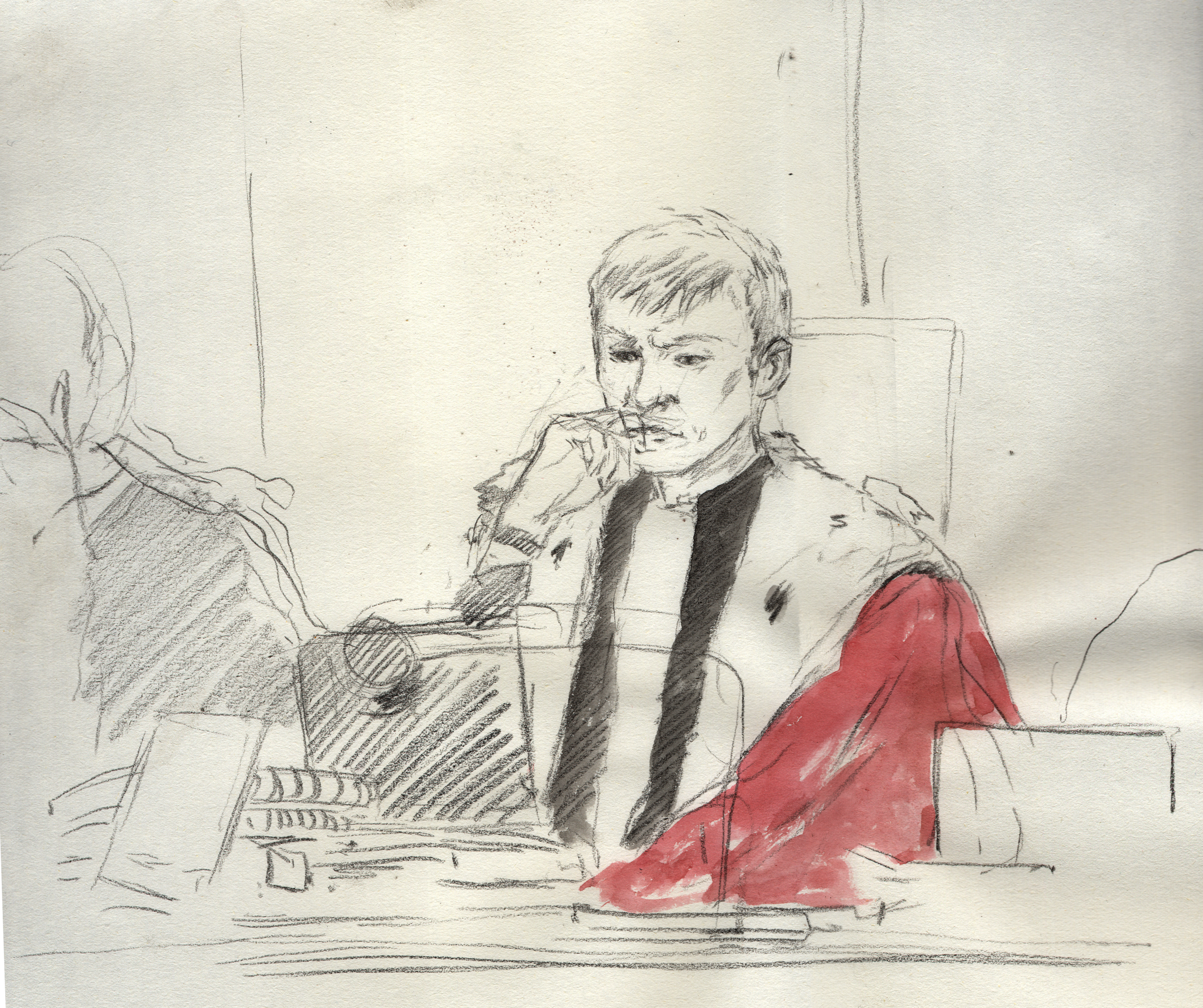
On 15 December 2025, the Paris Cour d’assises found Roger Lumbala, a former Congolese minister and warlord, guilty of complicity in crimes against humanity committed between 2002 and 2003 in the north-east of the Democratic Republic of the Congo (DRC).
This decision marks a significant step in the fight against impunity for international crimes and confirms the importance of universal jurisdiction, which allows a national court to prosecute serious crimes committed abroad.
The written judgment (la feuille de motivation) of the Cour d’assises, almost 90 pages long, follows a clear and structured line of reasoning. The court begins by explaining how it reached its conviction, before returning to the context of the conflict in the DRC and the role of the Congolese Rally for National Democracy (RCD-N). It then examines how the acts in question qualify as crimes against humanity, the involvement of armed groups, and Roger Lumbala’s personal responsibility, before determining the sentence.
A verdict based on solid evidence and supported by years of investigation
In reaching its decision, the judges and the jury relied on a wide range of reliable sources: United Nations reports (in particular those of MONUC and the Group of Experts), documentation from international and Congolese NGOs, analyses by specialised investigators, forensic and judicial expert reports, and numerous testimonies collected over the years.
The authors of these reports were among the 65 individuals heard during the trial; 30 witnesses (contextual witnesses, facts witnesses, and experts) and 35 civil parties, including seven individuals heard by videoconference. The court was thus able to verify the rigour of the investigative methods, the independence of the inquiries, and the absence of any manipulation of testimony. It emphasised that those questioned sought above all to recount their experiences.
The context: a war with devastating consequences
The court places the facts within the broader context of the Congo wars, which ravaged the country from the late 1990s to the early 2000s. In eastern DRC, the collapse of state authority, the intervention of foreign powers, and the proliferation of armed groups led to massive violence against civilian populations, against a backdrop of competition for control over territory and natural resources. It was in this context that numerous politico-military movements emerged or were reconfigured, including the RCD-N.
The RCD-N: a politico-military movement at the heart of the conflict
The court established that the RCD-N was created in June 2000 by Roger Lumbala, with the support of Ugandan military officials. The RCD-N was a politico-military group that exercised territorial control, relying on troops often drawn from other rebel groups and later reinforced through an alliance with Jean-Pierre Bemba’s Movement for the Liberation of the Congo (MLC).
The judgment describes how these alliances enabled the RCD-N to assert itself militarily in several areas of the north-east of the country, notably in Bafwasende and Isiro, and to take part in military operations, including Operation Effacer le Tableau at the end of 2002, aimed at driving out rival groups and controlling strategic territories around the town of Mambasa.
The court establishes the commission of crimes against humanity
The core of the verdict concerns the legal characterisation of crimes against humanity. The court concluded that widespread and coordinated attacks were carried out against civilian populations in several territories of the former Orientale Province. These acts of violence formed part of a strategy of terror designed to subjugate populations, eliminate any resistance, and consolidate military and political control. Men, women, and children were indiscriminately affected; certain populations were particularly targeted, notably civilians perceived as close to enemy groups and minority communities.
The court highlighted the existence of a concerted plan: the crimes were committed repeatedly, in multiple localities and over an extended period by troops operating under an identifiable chain of command. The so-called Effacer le Tableau operation illustrates this planning, with a coordinated offensive accompanied by looting and systematic violence against civilians.
According to the court, the crimes were foreseeable, organised and tolerated, and even encouraged by command structures. The recognised acts include 14 cases of summary executions, 15 cases of torture, 16 cases of rape constituting torture, 14 cases of pillage considered as inhuman acts, eight cases of enslavement in the form of forced labour, and two cases of sexual slavery.
Roger Lumbala’s responsibility
Roger Lumbala consistently claimed that he did not command armed troops at the time of the events. The court rejected this argument and established that the RCD-N in fact relied on combatants, including certain troops from the MLC, and that the crimes were committed in territories under his political and administrative authority.
The court found him responsible for complicity in crimes against humanity, recalling that complicity fully engages the criminal liability of those who facilitate, encourage or support the direct perpetrators of crimes. It underlined Lumbala’s role as founder and leader of the RCD-N, his participation in military alliances, and his knowledge of the crimes, given their scale and duration.
Roger Lumbala took no measures to prevent or halt the abuses. On the contrary, he encouraged and facilitated the crimes, while deriving political and military advantage from the situation.
The judgment also concluded that there was an agreement between the RCD-N and the MLC, involving several political, administrative and military officials from both groups. This coordination demonstrates that Roger Lumbala played an active and central role in organised actions aimed at committing crimes against humanity.
Finally, the court highlighted the central role played by Jean-Pierre Bemba in the joint operations, notably Operation Effacer le Tableau, which pursued common political, military, and economic objectives.
The sentence and the appeal proceedings
On the basis of its findings, the court sentenced Roger Lumbala to 30 years’ imprisonment. In view of the exceptional gravity of the crimes, it also imposed a permanent ban from French territory as an additional penalty.
Roger Lumbala has appealed against this decision; in response, the prosecution filed a cross-appeal.
In addition, a hearing on civil damages is scheduled for the end of June 2026. This phase of the proceedings will examine victims’ claims for reparations for the harm they suffered in connection with the crimes recognised by the court.
A landmark decision against impunity
By convicting Roger Lumbala of complicity in crimes against humanity, the French courts reaffirm a fundamental principle: the gravest crimes know no borders, and their perpetrators or accomplices can be prosecuted, even many years after the events, by national jurisdictions.
This decision highlights the decisive role played by victims and civil society organisations to obtain justice, and highlights the essential role played by various international bodies in the documentation of grave crimes. It sends a powerful message: crimes committed in the shadows of armed conflicts must not go unpunished.
That message resonates with particular force at a time when violence continues in eastern DRC and when certain current political processes sidestep the demands of justice and human rights, reminding us that there can be no lasting peace without justice and accountability.
Weekly summaries of the trial and updates on the case can be found here.