Day 1 Sonko Trial: The trial begins
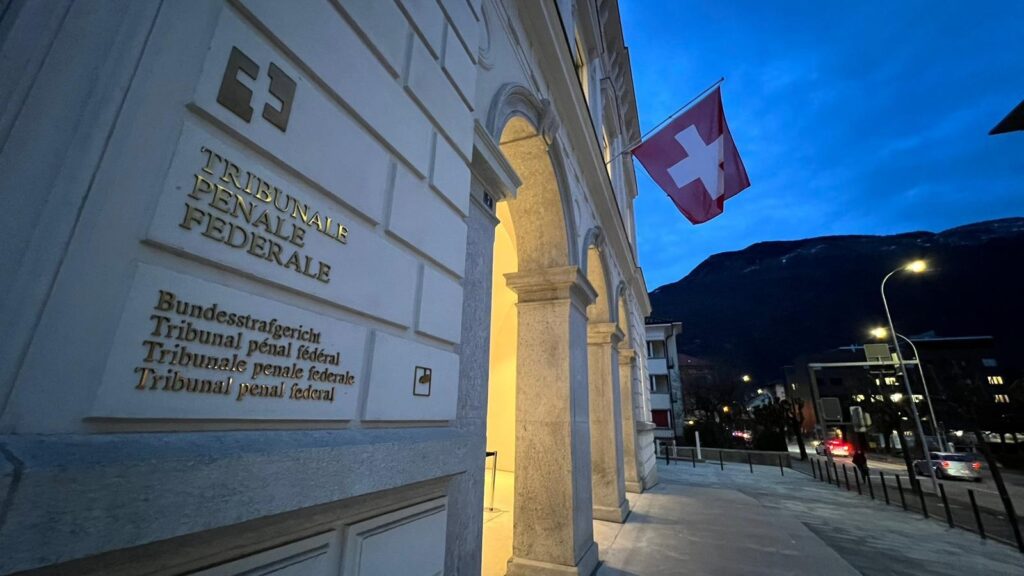
The trial of Ousman Sonko opened today, 8 January 2024, at 9:00 AM before the Swiss Federal Criminal Court, where three judges will be examining the former Gambian Minister of Interior’s responsibility over the numerous crimes against humanity that he is accused of having committed between 2000 and 2016. Read our recap for day one.
Ousman Sonko is present in the Courtroom, seconded by his lawyer and the defense team. Five plaintiffs are also present, while others will join at a later stage of the proceedings. They will be heard over the next two weeks.
In the framework of procedural and organizational questions at the opening of the trial, the plaintiffs’ lawyers notably requested that the electrical chocs imposed on genitals of a victim in March 2006 should not only be considered as torture, but also as independent acts of sexual violence committed within the frame of crimes against humanity. The Court was also requested to examine the charges pressed against Ousman Sonko as aggravated (art. 264a par. 2 of the criminal code), notably given the high number of persons affected and the cruel nature of the acts. The attention of the Court was then raised on the fact that, should the provision repressing crimes against humanity (art. 264a of the criminal code – in force since 1 January 2011) not be applicable retroactively to pre-2011 facts, the International Convention against torture would in any case find application given its ratification in the 1990s by Switzerland.
The defense first criticized the indictment’s extension – where the detention conditions of the plaintiffs in 2016 were added to the charges against Ousman Sonko – and requested that such amendments should not be taken into account by the Tribunal, as a result of procedural violations of the law that allegedly took place during the amendment process.
It was then contested that the Swiss Court has jurisdiction to prosecute Ousman Sonko for the facts that took place before 1 January 2011 and it was claimed that the provisions that entered into force at that time to repress crimes against humanity should not be applied retroactively. Thus, the defense requested the pre-2011 facts to be left out. It was added that most of these charges were time-barred and should be dropped.
In a fourth critique, the defense pleaded for evidence material to be removed from the casefile. In particular, according to the defense, numerous witness hearings as well as filed material had been collected in violation of procedural requirements.
The defense also called for the trial’s full interpretation in English in the interest of Ousman Sonko.
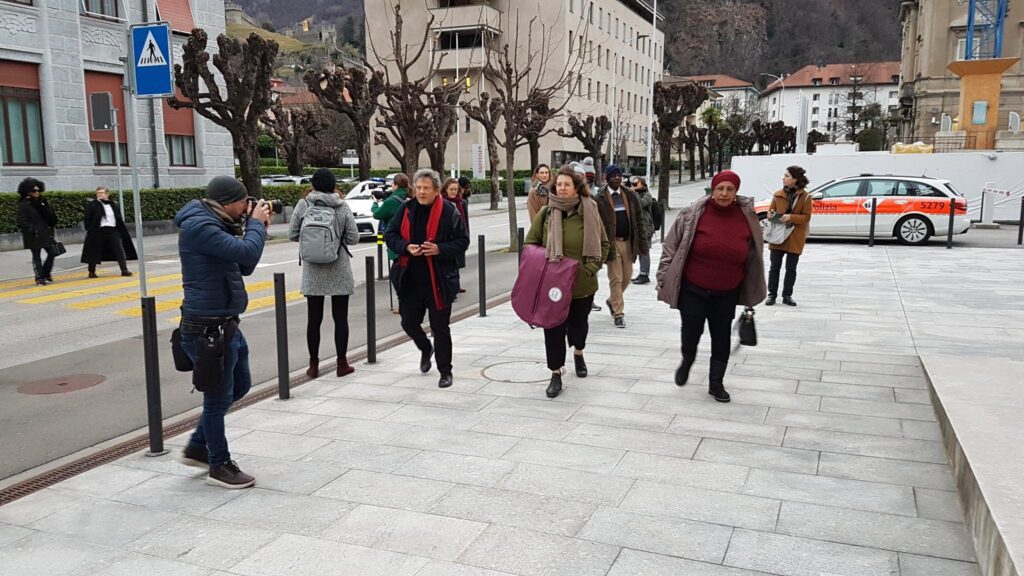
©TRIAL International / Arrival at the court of several of the plaintiffs with their lawyers.
Answers to the defense’s critics of the proceedings
After the defense’s oral arguments on preliminary questions, the Federal Prosecutor took the floor and reacted to the critics regarding the indictment’s amendment. He stated that the procedural code in fact allows such modifications and, hence, that there is no ground to attack the indictment. The Prosecutor then recalled that crimes against humanity are not subject to statute of limitations and that, as a result, none of the charges brought against Ousman Sonko should be considered as time-barred.
The Federal Prosecutor further argued that the Court had the jurisdiction over Ousman Sonko’s alleged crimes and that there had been no violation of the procedural law during the investigation.
The plaintiffs’ lawyers consecutively took the stand. They highlighted that the defense had been deploying many efforts to point out procedural errors made by the Federal Prosecutor during the investigative phase, with the sole purpose of having useful evidence removed from the casefile.
Regarding the Court’s jurisdiction to prosecute and the statute of limitations, it was argued that Swiss jurisdiction over the offenses in question derives not only from the new law adopted in January 2011 – claimed to be applicable to facts committed before that date – but also from the ratification of the Convention against Torture. It was notably referred to the Swiss precedent that unequivocally confirmed the Court’s jurisdiction over crimes against humanity committed in the 1990s in Liberia (Alieu Kosiah – Decision of the Appeal Court of the Federal Criminal Court CA.2022.8 of 30 May 2023) and insisted on the fact that the offenses were not time-barred in application of recent case law (case BB.2021.141 of 23 September 2021).
Finally, the rightful amendment of the indictment by the Prosecutor was supported by the lawyers of the victims of torture in 2016, who were imprisoned in the worst detention conditions, to the extent that they should be considered as inhumane treatment. They argued that Ousman Sonko’s only hope in challenging the legality of the indictment’s modification is to avoid his criminal responsibility, as Minister of Interior, for having imposed or agreed to such harsh detention conditions.
The Court adjourned the hearing to deliberate on these issues.
The decision from the Court is eagerly awaited, for as it will draw the contours of Ousman Sonko’s trial and, his possible criminal responsibility. It is also expected to stand as an important legal precedent with regards to the prosecution – in Switzerland – of international crimes committed before 01 January 2011.
Coming next: Reading of the Court’s decision at 1PM (CET) 9 January 2024.