(22-24 January 2024, Federal Criminal Court, Bellinzona, Switzerland)

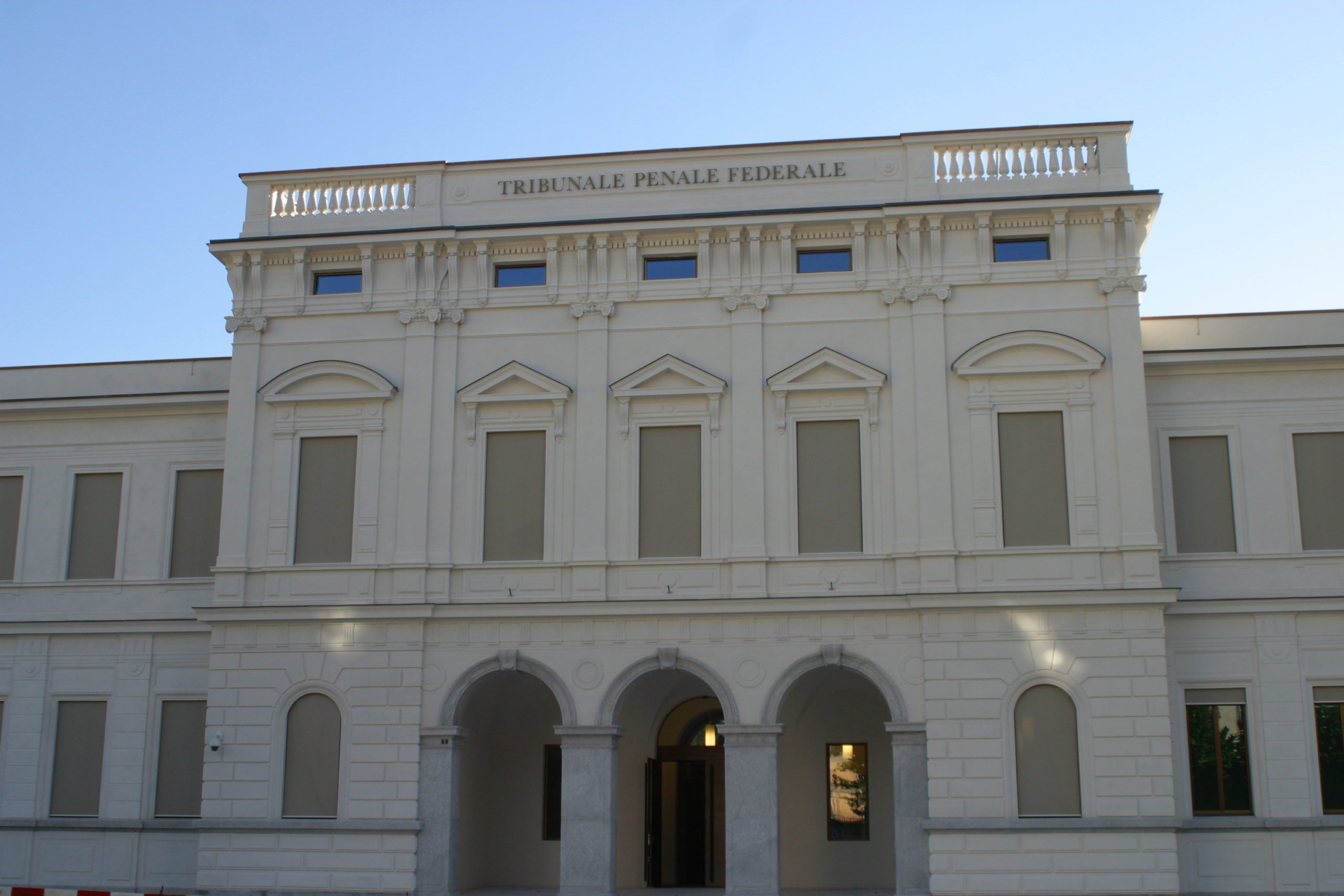
Federal Criminal Court in Bellinzona
©TRIAL International / the Federal Criminal Court in Bellinzona, Switzerland.

Examination of the March 2006 charges in relation to the persecution of journalists

(acts of torture, false imprisonment and sexual violence committed as crimes against humanity)

As part of an attempted coup d’état in March 2006, Ousman Sonko is being accused, as an accomplice of a group of perpetrators, of having tortured various people, including members of the army, politicians and journalists, of having illegally deprived them of their freedom, as well as of having committed a rape in Banjul, The Gambia.


18 and 22 January 2024 – Days 9 & 11

The plaintiff called to testify has been a Gambian journalist since the 1990s. In the 2000s, he occupied a senior position at national renowned newspaper “The Independent”. In March 2006, The Independent published several articles to report on the attempted coup against Yahya Jammeh’s government.

The plaintiff recalled having been arrested at the end of March 2006. Without explanations on the reasons for his arrest, he was transferred to the National Intelligence Agency’s (NIA) headquarters, where he had to endure terrible acts of torture at the hands of the Junglers. On one occasion, he met Ousman Sonko and NIA staff there.

Upon his release on bail at the end of April 2006, he had to go to several hospitals, but the doctors refused him treatment out of fear, as it was clear that he had been tortured. He consequently fled to Senegal with his pregnant wife. He suffered severe physical and psychological trauma from what he went through. His whole family is traumatized, including his son.

At The Independent, everyone was persecuted, the question was not if someone was going to be arrested but when. According to the plaintiff, torture and tyranny started with the Jammeh regime.


23 January 2024 – Day 12

The plaintiff called to testify is a Gambian journalist since the 1990s. In 2006, he was occupying a senior position at the national renowned newspaper “The Independent” as well as within the Gambia Press Union (GPU). He was arrested at the end of March 2006, after the newspaper published several critical articles, discussing the coup attempt against Yahya Jammeh. In 2017 and 2022, he was elected as a parliamentarian for the UDP Party.

The police officers who arrested him at his workplace, first drove him to the Police Intervention Unit’s headquarters, where he saw many of his colleagues. He was then brought to the National Intelligence Agency, where he was detained for several weeks and interrogated about the articles he wrote. He suffered physical injuries and psychological trauma from the violence he went through.

At some point, he was taken before a panel, including Ousman Sonko, then Inspector General of Police (IGP). He was explained that he was targeted as journalist, especially one working for this newspaper.

At the time, the political situation was terrible. According to the plaintiff, The Gambia was hell between 1994 and 2016: Jammeh was a tyrant, justice was selective and unfair, the parliament was not free.


Procedural highlight

Upon hearing’s resumption on 23 January 2024, the defense filed a written affidavit from Ousman Sonko’s former wife dated 22 January 2024. According to the defense, this document highlights the accused’s personality especially in private.

The Prosecutor argued that the document was irrelevant for the defense but would not oppose to include it in the casefile if it was important to the accused.

The plaintiffs deferred to the court as to the admission of this document in the proceedings, however stressed that it had no significance in Swiss legal practice and that hearing her as witness was neither necessary nor recommended given her proximity to the accused and defense team and her attending of the trial.

The Court accepted the document into the casefile.


Interrogation of Ousman Sonko on the examination of the March 2006 charges

(acts of torture, false imprisonment and sexual violence committed as crimes against humanity)


23 January 2024 – Day 12

Ousman Sonko was called to testify and confronted with the outcome of the investigation as well as to the plaintiffs’ additional statements made before the Court, with regards to the above-mentioned charges.

The accused explained that the Gambian police was a respected force. He repeated that he only had non-operational duties as Inspector General of Police (IGP) and that the National Intelligence Agency (NIA) was never under his control. All investigative panels were set under the NIA and upon Yahya Jammeh’s orders. He contested the TRRC’s conclusions stating that he was responsible, as IP, for the torture of people allegedly involved in the coup attempt.

Amongst other statements, the accused affirmed that, on 21 March 2006, he was a member of the investigative panel for the first time, only as an observer, when the interrogations had already started. He visited it once or twice. His presence was required to release people, apologize for their arrest and detention. He had no knowledge of any acts of torture and it was not in his power to prevent them.


23-24 January 2024 – Days 12-13: Evidence requests, procedural decision and trial suspension until March 2024

The 23rd of January 2024 marked the termination of all the parties’ hearings. In accordance with the procedural code, the parties were then given the opportunity to request additional evidence.

The Prosecutor and the plaintiffs recalled that several persons could still be heard to prove the existence of a system of repression in The Gambia in the 2000s, and that the casefiles of two recent Gambian cases in other countries could be added as evidence.

The defense criticized TRIAL International’s support of the plaintiffs as well as the independence of the lawyers vis à vis the organisation.


On 24th of January 2024, the parties were invited to reply.

The defense’s arguments against TRIAL International were considered to be diversionary tactics, who withdrew its request.

The Court accepted some evidence material into the casefile.

However, the hearings of additional witnesses were rejected. It also refused to include documents from other cases and rejected all the requests of the defense.

The Court informed the parties that the phase of presentation of evidence is closed and that the closing arguments will take place during the reserve week of 4-8 March 2024. (date subject to change)


>> This summary of the third week of the proceedings of the Ousman Sonko’s trial, lists the most important points discussed during the hearings. TRIAL International does its best to summarize as accurately as possible what was said. The organization cannot be held responsible for any errors or omissions. <<

(15-19 January 2024, Federal Criminal Court, Bellinzona, Switzerland)

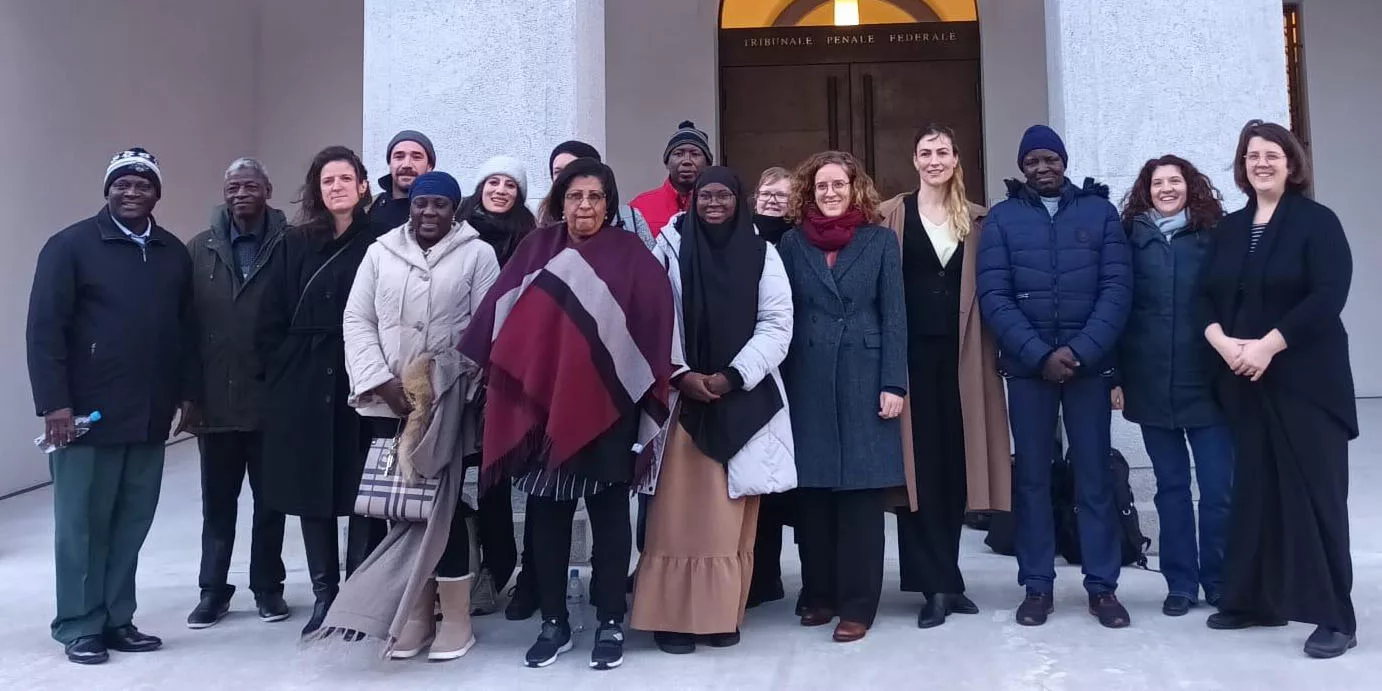
Plaintiffs, plaintiffs’ lawyers and TRIAL representatives before the FCC in Bellinzona during the second week of the trial of Ousman Sonko, former Minister of Interior of The Gambia.
©TRIAL International / plaintiffs, plaintiffs’ lawyers and TRIAL representatives before the FCC in Bellinzona during the second week of the trial.

15 January 2024 – Day 6

Examination of Ousman Sonko’s responsibility over Baba Joe’s murder in 2011

Ousman Sonko is accused of having intentionally killed Baba Jobe – a former member of the National Assembly – in Banjul in October 2011, in complicity with a group of perpetrators. He contested all the charges brought against him in relation to this event.

> Ousman Sonko contested all the charges brought against him in relation to this event.

A witness, who was heard during the investigative phase by the Swiss prosecuting authorities in 2021 in The Gambia, was called to testify upon the prosecution’s request. He was a prison guard (assistant to David Colley, General Director of prisons, at Mile 2 prison) and was responsible for guarding prisoner Baba Jobe, who was hospitalized in October 2011.

He confirmed that, upon orders from his superior, he granted a group of Junglers access to Baba Jobe’s hospital room, who subsequently killed him.

The witness also stated that inmates were picked up in Mile 2 prison, mostly by Junglers, and that when they were brought back it was clear that they had been tortured.

The witness recalled that David Colley, his superior, would provide day-to-day reports to Ousman Sonko every morning over the phone, which was denied by the accused. He did not admit either to having given any order about Baba Jobe’s murder to Colley.

15-17 January 2024 – Days 6 to 8

Examination of Ousman Sonko’s responsibility over the deprivation of liberty, torture and cruel detention conditions of protesters from April 2016 onwards

Ousman Sonko is being accused, in complicity with a group of perpetrators, of having tortured several political opponents and illegally depriving them of their liberty in the context of a political demonstration organized in April 2016 in Banjul. Within this context, Ousman Sonko is in particular suspected of having tortured and then killed one of the organizers of the demonstration.

> Ousman Sonko contested all the charges brought against him in relation to the torture, the deprivation of liberty and the cruel detention conditions of protestors in April 2016.

The plaintiffs and the Prosecutor requested witnesses to testify, who had both testified before the TRRC in 2020.

During the hearing, the first witness – requested by the plaintiffs –, who was a prison guard, confirmed that he had worked in the Mile 2 jail under Jammeh’s presidency, where he was himself imprisoned later. Mile 2 was not a clean place, where air did not circulate well. The little food detainees received was making them sick. In the security wing of Mile 2, political detainees were not detained at the same place as other inmates. The witness heard that the Junglers and the NIA had access to detainees. They allegedly came during the night so that no one would know what was going on. The witness confirmed having seen acts of torture being committed in Mile 2 when he was himself detained. He added that he had never seen Ousman Sonko in prison.

The second witness – requested by the Prosecutor –, was among the protesters arrested during the demonstration that took place on 14 April 2016. He declared having seen Ousman Sonko as well as other security officials at the NIA. There, the arrestees were strongly beaten and pressured into signing pre-written statements. He was then imprisoned. The witness then detailed the acts of torture and humiliations the arrestees went through. He personally also had to endure acts of a particular cruelty.

He was then brought before a panel which included Ousman Sonko, the MA Director and the NIA Director of Operations. Before this panel, visibly injured, he was again threatened. He was then transferred to other prisons, where he was ill-treated, without medical treatment and often without access to a lawyer or his family.

On the political and human rights’ context in The Gambia, the witness explained that, under Yahya Jammeh, opposition members or journalists would either be imprisoned or forced to leave the country. The judicial power was under the influence of the President and proceedings were partial.

Procedural highlight

The filing of additional material related to the illegal execution of nine Mile 2 inmates in 2012 (Gambian newspaper articles, videos, etc.) was discussed at the resumption of the hearing. In the Prosecutor and the plaintiffs’ views, this material supports the fact that a systematic and planned policy of oppression had been set up by the Gambian authorities. The material highlights the interaction amongst various state actors – and particularly the role of Ousman Sonko – within Yahya Jammeh’s government to implement the policy. The defense argued, that the filing of the material should be rejected as the inmates’ executions at stake were lawful, hence, cannot be the demonstration of a systematic or generalised attack against the civilian population.

> The Court subsequently ruled in favor of the plaintiffs and the prosecutor by accepting to add new evidence to the casefile.

17 and 18 January 2024 – Days 8 and 9

Examination of Ousman Sonko’s responsibility over the deprivation of liberty, torture and cruel detention conditions of protesters from April 2016 onwards as crimes against humanity

Ousman Sonko is being accused, in complicity with a group of perpetrators, of having tortured several political opponents and illegally depriving them of their liberty in the context of a political demonstration organized in April 2016 in Banjul. Within this context, Ousman Sonko is in particular suspected of having tortured and then killed one of the organizers of the demonstration.

First, two plaintiffs were called to provide their statements.

Both plaintiffs who were called to testify in relation to the April 2016 events are former members of the UDP (opposition party under Jammeh), who were strongly engaged in the activities of the party from an early age.

They were arrested and subsequently tortured in April 2016 and kept in detention for several months afterwards.

The first plaintiff to testify explained being arrested in April 2016 and brought to the Police Intervention Unit headquarters (PIU HQ) along with others. She was then taken to Mile 2 prison and to the National Intelligence Agency (NIA)’s premises. She described the torture and humiliation she went through as well as detailed the squalid detention conditions. Detained political opponents were treated like animals. She still suffers from severe physical damages.

The second plaintiff to testify explained that she was arrested on 14 April 2016 and taken to the PIU’s HQ, where she was hurt and humiliated. Along with other arrestees, she was brought to Mile 2 and then to the NIA premises. There, she was blindfolded and submitted to torture. During her time in Mile 2 she didn’t have access to a doctor or a lawyer and detention conditions were very poor.

A third plaintiff, who endured similar offenses in April 2016 onwards, had been fighting for justice in the proceedings against Ousman Sonko for several years. Indeed, in June 2017, she filed a complaint against him in Switzerland for the acts of torture she endured back then. Sadly, she passed away before having been able to tell her story before the Court.

Subsequently, Ousman Sonko was called to testify on the 14 April 2016 events.

He denied having been present at the Police Intervention Unit’s headquarters or taken part in the investigation panel at the NIA. He reiterated that the Junglers had not been under his supervision.

Notes that seem to be incriminating evidence were found in his suitcase by the police in 2017. He stated that the content was only partly true, even if he admitted it was his handwriting.

Further, he stated that in April 2016 protesters were not arrested because of their political opposition but because the demonstration had taken place illegally. So, the arrests were merely a security matter.

While he recognized the bad detention conditions at the time, Ousman Sonko repeated that he had done everything in his power to improve them during his term as Minister. He was not aware of any sexual assaults and apologized for any inconvenience their detention conditions might have caused the plaintiffs. He reiterated that he was never ordered to shoot at protesters and would not have followed such an order.

Day 10: Trial suspended until Monday 22 January 2024

After the hearing of Ousman Sonko on 18 January 2024, a plaintiff was called to provide a statement on his arrest and torture in 2006. His hearing was scheduled to continue on 19 January 2024.

The defense informed the Court and the parties that it would be unable to represent his client on the following day. Because the trial cannot continue without the presence of the defense, the Court suspended the proceedings and informed the parties they would resume on Monday 22 January 2024, 08:30 (CET). As a result, the remaining plaintiffs will have to be questioned next week, therefore the Court agreed that their stay be extended.

The other plaintiffs who were supposed to leave Switzerland on 20 January 2024 – as they already testified – would not have been able to hear the accused’s further questioning next week without finding additional means to extend their stay. Nevertheless, it remains unclear whether the Court will eventually refund them, entirely or even at all.

With regards to victims’ access to justice, TRIAL International strongly believes that the plaintiffs’ attendance of Ousman Sonko’s hearing and confrontation with the facts at stake can contribute to their healing process as well as provide each and everyone of them with the closure they have been awaiting for years now.

TRIAL International reiterates that the plaintiffs should have been invited, and their costs covered, to attend the full length of the trial in the first place, as victims’ participation to these trials is of utmost importance and aligns with the principle of universal jurisdiction, which allows victims to be heard before foreign jurisdictions on the serious crimes they have suffered.


>> This summary of the second week of the proceedings of the Ousman Sonko’s trial, lists the most important points discussed during the hearings. TRIAL International does its best to summarize as accurately as possible what was said. The organization cannot be held responsible for any errors or omissions. <<

(8-12 January 2024, Federal Criminal Court, Bellinzona, Switzerland)

The trial of Ousman Sonko opened on 8 January 2024 before the Swiss Federal Criminal Court (FCC). A panel of three judges is examining the former Gambian Minister of Interior’s responsibility over the numerous crimes against humanity that he is accused of having committed between 2000 and 2016, under the regime of former President Yahya Jammeh.

During the three-weeks trial, Ousman Sonko will be represented by a defense team of four. Nine plaintiffs are heard over two weeks. They are represented by their lawyers and supported by TRIAL International, who filed the criminal denunciation against Ousman Sonko in 2017.

©TRIAL International / plaintiffs, plaintiffs’ lawyers and TRIAL representatives before the Swiss Federal Criminal Court in Bellinzona.
©TRIAL International / plaintiffs, plaintiffs’ lawyers and TRIAL representatives in front of the Swiss Federal Criminal Court in Bellinzona

8 January 2024 – The trial begins

On the first day, the hearing touched upon procedural and organizational questions. Within this framework, the defense argued that Switzerland had no jurisdiction over the crimes that Ousman Sonko is accused of having committed between 2000 and 2006 and that these alleged crimes were time-barred. The defense team also requested for numerous evidence material to be removed from the casefile on procedural grounds.

As a response, the Federal Prosecutor and the plaintiffs’ lawyers recalled that the Swiss case law is in favor of the prosecution.

In Switzerland, “(…) a perpetrator can be prosecuted and punished for crimes against humanity committed before 2011 until the end of his or her life, regardless of the passage of time.” (Federal Prosecutor’s pleading of 8 January 2024)

In addition, the plaintiffs’ lawyers requested that the charges be examined as aggravated, considering the high number of persons affected and the particularly cruel nature of the facts to be judged.

Both parties requested for all of the proceedings to be translated in English.


9 January 2024 – Going forward with the case

The proceedings resumed with the Court ruling that the trial would first examine the substance and, once it has established whether crimes against humanity were committed or not, it will consider the parties’ arguments regarding its jurisdiction and the statute of limitations.

The Court then ruled that the challenged evidence material had been collected in compliance with the law by prosecuting authorities and that, as a result, the casefile would remain as it is.

Regarding the translation of the proceedings, the Court explained that the English interpretation would not be provided for the parts of the trial that it considers non-essential for the parties.

After those issues were clarified, the Court proceeded with the substance of the case.

As prescribed by law, the Court reminded Ousman Sonko of the accusations pending against him. He was then asked to answer questions on his personal situation. He stated that the seven years of pre-trial detention had been the worst time of his life, mentioning that his health deteriorated and that the financial situation of his family had worsened.

In an open statement, Ousman Sonko reaffirmed that he was not guilty of the crimes he is accused of. He assured that he has always been loyal to his country and served it as best as he could, trying to improve prison conditions and professionalize the work of security forces and police. He claimed to have no knowledge of any ill-treatment in the security wings of Gambian prisons.

Ousman Sonko then criticized Swiss authorities:

“Switzerland is not in a position to lecture anyone on human rights.” (Ousman Sonko – Open statement of 8 January 2024)


10 January 2024 – Examination of the 2000s charges

(murder of Almamo Manneh and multiple rapes as crimes against humanity)

“Ousman Sonko is being accused of having participated in the murder of Almamo Manneh, former member of the State Guards, in January 2000 and, of having sexually assaulted his widow between the years 2000 to 2002 as well as having tortured, raped and sequestrated her in 2005.” (Indictment filed against Ousman Sonko on 17 April 2023)

On the third day of the trial, Almamo Manneh’s widow was heard by the Court. Sonko was placed in a separate room, to avoid a direct confrontation with him during her interrogation. She explained how Sonko severely and repeatedly abused her. She noted that from the mid-1990s, it was hell for Gambians who opposed the Government. Following her testimony at the TRRC, she had been contacted by many women who had also been sexually assaulted but who were scared to report the assaults.

When questioned about Almamo Manneh’s murder, Sonko explained that he was bound by professional secrecy and could not comment further. Regarding the rape and torture allegations, he affirmed that he was not in the country at the time of the events, as he was travelling for a UN engagement and only came back once to The Gambia for a break. The Court informed the parties that it was waiting for the UN to confirm this information.


10-12 January 2024 – Examination of the March 2006 charges – continued

(acts of torture, false imprisonment and sexual violence committed as crimes against humanity)

“As part of an attempted coup d’état in March 2006, Ousman Sonko is being accused, as an accomplice of a group of perpetrators, of having tortured various people, including members of the army, politicians and journalists, of having illegally deprived them of their freedom, as well as of having committed a rape in Banjul, The Gambia.” (Indictment filed against Ousman Sonko on 17 April 2023)

During three days, three plaintiffs provided an account of the acts of torture they had been submitted to within the frame of an investigation conducted on an alleged coup attempt in March 2006.

Ousman Sonko contested all the charges brought against him in relation to these events. He will be heard at a later stage regarding these events.

The first plaintiff to address the Court recalled his arrest on 21 March 2006, when he was violently interrogated and submitted to acts of torture at the National Intelligence Agency (NIA) on several occasions. As a result, he still suffers from serious physical and mental after-effects. The plaintiff also recalled that the members of an investigation panel set up at the premises of the NIA – including Ousman Sonko – knew very well that people were being tortured within the frame of this investigation.

At the time, the country was under extreme dictatorship. People were arrested and imprisoned without being brought before court. Others disappeared. People were living in constant fear.” (Plaintiff’s statement regarding the Gambian context, 10 January 2024)

The second plaintiff to give a statement explained that she was arrested on 24 March 2006 and detained, then brought to the premises of the NIA. She found herself in a room where many people – amongst whom Ousman Sonko and the former vice-director of the NIA – were sitting. She was interrogated on the attempted coup that was suspected to have taken place. During her presence at the NIA, she was raped, humiliated and tortured. Following these horrific events, she was put in jail, where she remained for several weeks – along with other people.

In October of the same year, she was arrested again at her home and imprisoned. Eventually, she was released.

The plaintiff mentioned the physical and mental impacts these acts had on her since then.

The Gambian judicial system was accomplice to the government, within which judges were answering to the orders of the President.” (Plaintiff’s statement regarding the Gambian context, 11 January 2024)

The third plaintiff confirmed he had been kidnapped form the Parliament in March 2006. Taken to the NIA premises on several occasions, he had been questioned on his suspected role in the alleged coup attempt. He was submitted to acts of torture on several occasions and pressured to sign a statement. He suffered important physical and psychological consequences from the acts of torture he had endured and remains affected in his daily life ever since.

“I have been subjected to heinous crimes and humiliation that I never thought a man could do to another one!” (Plaintiff’ statement regarding the Gambian context, 11 January 2024)


>> This summary of the first week of the proceedings of the Ousman Sonko’s trial, lists the most important points discussed during the hearings. TRIAL International does its best to summarize as accurately as possible what was said. The organization cannot be held responsible for any errors or omissions. <<


This article is part of the daily summaries of the trial of Ousman Sonko, former Interior Minister of The Gambia, which took place between January and March 2024 in Bellinzona, Switzerland. During this time, TRIAL International did its best to capture the most important points discussed during the hearings and cannot be held responsible for any errors or omissions.
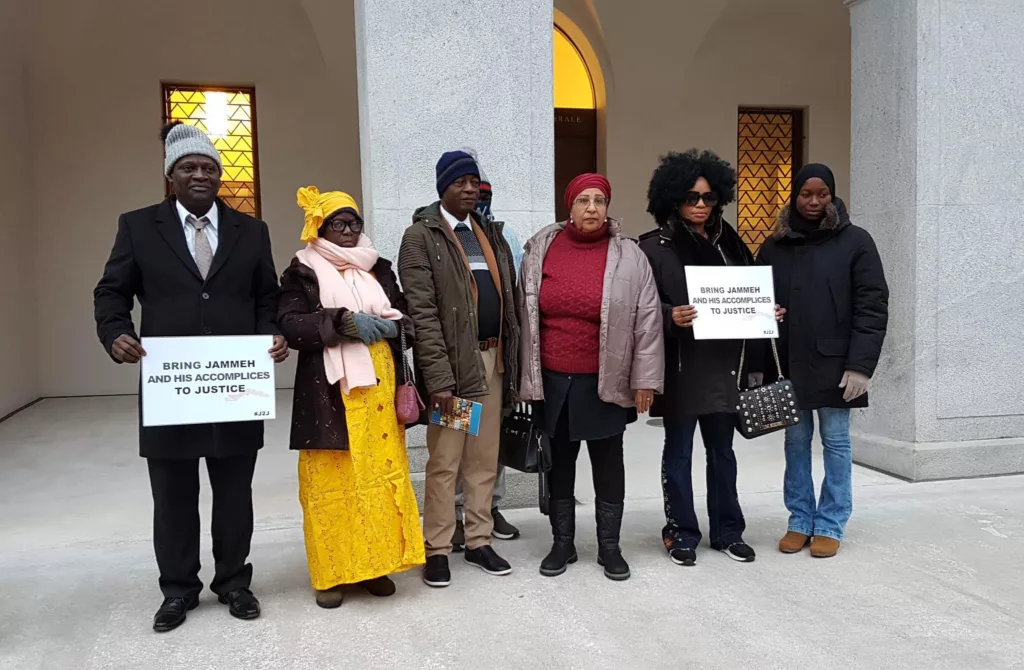
©TRIAL International / Several of the plaintiffs in the Ousman Sonko case at the trial start before the court entrance.


Ousman Sonko is being accused, among other charges, of having participated in the murder of Almamo Manneh, former member of the State Guards, in January 2000 and, of having sexually assaulted his widow between the years 2000 to 2002 as well as having tortured, raped and sequestrated her in 2005.

The accused explained that he was bound by a professional secrecy that prevented him to talk about Almamo Manneh’s facts and contested all the rape charges, claiming that he was not in the country at the time of the events.

The Court then proceeded with the hearing of Almamo Manneh’s widow. Her lawyer requested Ousman Sonko to be placed in a separate room, for the plaintiff not to be directly confronted to him during her interrogation. Given the sensitive discussions at stake, the female judge led the examination.

Upon the Court’s questioning, the plaintiff confirmed all the declarations she made before the federal Prosecutor in 2019 (during the investigation’s phase). She also stated that she had no knowledge of the alleged coup her husband had been suspected of having fomented against the former President. During the night of the killing, her late husband received a phone call and then left their house. She never saw him again.

The plaintiff explained how the defendant had severely abused her repeatedly within the period of January 2000 to April 2002 as well as in 2005.

She also recalled that from the mid-1990s, it was hell for any Gambian who was opposing the Government. After her testimony before the TRRC, she was contacted by women who had also been sexually assaulted. A lot of Gambian women were scared to report the assaults and when they did so, they were not believed.

The defense lawyer declined to make use of the right to ask additional questions to the plaintiff as regards the rape and torture allegations.

When taken back to the courtroom, the accused explained that he was not aware of the reasons why Almamo Manneh would have planned a coup, nor was he aware of President Jammeh’s reaction about Manneh’s death. However, he repeated that he was bound by a professional secrecy and could not comment further. Confronted with the fact that the TRRC found him responsible for the murder of Almamo Manneh, he replied that he had not seen his name in TRRC compendium volumes A or B.

Ousman Sonko was then confronted with a series of Gambian newspaper articles published after Manneh’s killing, referring notably to an “official release on a coup attempt” from the Department of the Interior. The accused said he did not know about the substance of this so-called release. According to him, these articles about the coup were in fact the demonstration that Gambian press was free.

He explained that he was in Sierra Leone for a UN engagement between 6 January 2001 and 21/22 January 2002 and only came back once to The Gambia during this period of time for a break. The Court informed the parties that mutual legal assistance had been requested to the UN to confirm the breaks taken by the accused and that it was waiting for an answer.

Coming next: Hearings on the March 2006 alleged coup plotters’ torture events. Read day 4. 

Gambian Ex-Minister Sonko Faces Crimes Against Humanity Charges

(Geneva, January 5, 2024) – The opening of a Swiss trial on January 8, 2024, for serious crimes committed in The Gambia represents a significant advance for justice for the victims of grave abuses, Gambian and international groups that are part of the Jammeh2Justice campaign said today.

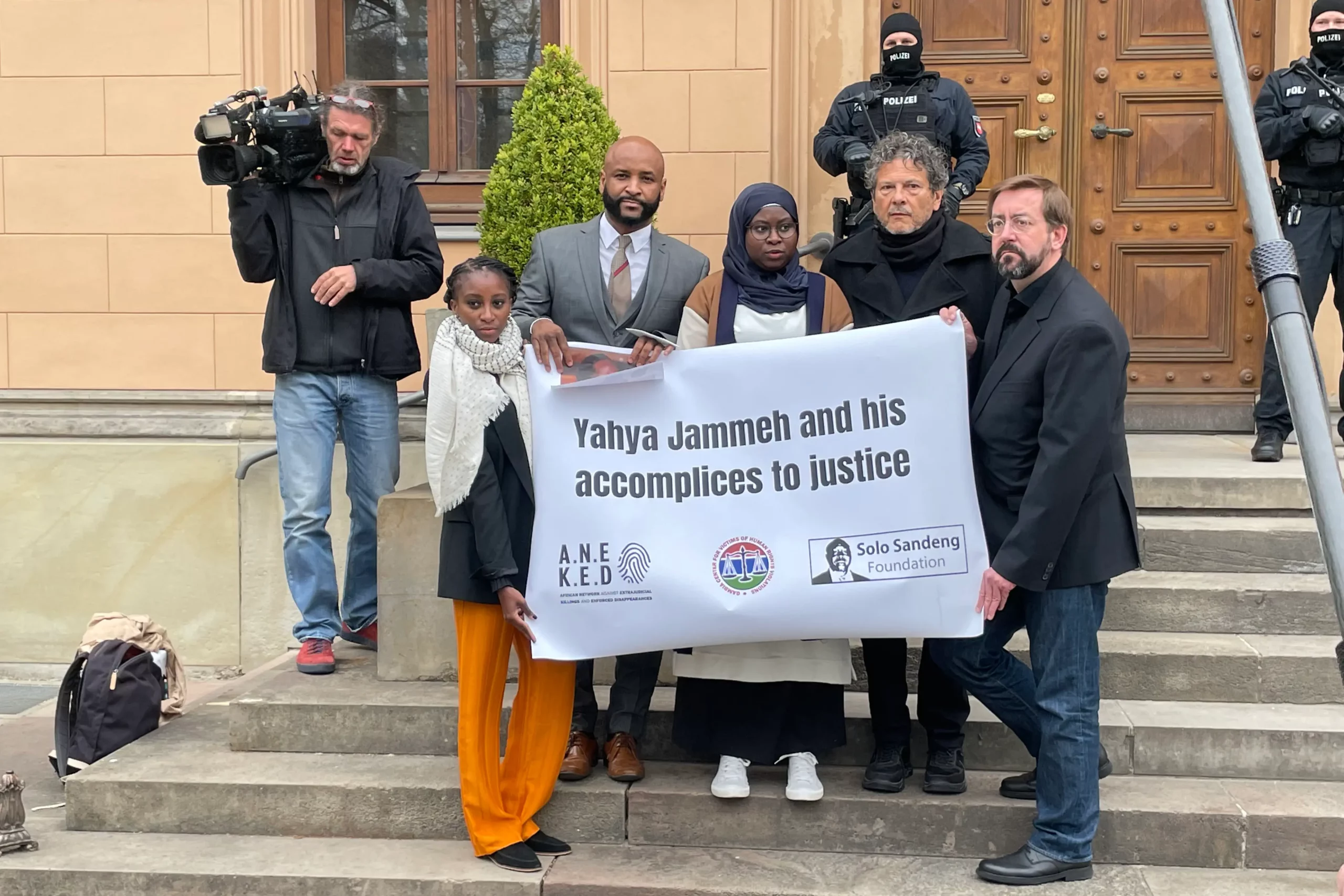
Bai Lowe trial_Germany_Celle_2022
Victims and representatives from non-governmental organizations stand in front of the Higher Regional Court in Celle, Germany. © 2022 Whitney-Martina Nosakhare/HRW

The former Gambian Interior Minister Ousman Sonko is charged with crimes against humanity relating to torture, kidnapping, sexual violence, and unlawful killings between 2000 and 2016 under then-President Yahya Jammeh. Jammeh’s 22-year rule was marked by systematic and widespread human rights violations, such as arbitrary arrests, torture including sexual violence, extrajudicial killings, and enforced disappearances of actual and perceived opponents to his rule.

The trial of Ousman Sonko is another major step in the search for justice for victims of brutal crimes and their families committed under Jammeh’s rule,” said Sirra Ndow, coordinator of the Jammeh2Justice campaign. “The Sonko case should reinforce efforts back in The Gambia to try crimes under Jammeh’s rule so that perpetrators are held to account for the atrocities committed.”

Sonko was arrested in Bern, Switzerland on January 26, 2017, the day after TRIAL International filed a criminal complaint against him. The Office of the Attorney General of Switzerland filed an indictment against Sonko before the Federal Criminal Court on April 17, 2023. The trial, taking place in the city of Bellinzona, is expected to last about three weeks.

The trial is possible because Swiss law recognizes universal jurisdiction over certain serious international crimes, allowing for the prosecution of these crimes no matter where they were committed and regardless of the nationality of the suspects or victims. Swiss nongovernmental organizations, former federal prosecutors, members of parliament, and others have previously criticized judicial officials in Switzerland for lagging behind other European countries on universal jurisdiction cases despite having solid legislation to address serious crimes.

With Sonko’s trial, Switzerland appears at last to be gaining momentum on prosecuting atrocity crimes committed abroad,” said Philip Grant, executive director at TRIAL International, which supports plaintiffs in the case. “Sonko is the highest-level former official to be tried under the principle of universal jurisdiction in Europe.”

Sonko is the second person to be tried in Switzerland before a non-military court for serious crimes committed abroad, the second person to be tried in Europe for crimes committed in The Gambia, and the highest ranked official to be prosecuted in Europe on the basis of universal jurisdiction. Gambian activists and survivors, and international advocates will attend the trial’s opening in Bellinzona and are available for comment. The first case addressing crimes committed in The Gambia was in Germany against Bai Lowe, a former member of the paramilitary unit known as the “Junglers,” which Jammeh created. Lowe was convicted and sentenced to life in prison by a German court on November 30, 2023, for two murders and an attempted murder, constituting crimes against humanity.

A major challenge will be to ensure that Gambians, whether in the audience or outside the courtroom, can access, follow, and understand the proceedings, which will be conducted in German. Survivors, victims’ groups, and civil society groups have tried to ensure that information on developments is disseminated within The Gambia to increase their impact.

Developments in the proceedings of such a significant case should be made accessible to Gambians, victims and non-victims alike, in the English language, which they understand, thereby boosting their interest in the trial,” said Fatoumata Sandeng, a plaintiff in the Sonko case who heads the Solo Sandeng Foundation. “Greater action on accountability by the government back home in Gambia is also needed.”

Since Jammeh’s fall, The Gambia has moved forward with only two prosecutions for Jammeh-era crimes. In December 24, 2021, the final report of Gambia’s Truth Reconciliation and Reparations Commission(TRRC) found that Jammeh and 69 of his associates committed crimes against humanity, and called for their prosecution. On May 25, 2022, the Gambian government accepted the TRRC’s recommendation for accountability, but without an action plan.

On May 12, 2023, the government presented a long-awaited detailed implementation plan calling for the creation of a Special Prosecutor’s Office to complete the investigations initiated by the TRRC and to prepare case-ready dossiers. A hybrid tribunal of Gambia and the Economic Community of West African States (ECOWAS) would be created to carry out prosecutions of the most serious offenses. The Gambia and ECOWAS have created a joint technical committee to develop the hybrid court.

The Gambian government and ECOWAS should move without delay to create the hybrid court,” said Elise Keppler, associate international justice director at Human Rights Watch. “Victims and the Gambian public have waited a very long time to have the chance to see justice done.”

Groups involved with the campaign include: Africa Center for International Law and Accountability (ACILA), African Network Against Extrajudicial Killings and Enforced Disappearances (ANEKED), Amnesty International–Ghana, Center for Justice and Accountability (CJA), Commonwealth Human Rights Initiative (CHRI), Gambia Center for Victims of Human Rights Violations, Ghana Center for Democratic Development (CDD-GHANA), Human Rights Advocacy Center, Human Rights Watch, International Commission of Jurists, Institute for Human Rights and Development in Africa (IHRDA), Media Foundation for West Africa (MFWA), POS Foundation, Right 2 Know–Gambia, Solo Sandeng Foundation, The Toufah Foundation, TRIAL International, and Women’s Association for Victims’ Empowerment (WAVE).

For more information on the trial, please visit:
https://trialinternational.org/latest-post/ousman-sonko-case-the-second-trial-for-crimes-against-humanity-in-switzerland-to-take-place-in-january-2024/ or read our Frequently Asked Questions about the case.

For more Human Rights Watch reporting on The Gambia, please visit:
https://www.hrw.org/africa/gambia

For more information, please contact:

  • For Human Rights Watch, in New York, Elise Keppler (English, French): +1-917-687-8576 (mobile); or kepplee@hrw.org. Twitter: @EliseKeppler
  • For TRIAL International, in Geneva, Vony Rambolamanana (English, French, German): +33-66 -48-80-305 (mobile); or media@trialinternational.org. Twitter: @trial
  • For ANEKED, in New York, Nana-Jo Ndow (English, French, Spanish, Portuguese): +1-929-684-5734 (mobile); or nanajo.ndow@aneked.org. @theANEKED
  • For International Commission of Jurists, in Barcelona, Reed Brody (English, Spanish, French, Portuguese): +1-917-388-6745 (mobile); or reedbrody@gmail.com. Twitter: @reedbrody
  • For Solo Sandeng Foundation, in Germany, Fatoumatta Sandeng (English, German, Mandinka, Wollof) +49-16-31-74-75-19 (mobile); or solosandengfoundation@gmail.com. Twitter: @solosandengfound

(Geneva, 4 January 2024) – The trial of Ousman Sonko, former Gambian Minister of Interior, will open before the Swiss Federal Criminal Court on 8 January 2024 and last until 30 January. Ousman Sonko is accused of multiple counts of crimes against humanity, allegedly committed under the regime of former Gambian President Yahya Jammeh. TRIAL International filed the criminal complaint against Ousman Sonko in January 2017.

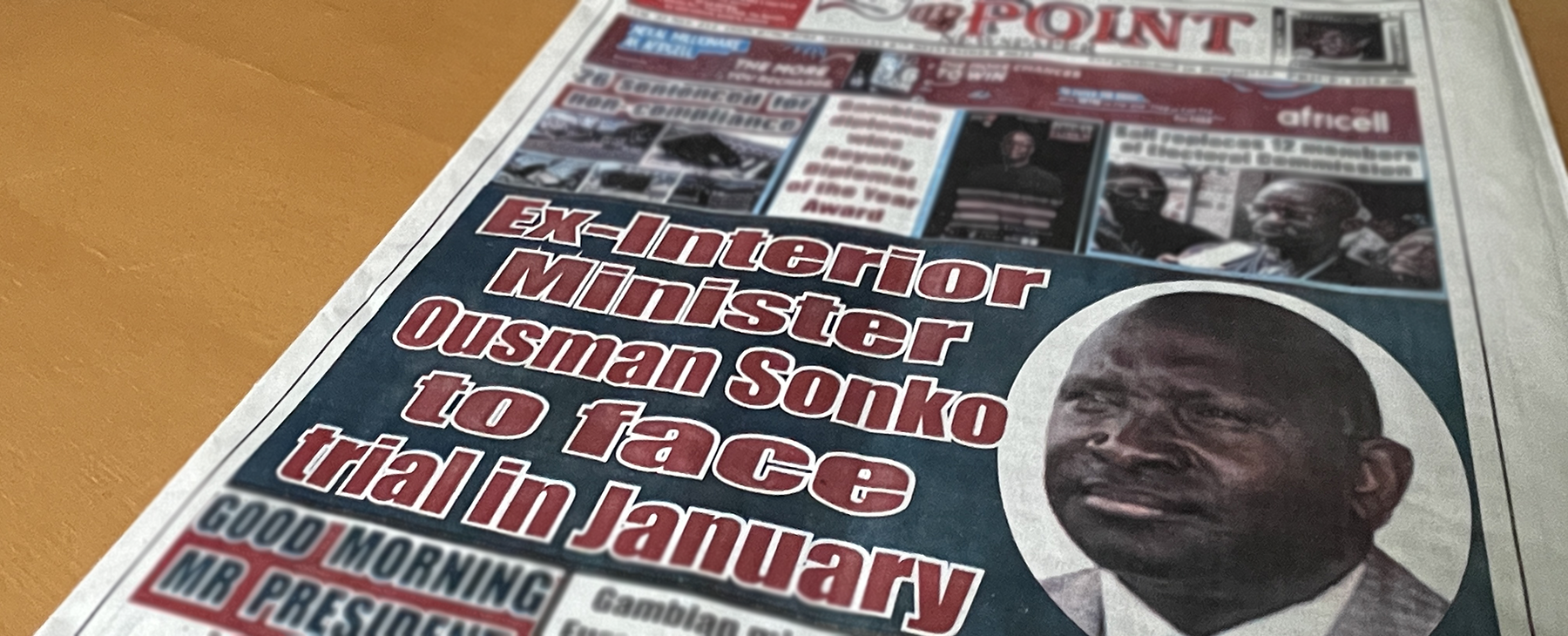
Banner_CP ouverture procès Ousman Sonko Gambia

Frontpage of Gambian national media reporting about Ousman Sonko’s trial in Switzerland.

The Swiss prosecuting authorities have charged Mr. Sonko with a range of heinous acts: the killing of a political opponent in 2000; acts of sexual violence between 2000 and 2002, as well as in 2005; involvement in torture and illegal detention related to a coup plot in March 2006; and the murder of a politician in 2011. The Office of the Attorney General also accuses Ousman Sonko of having co-perpetrated deprivation of liberty and acts of torture of peaceful demonstrators in 2016, when he was Minister of the Interior. These acts have been qualified by the Swiss prosecutor as crimes against humanity.

This trial is a significant moment in Swiss judicial history, being only the second trial for crimes against humanity in the country. Ousman Sonko will also be the highest-ranking state official ever to be tried for international crimes under the principle of universal jurisdiction in Europe”, said Leslie Haskell, President of TRIAL International. Under this principle, States have the possibility to prosecute the perpetrators of international crimes on their territory, regardless of where the crimes were committed or the nationality of the perpetrators and victims.

TRIAL International is supporting nine plaintiffs who will travel all the way to Bellinzona to be heard by the court. Unfortunately, a tenth passed away in October 2023, due to lasting consequences of her mistreatment at the time. This trial shines a beacon of hope for victims of the atrocities committed during Jammeh’s 1994-2016 reign of terror. On 30 November 2023 already, a former member of a paramilitary unit known as “Junglers”, created by the former President, was sentenced by a German court to life imprisonment for crimes against humanity, in relation to two murders and an attempted murder. Another alleged member of the same death squad, Michael Correa, is scheduled to stand trial in Denver, USA, in September 2024. He faces charges of torture and conspiracy to commit torture.

While the transitional justice process in The Gambia remains too slow, these trials in Germany and Switzerland are finally providing the closure that the victims have been waiting for too long now”, said one of the plaintiffs, whose identity remains hidden at this stage. Indeed, a possible recognition of Ousman Sonko’s role in the abuses committed during Jammeh’s dictatorship will not only contribute to reducing impunity for the violations that took place in The Gambia during Mr. Jammeh’s regime, but may also spur domestic prosecutions, propelling the transitional justice process initiated in 2017.

The proceedings will be in German and open to the public and the media. However, there will be no interpretation provided other than when the defendant, the victims and English-speaking witnesses will take the stand. TRIAL International expresses regret over this decision, which will limit the ability of plaintiffs, journalists and the Gambian community to fully comprehend and report on the proceedings. Upholding the principle that “justice must not only be done but be seen to be done,” TRIAL International advocates for meaningful access to such a historic trial for victims and the affected Gambian communities.

The trial of Ousman Sonko, former Gambian Minister of Interior, will open on 8 January 2024 before the Swiss Federal Criminal Court (FCC).

Ousman Sonko is accused of multiple counts of crimes against humanity, allegedly committed between 2000 and 2016, during the rule of former Gambian dictator Yahya Jammeh.

This will be the second trial for crimes against humanity in Swiss judicial history. Moreover, Ousman Sonko will be the highest-ranking state official ever to be tried for international crimes in application of the principle of universal jurisdiction in Europe.

The trial of Ousman Sonko will open on Monday 8 January 2024 before the FCC, situated in Bellinzona, Ticino, Switzerland. It is planned to last until 30 January, with a week reserve time between 4-8 March 2024.

The proceedings will be in German and open to the public and journalists within the limits of the available courtroom space.

Interest journalists can request accreditation with the General Secretariat of the FCC.

Further information provided by the FCC.

Contact: media@trialinternational.org, +41 22 519 03 96

TRIAL International will be present in Bellinzona during the trial.

For more details on the case, you can read our article of 3 November 2023, our press release of 18 April 2023 and our Q&A. (available in English, French and German)

  1. Who is Bai L. and what are the charges against him?

Bai L. is a 48-year-old Gambian citizen who is alleged to have been a member of the “Junglers” death squad, a paramilitary unit also known as the “Patrol Team” created by the former Gambian President Yahya Jammeh. According to the indictment, “the aim of [the Junglers’] operations was to intimidate the Gambian people and suppress the opposition.” Bai L. is charged with five counts of crimes against humanity. German prosecutors accuse Bai L. of being involved in the attempted murder of Ousman Sillah, a lawyer, in 2003, as well as in the murder of Deyda Hydara, a journalist, in 2004, the attempted murder of Ida Jagne and Nian Sarang Jobe, who were with Hydara, and the murder  former Gambian soldier Dawda Nyassi, in 2006.

Bai L. has been in pretrial detention since his arrest in March 2021 in Germany, where he had been living since leaving The Gambia 2012. This trial, which began on April 25, 2022 in the German city of Celle, is the first to tackle human rights violations committed in The Gambia during the Jammeh era on the basis of universal jurisdiction.

  1. Why is Bai L. being tried in Germany?

Bai L.’s trial in Germany is possible because the country’s laws recognize universal jurisdiction over certain serious crimes under international law, allowing for the investigation and prosecution of these crimes no matter where they were committed, and regardless of the nationality of the suspects or victims. Because Bai L. is living in Germany, German authorities are under an obligation to prosecute the case.

Universal jurisdiction cases are increasingly important in international efforts to hold those responsible for atrocities accountable, to provide justice to victims who have nowhere else to turn, to help deter future crimes and to ensure that countries do not become safe havens for human rights abusers. A number of European countries have ongoing investigations and prosecutions related to grave abuses committed abroad in places such as the Democratic Republic of CongoIraqLiberiaSyria, and Ukraine.

German authorities have been leaders in conducting prosecutions based on universal jurisdiction. In January 2022, a German court in Koblenz convicted a former Syrian intelligence officer for crimes against humanity and sentenced him to life in prison. In the 2023 edition of TRIAL International’s Universal Jurisdiction Annual Review, eight universal jurisdiction cases have been listed in Germany for the year 2022, seven of them relating to Syria, and the Bai L. case relating to The Gambia.

  1. What was the human rights situation in The Gambia under Yahya Jammeh?

Yahya Jammeh’s 1994-2017 rule was marked by systematic oppression of real or perceived opponents. The government targeted, among others: journalists, human rights defenders, student leaders, religious leaders, political opposition members, judiciary officials, and lesbian, gay, bisexual, transgender and queer (LGBTQ) people. This resulted in serious human rights violations, including torture, extrajudicial killings, enforced disappearance, and sexual violence.

Many of these human rights violations were brought to light during the hearings of The Gambia’s landmark Truth, Reconciliation and Reparations Commission (TRRC), which was set up in 2018. A total of 393 witnesses, including victims and former government insiders, testified during over two years of public hearings.

Witnesses at the TRRC, including direct perpetrators, linked Jammeh to the killing and torture of political opponents, the murder of 59 West African migrants, and “witch hunts” in which hundreds of people were arbitrarily detained, among other crimes. They also alleged that Jammeh raped and sexually assaulted women and ran a sham HIV-treatment program.

  1. Who were the victims of Bai L.’s alleged crimes?

Ousman Sillah was one of the lawyers of Baba Jobe, former leader of the parliament majority who had been close to Jammeh but was later jailed for alleged tax evasion. Jobe died in 2011 under controversial circumstances while in prison. Sillah survived a December 2003 attack on his life, purportedly carried out as retaliation for his aggressive defense of Jobe. Bai L. allegedly was driving the vehicle used by the Junglers during this operation.

Deyda Hydara was a renowned Gambian journalist, co-founder, and primary editor of The Point Newspaper, as well as an Agence France Presse (AFP) and Reporters Without Borders’ (RSF)  correspondent in the country. He had a widely read column in The Point, “Good morning, Mr President,” on Gambian politics. According to RSF, Hydara was being spied on by Gambian intelligence services just before his death. Hydara was killed on December 16, 2004. Bai L. is accused of driving the killers to and from the scene and having used his car to cut off Hydara’s car.

Dawda Nyassi was a Gambian citizen who had gone to fight in Liberia’s civil war. When he returned to The Gambia, he was allegedly shot by members of the Junglers in 2006 because he was suspected of having plans to overthrow Jammeh. Here again, Bai L. allegedly drove the killers to the crime scene during this Junglers-led operation.

The TRRC found that Jammeh ordered the Junglers to murder Sillah, Hydara and Nyassi. Gambia’s TRRC also called for Bai L.’s prosecution in the murder of the 59 West African migrants in 2005. He is not charged for this crime in Germany, however, NGOs have called for German authorities to investigate this massacre as well. Martin Kyere, a key witness to this crime, testified in Celle (see below).

  1. What evidence has been presented at the trial?

The prosecution submitted two long and publicly accessible interviews which Bai L. gave to Pa Nderry M’Bai, editor of Freedom Radio, a Gambian opposition station based in the United States  in 2013, and to leading Gambian journalist and host of the Fatu Network, Fatou Camara in 2014. In those interviews given after Bai L. had left The Gambia and was living in Germany, he described in great detail the Hydara and Nyassi killings, as well as the Sillah shooting. He also talked in those conversations about his role as a driver in those acts as well as in the murder of the West African migrants, the execution of former intelligence chief Daba Marenah and four associates in April 2006, and the murder of Jammeh’s cousin Haruna Jammeh. According to Bai L., Jammeh was allegedly behind each of the Junglers’ operations. Considerable evidence was presented at the trial, including from the defense, related to the circumstances, the authenticity, and the truthfulness of those interviews, as well as to Bai L.’s motives for conducting the interviews. This evidence included thousands of chats and photos taken from Bai L.’s telephone and of conversations he had with others about the interviews and about his time in The Gambia.

Other witnesses included German investigators, a German expert on The Gambia’s history, a former Gambian Jungler who had given a prior statement that Bai L. was a Jungler (though at trial he chose to remain silent), Bai L.’s former trainer in the army who testified that Bai L. was a Jungler, the German asylum judge who interviewed Bai L. during which he described his role in the Hydara killing, acquaintances of Bai L. who placed him as a member of the Junglers, Ida Jagne and Nian Sarang Jobe who were both passengers in the car Deyda Hydara was driving when he was killed, and Pap Saine, co-founder with Deyda Hydara of The Point newspaper. Deyda Hydara’s son, Baba Hydara, who is also a journalist, as well as his younger brother Deyda Hydara Jr., Fatou Sillah, daughter of Ousman Sillah, and Omar Nyassi, son of Dawda Nyassi, testified as well. Additionally, a former driver at the State House provided an alleged alibi, explaining that on the night of Deyda Hydara’s assassination, he was transporting equipment with the accused to Kanilai. Much of the evidence centered on the Hydara case over the other two.

Transcripts and recordings of the TRRC proceedings which mentioned Bai L.’s alleged participation in the crimes were also entered into evidence. On the issue of whether Bai L. was a Jungler, Martin Kyere of Ghana, the sole known survivor of the massacre of the West African migrants, testified that he recognized Bai L. in a photo line-up organized by the German police as well as in court from interactions they had when Kyere was detained in 2005. In one instance, Kyere said, Bai L. pushed him during the migrants’ initial arrest and a second time he took Kyere to the pick-up truck he was driving, in which they were taken into the forest where all of Kyere’s companions were killed. Kyere admitted that he had seen photos of Bai L. on the internet and the defense argued that after 18 years, his identification of Bai L. could not be relied upon.

  1. What has Bai L. said about the charges?

In October 2022, when Bai L. expressed himself for the first time since the beginning of his trial, he offered a statement read out by his lawyers in which he said that he left The Gambia in 2012 after soldiers came twice to his house to arrest him, and claimed that the information he shared on the murders during the 2013 and 2014 interviews were based on elements narrated to him beginning in 2006 by Junglers he knew, and that, although he had not been part of the Junglers, he was encouraged by journalist Pa Nderry M’Bai to pose as a former Jungler to “make the people in The Gambia believe the truth” about Jammeh’s crimes. Pa Nderry M’Bai who died in 2021 could not be heard in court in this regard. Bai L. said that by posing as a Jungler, he thought he would add credibility to the accounts given to him by others. “It did, finally, lead to the people in The Gambia knowing the truth about Jammeh,” he said in his statement, while denying his participation in the murders and attempted murder tried in court: “I did not participate in any of these acts.”

A former Gambian officer said that, in his own interview with journalist Pa Nderry M’Bai, he was also instructed by the journalist to pose as Jungler and as a direct eyewitness to the events described, in order to make them more credible to the Gambian public. Others contested the veracity of this officer’s account. Journalist Fatu Camara, who interviewed Bai L. in 2014, also testified that she could not imagine Pa Nderry M’Bai giving instructions of this nature to his interviewees; and that in her own interview, there were no signs pointing to the possibility that what the accused was sharing about their implication in these murders was untrue.

  1. How have survivors and victims been involved in the proceedings?

Deyda Hydara’s son, Baba Hydara is a joint plaintiff in the trial against Bai L., alongside Dawda Nyassi’s sons Omar and Modou Nyassi, as well as Ida Jagne, Deyda Hydara’s former colleague who was present in the car Hydara was driving when he was shot, and incurred injuries during the attack.

Under German law, a victim of certain crimes charged in the trial or a family member of a victim who was killed can join a criminal proceeding as a joint plaintiff, thereby becoming a formal party to the proceeding.

The joint plaintiffs and their lawyers were present at the trial and were able to enjoy the same procedural rights as the prosecution and the defense such as questioning witnesses and experts, filing and reacting to procedural motions, and requesting evidence to be introduced into the trial. Baba Hydara and Omar Nyassi also gave closing statements.

  1. What sentence does Bai L. face if he is convicted?

If convicted by the Higher Regional Court of Celle, Bai L. could face up to life in prison. Judgments by Higher Regional Courts in Germany can be appealed at the German Federal Court of Justice.

  1. Will Yahya Jammeh or other high-level officials be prosecuted for serious crimes committed in The Gambia?

Jammeh is currently in Equatorial Guinea, where he sought exile in January 2017 after losing the December 2016 presidential election to Adama Barrow. Since his fall, The Gambia has moved forward with only two prosecutions for Jammeh-era crimes. On July 14, 2021, Yankuba Touray, former minister of local government in the early days of Jammeh’s military junta, was found guilty of the 1995 murder of former finance minister Ousman Koro Ceesay. On July 13, 2022, after a five-year trial, a Gambian court convicted Yankuba Badjie, the former Director-General of the National Intelligence Agency (NIA), and five others for the 2015 murder of opposition leader Solo Sandeng who died in custody after leading a peaceful march for political reform.

On December 24, 2021, the final report of Gambia’s TRRC was published, concluding that Jammeh and 69 of his associates committed crimes against humanity and calling for itheir prosecution. On May 25, 2022, the Gambian government responded with a White Paper accepting the TRRC’s recommendation that those responsible be prosecuted, though without presenting a plan for how to do so, despite the fact that such a TRRC recommendation had been predictable for many years.

Indeed, since 2019, the Gambia Bar Association had independently led a series of multi-stakeholder consultations on how any trials recommended by the TRRC should be conducted. These discussions resulted in a consensus in favor of a “hybrid” court, anchored on a treaty with Economic Community of West African States (ECOWAS), with both Gambian and international staff, with a framework tailored to the prosecution of the worst Jammeh-era crimes that would ultimately build the capacity of the national justice system.

The hybrid court proposal was also backed by the United Nations Working Group on Enforced Disappearances. Finally, at an international stakeholders conference on May 12, 2023, the government presented a long-awaited detailed implementation plan for the TRRC recommendations, calling for the creation of a Special Prosecutors’ Office to complete the investigations initiated by the TRRC and to prepare case-ready dossiers, followed by a Gambia-ECOWAS hybrid tribunal to carry out prosecutions of the most serious offenses.

The Gambia and ECOWAS have created a joint technical committee to develop the modalities for the hybrid court. Given how long victims and Gambian society have now waited for accountability, and how long it took the government to propose a concrete implementation plan, the government and ECOWAS should move quickly to establish the hybrid court so that it can commence work.

  1. Could Bai L. be tried in The Gambia as well?

When The Gambia begins to prosecute those designated by the TRRC, it could request Bai L.’s extradition from Germany to stand trial. The principle of double jeopardy (ne bis in idem) enshrined in international law and the Gambian constitution would prevent The Gambia from prosecuting him for any of the acts included in the indictment in the current trial, however.

  1. Is anyone else being prosecuted under universal jurisdiction for crimes committed in The Gambia during the Jammeh era?

Bai L. is not the first person to have been indicted outside of The Gambia for crimes committed in Gambia under Jammeh. Another alleged Jungler, Michael Correa, 44, was indicted in the United States in June 2020 on charges of torturing individuals suspected of having plotted a coup in The Gambia in 2006. He is currently awaiting trial, which is scheduled to start on September 16, 2024 before the US District Court of Colorado in Denver.

On April 17, 2023, Swiss prosecutors indicted Ousman Sonko, former Interior Minister of The Gambia, on charges of crimes against humanity, six years after his first arrest in Bern. Sonko is the highest-ranking individual to be prosecuted in Europe under the principle of universal jurisdiction. He is accused of the killing of a perceived political opponent, acts of sexual violence, the murder of a politician, as well as of having been involved in deprivation of liberty and acts of torture– including against Solo Sandeng, which led to his death. His trial before the Swiss Federal Criminal Court in the city of Bellinzona will open on January 8, 2024.

  1. How accessible has the trial been to the public and journalists and affected communities in Gambia?

Distance, language, and the lack of an outreach program have made it difficult for Gambians to follow the trial. The trial is taking place on a different continent, in a foreign language, without audio or video coverage to those not in the courtroom, with no transcripts and little press coverage.

Due to Covid-19 restrictions, there has been a limited number of seats available for the public in the courtroom. According to the March 30, 2022 news release of the Higher Regional Court of Celle, 15 seats were available for accredited journalists, and one was reserved for Gambian journalists. The court has been welcoming towards the press, including Gambian journalists, two of whom attended the opening and another two who travelled to Celle in June 2022 to document the trial. The trial has not received sustained attention in the international press, with some exceptions such as three articles on the website JusticeInfo.net.

The trial has been conducted in German with an interpreter for the defendant who alternated between Wolof and English. Unlike the above-mentioned Koblenz trial, where the interpreter’s feed was only available to accredited journalists, at Celle, the interpreter’s feed has been available upon request to all those present in the courtroom.

The verdict will first only be available in German, and no official transcript of trial proceedings in any language will be provided once the trial concludes. The Higher Regional Court in Celle published one news release about the opening of the trial in English. Legislation is pending in Germany that would foresee the translation of important judgments in international crimes cases to English. Generally, it takes several months until a written judgment is rendered, following the oral one. A translation to English by the German Ministry of Justice would take additional time.

To be meaningful, justice should not only be done, but be seen to be done. Research by Human Rights Watch, the European Center for Constitutional and Human Rights (ECCHR) and others has shown that the impact of accountability efforts on affected communities strongly correlates to outreach efforts. As Germany is acting on behalf of the international community through this trial, information should be more accessible to those most affected by the crimes. The court should consider ways to address this, for instance by making the verdict accessible in the relevant national languages and by facilitating the work of media representatives that are part of and report for the affected communities.

To ensure some record of the trial, TRIAL International and the International Commission of Jurists organized a trial monitoring program with a team from Georg-August-University of Göttingen for the entire duration of the trial. The students attended each hearing and took detailed notes in English. These notes were shared with Gambian civil society groups such as African Network against Extra-judicial Killings and Enforced Disappearances (ANEKED) and the Solo Sandeng Foundation, which could then use them to inform their constituents about the proceedings. The Point newspaper in Gambia and Journalists for Justice published articles based on the students’ reporting as well.

This question-and-answer document has been prepared by ANEKED, ECCHR, the Gambian Center for Victims of Human Rights Violations, Human Rights Watch, the International Commission of Jurists, Reporters Without Borders, the Rose Lokissim Association, the Solo Sandeng Foundation and TRIAL International.
The trial of Ousman Sonko – the former Gambian Interior Minister accused of having committed multiple crimes against humanity – will open on 8 January 2024 before the Federal Criminal Court in Bellinzona, Switzerland.

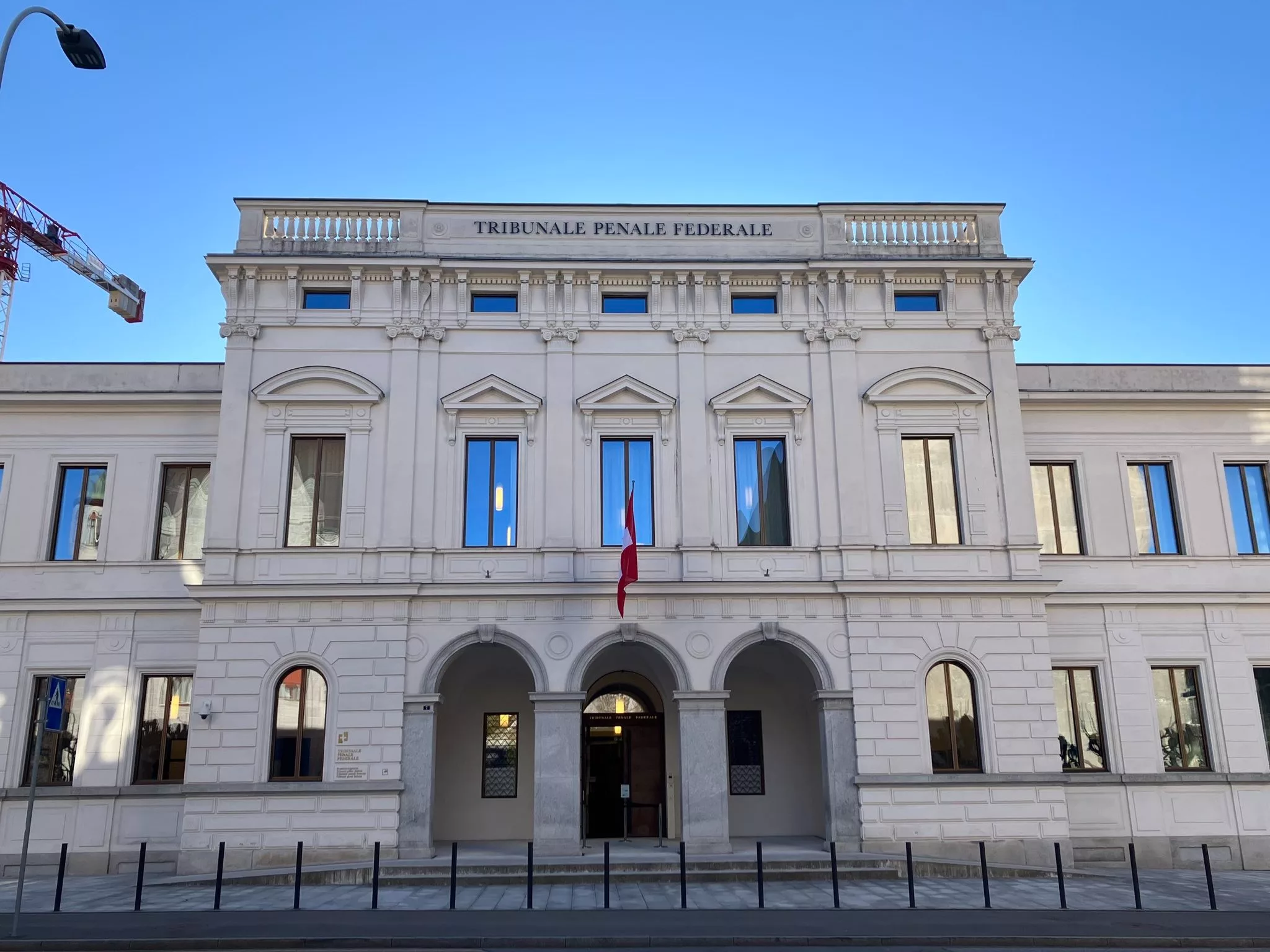
Tribunale Penale Federale_Bellinzona_Wikimedia
The building of the Federal Criminal Court in Bellinzona, Switzerland. © Wikimedia Commons

This will be the second trial for crimes against humanity in the Swiss judicial history. Moreover, Ousman Sonko will be the highest-ranking state official ever to be tried for international crimes in application of the principle of universal jurisdiction in Europe.

With the dates of the opening of the trial, the victims’ hope of finally seeing their abuser brought to justice becomes a reality. “Some of the victims have fought this battle for more than twenty years, and Swiss justice must live up to their expectations” stresses Vony Rambolamanana, Senior Legal Advisor at TRIAL International.

A possible recognition of Ousman Sonko’s role in the abuses committed during Yahya Jammeh’s regime would be an important sign for the transitional justice process undertaken by the Gambia in 2017. The recent news of the arrest of a human rights defender, a journalist and other activists raises fears of an upsurge in repressive measures against those who oppose the government. The trial of one of the senior officials of the Jammeh regime could send a strong signal, and give new impetus, to the search for truth and justice for which many Gambians have worked to date.

As a reminder, the accused was arrested in Bern on 26 January 2017. The day before, TRIAL International had filed a criminal complaint against him. On 17 April 2023, after more than six years of investigation, the Office of the Attorney General of Switzerland (OAG) filed an indictment before the Federal Criminal Court. The OAG accuses Ousman Sonko for having taken part in numerous acts of torture, kidnapping, sexual violence and killings perpetrated between 2000 and 2016 in The Gambia.

The fact that the case is finally going to trial is very important for our clients” says lawyer Fanny de Weck. “This trial should notably show whether hierarchical superiors – and not just those who executed the crimes – can be held to account on the basis of universal jurisdiction” adds lawyer Nina Burri. Both lawyers are representing private plaintiffs in the trial against Ousman Sonko.

The proceedings will be in German and open to the public and journalists within the limits of the available courtroom space.

Interest journalists can request accreditation with the General Secretariat of the FCC.

Further information provided by the FCC.

For more details: read our press release of 18 April 2023 and our Q&A. (available in English, French and German)

Between 2014 and 2017, The Gambia exported nearly 163 million US dollars-worth of rosewood, a rare and precious tree species, to China. During this time, Westwood, a Gambian company presumably owned by Swiss national Nicolae Bogdan Buzaianu and former Gambian President Jammeh, had the exclusive license to export rosewood. The timber it exported was illegally felled in neighboring Casamance where the separatist armed group has been fighting the Senegalese army for decades. TRIAL International filed a criminal complaint with the Swiss Office of the Attorney General against Mr. Buzaianu accusing him of having pillaged conflict timber.

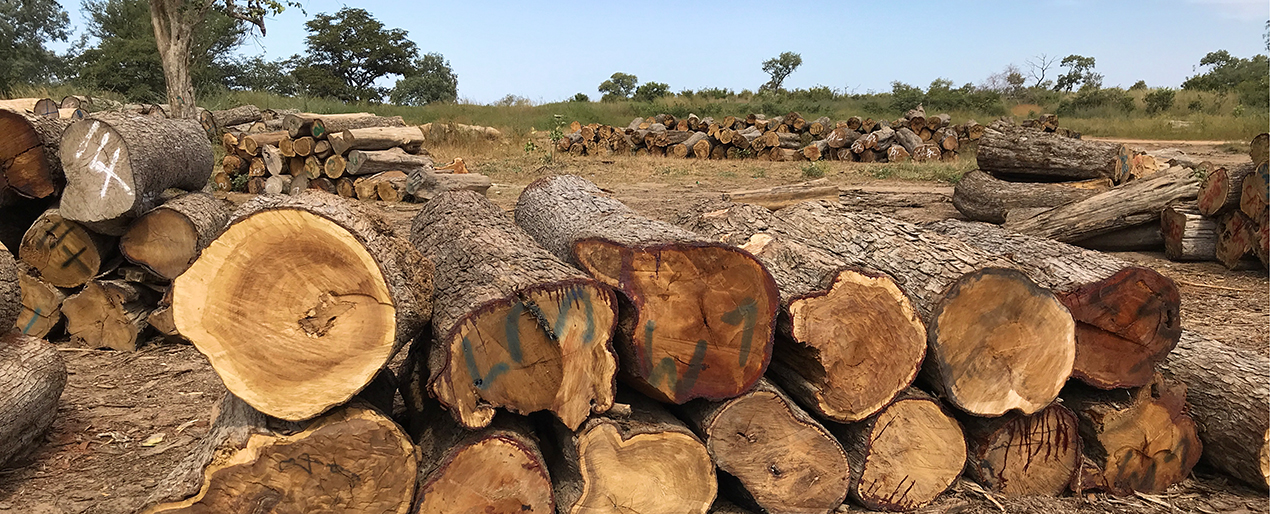
The logs felled in the Senegalese region of Casamance were smuggled across the Gambian border and left in open depots before being sold to traders. ©TRIAL International

According to the criminal complaint (dénonciation pénale) filed by TRIAL International, Swiss businessman Nicolae Bogdan Buzaianu’s company was involved in the pillaging of precious rosewood from Casamance between 2014 and 2017. During this period, Westwood Company Ltd – which, according to TRIAL International’s findings, Mr. Buzaianu co-founded with former Gambian President Yahya Jammeh – had a monopoly on the export of rosewood, a precious tropical wood from The Gambia. But with Gambian rosewood nearly depleted since 2011, most of the timber was actually imported from Casamance, a region in southern Senegal that borders The Gambia. For several decades, large areas of this region have been under the control of the separatist armed group, the Mouvement des forces démocratiques de Casamance (MFDC).

“Exploiting natural resources from a conflict zone is a war crime that must be punished. Without the pillaging of natural resources, many armed groups would have no means of financing their wars’, said Montse Ferrer, Senior Legal Advisor and Corporate Accountability Coordinator at TRIAL International. ‘Despite numerous documented cases of pillage, not a single conviction has been made since the end of World War II.’”

TRIAL International filed a criminal complaint for pillage against Mr. Buzaianu in Switzerland with the Office of the Attorney General (OAG) in June 2019. ‘We have waited until today to go public because we wanted to give the Swiss prosecutorial authorities sufficient time to review the evidence and, as the case may be, take decisive action against Mr. Buzaianu. We are hopeful that these steps have been taken and that the OAG is investigating the matter’, she added.

LOGGING THAT BENEFITS AN ARMED GROUP

Some estimates suggest that Senegal loses the equivalent of 40,000 hectares of forest per year, several dozen hectares of which are lost due to the illegal exploitation of rosewood in Casamance. This selective deforestation has led to a decrease in rainfall and increased desertification in the region. It has also led to conflicts between rebels and communities who can no longer use the forests for sustainable livelihoods.

Illegal logging of precious woods is problematic, as it undermines reforestation efforts in the region. According to the International Institute for Environment and Development (IIED), “in the village of Koudioube, the restoration of the community forest has helped to overcome conflicts.” Illegal logging has stopped, fruits and wildlife are abundant, and local people are once again able to sell forest products. Communities that used to fight each other are now working together.

A large share of the trafficking and logging has been taking place directly in the territory controlled by the MFDC for almost thirty years. ‘Westwood’s illegal activity is all the more serious because it contributed to an illegal timber trade that has historically financed the MFDC. Equally striking is that this trade has had such a negative impact on the lives of local people contributing directly to the deforestation of the region’, said Jennifer Triscone, Legal Advisor at TRIAL International. The armed group exercises de facto control over the precious wood industry by issuing logging authorizations and transport permits, and by ensuring the security of the latter. The rebels also illegally exploit and sell precious hardwood timber to finance their armed struggle: an illegal trade fueled by demand from the global tropical hardwood market.


  Read the full press kit