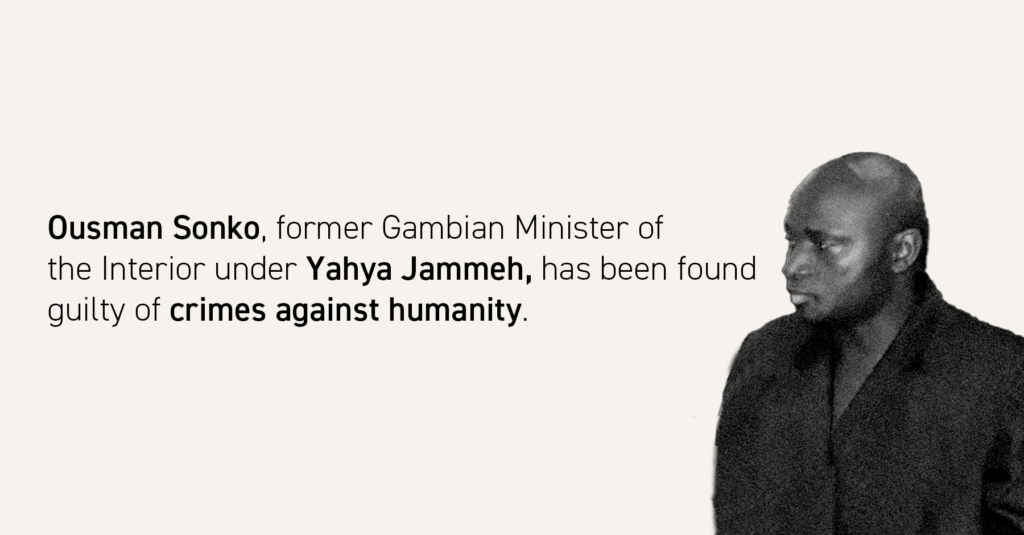
(Geneva, 30 March 2026) – Nearly a decade after his arrest, and almost two years after a landmark conviction, appeal proceedings open today in Bellinzona, offering a renewed opportunity for victims of Jammeh-era crimes to seek justice.

In May 2024, the Swiss Federal Criminal Court (FCC) found Ousman Sonko guilty of multiple counts of crimes against humanity committed between 2000 and 2016, under the rule of Gambia’s former president Yahya Jammeh. He was sentenced to 20 years in prison.

Arrested in 2017, following the filing of a denunciation by TRIAL International, Ousman Sonko is the highest-ranking official ever convicted in Europe under the principle of universal jurisdiction.

In its 2024 judgment, the FCC found Ousman Sonko guilty of the killing of a perceived political opponent in 2000; of torture and illegal detention in connection with a coup plot in March 2006; of the killing of a politician in 2011 and of deprivations of liberty as well as acts of torture – including one killing – of peaceful demonstrators in 2016. The Court further ordered Mr. Sonko to pay compensation to the plaintiffs.

The FCC discontinued all charges related to sexual violence: it found that some of the alleged acts were time-barred, while others were considered isolated incidents, and as such, could not be qualified as crimes against humanity.

The accused, the Office of the Attorney General, and ten plaintiffs have appealed the decision, each on different grounds. While the accused challenged the judgement in its entirety, the Office of the Attorney General and the plaintiffs are appealing only specific aspects of the ruling.

The appeal proceedings, which should last at least two weeks, will also see five plaintiffs travelling from The Gambia to attend the trial. “I sincerely hope that this process will bring truth, accountability, and justice. My deepest wish is that the voices of victims and survivors are heard and respected, and that this trial contributes to healing and dignity for all those who suffered.” Said Ramzia Diab Ghanim, one of the plaintiffs in the case.

As The Gambia continues efforts to establish a special tribunal to prosecute crimes committed under Yahya Jammeh’s regime, the Sonko trial forms part of a broader wave of prosecutions targeting those responsible for these crimes, including landmark convictions in Germany and the United States against members of the “Junglers” death squad.

TRIAL International will provide weekly reviews of the appeal trial, and will collaborate with the Solo Sandeng Foundation to disseminate information in The Gambia and affected communities in various local languages.

A Q&A on the appeal, and more information about the first instance trial, including daily trial monitoring, can be found here.

  • Who is Ousman Sonko and what is he accused of? 

Ousman Sonko is a former Gambian government official who served under the regime of President Yahya Jammeh. Over the course of his career, Mr. Sonko held several senior positions: commander of the State Guard, Inspector General of Police, and, from 2006 to 2016, Minister of the Interior.

He stands accused, and was convicted at first instance, of participating in crimes against humanity committed in The Gambia between 2000 and 2016.

Ousman Sonko was arrested in Switzerland in January 2017, where he had sought asylum. He was tried in 2024 under the principle of universal jurisdiction, which allows national courts to try foreign individuals suspected of international crimes regardless of where they were committed.

  • What was happening in The Gambia under Yahya Jammeh’s rule? 

Yahya Jammeh ruled The Gambia from 1994 to 2017, following a military coup. His regime was marked by widespread and systematic repression of real or perceived political opponents, including journalists, human rights defenders, members of the security forces, and individuals accused of disloyalty.

During this period, state agents, security forces and affiliated groups, most notably the “Junglers,” a paramilitary unit operating under Jammeh’s authority, were implicated in serious human rights violations. These included arbitrary arrests and detentions, torture, enforced disappearances, extrajudicial killings, and acts of sexual violence.

Many of these abuses were later documented by The Gambia’s Truth, Reconciliation and Reparations Commission (TRRC), which heard from hundreds of victims and witnesses between 2019 and 2021. Its findings highlighted the central role of the regime, including its senior officials and state institutions, in the commission of these violations, and recommended criminal prosecutions for dozens of individuals, including Ousman Sonko.

  • What happened during the first instance?

In May 2024, the Swiss Federal Criminal Court (FCC) found Ousman Sonko guilty of crimes against humanity and sentenced him to 20 years’ imprisonment. The Court held that he had participated in a systematic attack against the civilian population under Yahya Jammeh’s regime, through acts including torture, unlawful detention and killings. Sonko was found guilty of i) multiple counts of intentional homicide as crimes against humanity; ii) of multiple counts of false imprisonment as crimes against humanity; iii) of multiple counts of torture as crimes against humanity.

All charges of sexual violence were discontinued. The Court did not determine whether the alleged acts took place; instead, it held that some of the facts were time-barred and that others fell outside its jurisdiction, as they lacked a sufficient link to the broader attack against the civilian population. It also found that certain charges of sexual violence did not constitute acts of torture.

The hearings were held in Bellinzona in January and in March 2024, and 9 plaintiffs from The Gambia flew in to attend the trial.

A Q&A on the first instance proceeding can be found here.

  • What aspects of the judgement are being challenged on appeal? 

Following the judgment, all parties, namely the accused, the Office of the Attorney General and the plaintiffs, filed appeals on different grounds. While the accused challenges the judgment in its entirety, the prosecution and the plaintiffs contest only specific aspects of the ruling.

Regarding one of the plaintiffs concerned by the sexual violence allegations, the Court ruled that she was not part of the civilian population targeted by the regime, such as journalists, politicians, activists, and others who expressed real or perceived opposition. By doing so, it concluded that the acts she suffered from were privately motivated, rather than part of the broader context of the systematic attack against civilians.

In one instance, acts involving the infliction of pain to the genitals were recognised as torture as a crime against humanity, but were not characterised as sexual violence. The Prosecution and the plaintiffs concerned are challenging these aspects.

  • How does the appeal process work in Switzerland?

In Switzerland, criminal appeals trials can involve a full review of a case. In federal proceedings, appeals are heard by the Higher Appeals Chamber of the FCC. At this stage, the judges can reassess both the contested facts and the law, as well as the sentence and other measures decided in the first instance judgment. They may re-examine evidence, hear new witnesses, and either confirm, amend or overturn the original judgment on the issues challenged on appeal.

A further appeal can then be brought before the Swiss Federal Court (the “Swiss Supreme Court”), but with a more limited scope of review. The Swiss Federal Court focuses mainly on legal questions and does not normally reassess the facts. Its role is to ensure that the law was applied correctly and that the proceedings were fair.

  • Why is this case important? 

This case concerns one of the highest-ranking former government officials ever tried in Europe under the principle of universal jurisdiction.

Ousman Sonko is the most senior Gambian official to face prosecution for crimes committed under Yahya Jammeh’s rule. In Switzerland, his trial marks only the second prosecution of its kind, following the conviction of Alieu Kosiah. At the global level, Ousman Sonko is among the highest-ranking political figures ever brought to trial under this principle, alongside cases such as Hissène Habré.

Together with the convictions of Bai Lowe in Germany and Michael Sang Correa in the United States, the Swiss proceedings contribute to a growing body of judicial recognition of the crimes committed under Yahya Jammeh’s regime. This emerging jurisprudence is likely to support future prosecutions in The Gambia, including within the transitional justice process. The Swiss court itself referred to earlier findings by German courts recognising that crimes against humanity were committed in The Gambia.

  • What is TRIAL’s role in these proceedings? 

TRIAL International played a key role in initiating the case, having filed the criminal complaint that led to Ousman Sonko’s arrest in 2017. It continues to support the proceedings by liaising between the victims, their legal representatives and partner organisations in The Gambia, helping to ensure coordination, holistic support, and meaningful participation.

TRIAL International ensured on-the-ground monitoring of the first instance trial and will again report from the courtroom during the appeal.

  • What is AVLO? 

The Association of Victim-Led Organisations (AVLO) is a Gambian non-profit organisation established in January 2024 to champion and represent the interests of victims of human rights violations during the era of former president and dictator Yahya Jammeh in the implementation of the TRRC’s recommendations.

AVLO is an alliance of local victim organisations and associations, including the African Network against Extrajudicial Killings and Enforced Disappearance (ANEKED), Gambia Centre for Victims of Human Rights Violation, Survivors of the Presidential Alternative Treatment, Fantanka, Solo Sandeng Foundation, Women’s Association for Victim Empowerment (WAVE), Women in Leadership and Liberation (WILL), and Yelef Initiative. The organisation aims to advocate for and support victims and survivors of human rights violations in seeking justice and to receive reparations that are adequate, effective, prompt, and proportional to the gravity of the violations and harm the victims have suffered.

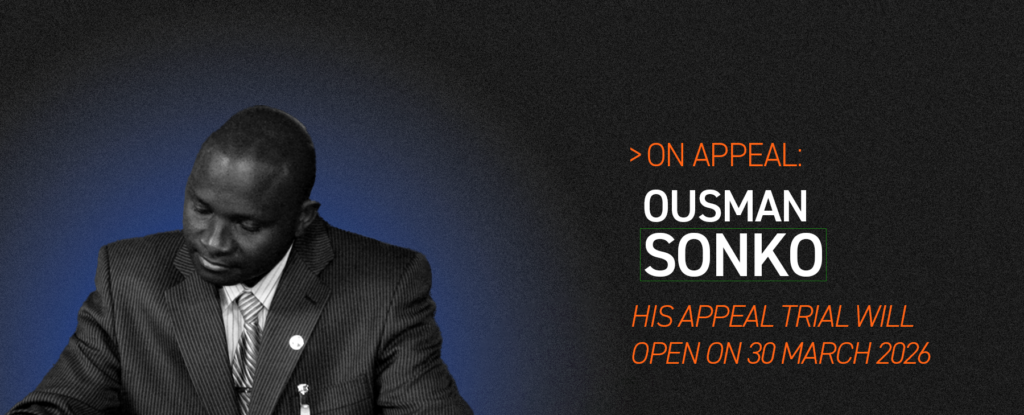
The appeal trial against former interior minister of The Gambia for crimes against humanity will open on 30 March 2026.


The appeal trial against former interior minister of The Gambia for crimes against humanity to start on 30 March 2026


What

The appeal trial of Ousman Sonko, former Interior Minister of The Gambia, will open on 30 March 2026 before the Higher Appeals Chamber of the Swiss Federal Criminal Court (FCC).

Why

On 15 May 2024, Ousman Sonko was found guilty of multiple counts of crimes against humanity for atrocities committed between 2000 and 2016, during the rule of former Gambian dictator Yahya Jammeh. He was sentenced to 20 years’ imprisonment. The accused, the Office of the Attorney General, and ten plaintiffs have appealed the decision.

His trial was the second for crimes against humanity in Swiss judicial history. Ousman Sonko was also the highest-ranking state official ever to be tried in Europe for international crimes under the principle of universal jurisdiction.

When

The appeal trial will take place on the following dates:

  • Opening of the proceedings: 30 March 2026 at 9h30
  • Hearing dates:
    • 31.03. – 02.04.2026
    • 07 – 10.04.2026
    • 14 – 17.04.2026
  • Reserve dates:
    • 20 – 24.04.2026
    • 29 – 30.04.2026

Where

Federal Criminal Court, Viale Stefano Franscini 7, 6500 Bellinzona, Ticino, Switzerland.

Accessibility

The proceedings will be in German and will be open to the public and the media, subject to available courtroom space.

Interested journalists may request accreditation with the General Secretariat of the FCC.

Further information provided by the FCC. (case CA.2025.3)

Contact

For more information, visit our case page or contact:

Anja Härtwig (English, French, German)

media@trialinternational.org

+41 22 519 03 96


TRIAL International will be present in Bellinzona throughout the appeal trial.

Denver, Colorado, USA – Today, a federal judge sentenced Michael Sang Correa to 810 months or 67.5 years in prison for torture committed in The Gambia in 2006.

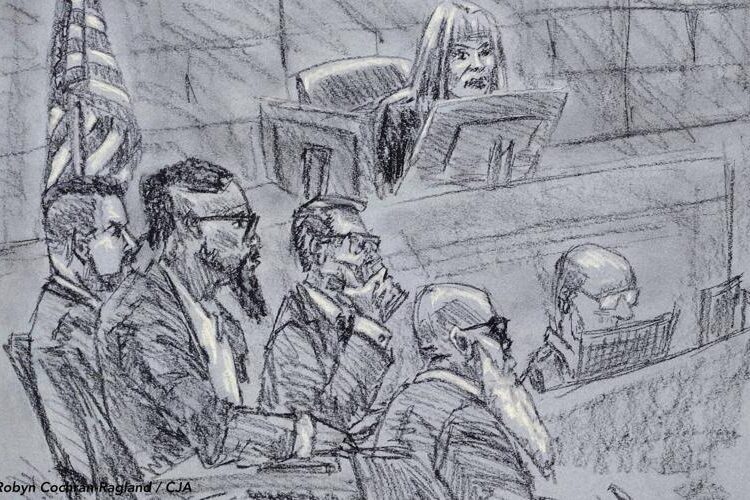
Courtroom sketch showing Michael Correa with his lawyers, during his trial in in Denver on 7 April 2025. Drawing by Robyn Cochran-Ragland / CJA.
This courtroom sketch shows Michael Correa, second from left, with his lawyers, during his trial in Federal Court in Denver on 7 April. Drawing by Robyn Cochran-Ragland / CJA.

During today’s sentencing hearing, Judge Christine M. Arguello, who presided over Mr. Correa’s trial in April, heard from victims about the impact the torture they experienced at the hands of Mr. Correa and other Junglers had on their lives and that of their families.

Yaya Darboe, a commanding officer in the Gambian Armed Forces, who had been tortured by Mr. Correa asked the Court to impose a 40-year sentence because Mr. Correa “must be held fully accountable for his actions. When I saw him in Colorado at the trial, he was smiling, showing no remorse. He tried to escape justice. He should not be allowed to do so.

Justice in this case is not only about punishment; it is about restoring faith in the rule of law for victims like me, and for the Gambian people,” said Demba Dem, a former member of The Gambia’s Parliament. “I am glad that Mr. Correa received a fair trial. It is more than I and many others received, but it is important for true justice.

Mr. Correa was initially arrested in September 2019 by the U.S. Department of Homeland Security for overstaying an expired visa. A coalition of Correa’s victims, Gambian civil society organizations, and international human rights organizations, including the Center for Justice and Accountability (CJA) and TRIAL International called on the U.S. to investigate claims that Correa committed torture. This led to his indictment for torture in 2020. CJA now represents five of Mr. Correa’s victims in the criminal prosecution with co-counsel King and Spalding LLP.

In April, a unanimous jury found Mr. Correa guilty of torture and conspiracy to commit torture. At the trial, evidence established that Mr. Correa was a member of the Junglers, a notorious death squad in The Gambia. Victims and witnesses testified that following an attempted coup against former President Yahya Jammeh’s dictatorship in 2006, Mr. Correa and other Junglers brutally tortured suspected participants in the coup, including by beating them, suffocating them with plastic bags, and subjecting them to electric shocks.

I pray that this sentence will send a resounding message to all purveyors of human suffering, that their cruelty will be met with severe punishment,” said Ramzia Diab, one of the Junglers’ victims and a survivor of torture. Ms. Diab is a former member of The Gambia’s Parliament and former Gambian Ambassador to the Association of Southeast Asian Nations (ASEAN). “It will show that the rule of law can reach even those who once believed they were untouchable.”

The case comes at an important moment for The Gambia’s transitional justice process. In 2021, the Gambian Truth, Reconciliation and Reparations Commission (TRRC) concluded that former president Jammeh and 69 of his associates, including Mr. Correa, committed crimes against humanity in The Gambia. Most perpetrators have yet to be held accountable.

Elizabeth Mendy, widow of former Gambian Armed Forces lieutenant colonel Pierre Mendy said: “The TRRC gave Pierre a chance to speak, but nothing concrete has come from it. Justice sleeps in The Gambia. The Junglers who fled hide abroad. Those who stayed walk freely.” She asked the court to sentence Correa to life imprisonment to send a message to The Gambia to find the courage to move ahead with prosecutions.

Last year The Gambia took significant steps towards justice, including passing legislation aimed at creating a war crimes tribunal in the Gambia and securing ECOWAS’s approval to establish the tribunal. Victims hope that The Gambia will act swiftly to establish its hybrid court to prosecute the remaining perpetrators identified in the TRRC report.

This decision will resonate far beyond this courtroom,” said Tamsir Jasseh, one of Mr. Correa’s victims. He currently serves as advisor to the Gambian Police and spoke during today’s hearing. “The United States’ involvement in this case has already encouraged Gambian authorities to take accountability seriously. This trial is a catalyst, a jumpstart, for our nation’s journey toward truth, justice, and healing.


About the Alliance of Victim-Led Organisations (AVLO)

The Alliance of Victim-Led Organisations (AVLO) is a coalition of Gambian civil society organizations that has been championing and representing the interests of victims of human rights violations in The Gambia.

About the Center for Justice & Accountability

The Center for Justice and Accountability (CJA) is a United States-based international human rights organization dedicated to working with communities impacted by torture, war crimes, crimes against humanity, and other serious human rights abuses to seek truth, justice, and redress using innovative litigation and transitional justice strategies.

About TRIAL International

TRIAL International is an international NGO fighting impunity for international crimes such as genocide, crimes against humanity, war crimes, torture, enforced disappearances and conflict-related sexual violence. Founded in 2002, it has offices in Switzerland, Bosnia and Herzegovina and the Democratic Republic of the Congo (DRC).


More Information

Read answers to Frequently Asked Questions here.

Or please contact:

  • Sirra Ndow, Alliance of Victim-Led Organisations, in Banjul (English): avlogambia@gmail.com, +2203737766
  • Ela Matthews, The Center for Justice and Accountability, in London (English): ematthews@cja.org, +44 78 627 28 939
  • Anja Härtwig, TRIAL International, in Geneva (English, French, German): media@trialinternational.org, +41 22 519 03 96

U.S. Federal Court will be conducting sentencing hearing of former Jungler, Michael Sang Correa on 22 August 2025, in Denver, Colorado, USA.

On 15 April 2025, after a five-day trial in U.S. federal court, a Denver jury found Michael Sang Correa guilty of five counts of torture and one count of conspiracy to commit torture. Mr. Correa was a member of the Junglers, a notorious death squad in The Gambia.

Judge Christine M. Arguello, who presided over the trial, scheduled Mr. Correa’s sentencing for 22 August 2025. Mr. Correa faces up to 120 years in prison.

During the trial, victims and witnesses who traveled to Colorado from The Gambia testified that in 2006, Mr. Correa and other Junglers brutally tortured suspected participants in an attempted coup against former President Yahya Jammeh. Fatou Baldeh, Founder & CEO of Women in Liberation and Leadership (WILL), attended the trial. “It was very moving sitting in front of Mr. Correa and seeing the evidence presented by the prosecution,” she said. “The victims were afforded an opportunity to face their perpetrator, and you could see they got their power back.” Zainab Lowe, a prominent victims’ rights advocate in The Gambia, was also present in Denver for the trial. “The jury’s unanimous verdict was felt all the way in The Gambia” she said. “It sent a strong message that The Gambia must continue to work to ensure all Junglers are held to account and that other victims of human rights abuses get justice.”

At the sentencing hearing, both the prosecution and the defense will present arguments in support of the sentences they believe should be imposed. Some of Mr. Correa’s victims will have an opportunity to present statements describing how Correa’s s crimes impacted their lives. The U.S. government is recommending that Judge Arguello impose the maximum sentence of 120 years in prison.

“Correa’s conviction, together with a significant sentence will send a strong message to other Junglers and other human rights abusers, currently living with impunity that they will too face justice,” said Ayeshah Jammeh of the Gambian Center for Victims of Human Rights Violations and the Victim’s Podcast. “Correa’s sentencing also serves as a reminder to The Gambian government that there are still Junglers living freely in Banjul who must be brought to justice” said Muhammed Sandeng of the Solo Sandeng Foundation, “our government must follow through on its promise to establish a hybrid court to prosecute the remaining Jammeh-era perpetrators.”

After sentencing, Mr. Correa can appeal the jury’s verdict on limited grounds. For more information about Mr. Correa’s right to appeal, read our Frequently Asked Questions.


About the Alliance of Victim-Led Organisations (AVLO)

The Alliance of Victim-Led Organisations (AVLO) is a coalition of Gambian civil society organizations that has been championing and representing the interests of victims of human rights violations in The Gambia

About the Center for Justice & Accountability

The Center for Justice and Accountability (CJA) is a United States-based international human rights organization dedicated to working with communities impacted by torture, war crimes, crimes against humanity, and other serious human rights abuses to seek truth, justice, and redress using innovative litigation and transitional justice strategies.

About TRIAL International

TRIAL International is an international NGO fighting impunity for international crimes such as genocide, crimes against humanity, war crimes, torture, enforced disappearances and conflict-related sexual violence. Founded in 2002, it has offices in Switzerland, Bosnia and Herzegovina and the Democratic Republic of the Congo (DRC).


More Information

Read answers to Frequently Asked Questions here.

Or please contact:

  • Anja Härtwig, TRIAL International, in Geneva (English, French, German): media@trialinternational.org, +41 22 519 03 96
  • Sirra Ndow, Alliance of Victim-Led Organisations, in Banjul (English): avlogambia@gmail.com, +2203737766
  • Ela Matthews, The Center for Justice and Accountability, in London (English): ematthews@cja.org, +44 78 627 28 939

Denver, Colorado, USA 15 April 2025 – Today, a Denver jury found Michael Sang Correa guilty of five counts of torture and one count of conspiracy to commit torture. This verdict marks the first time a U.S. jury has ever held a non-U.S. citizen criminally responsible for torture committed outside of the United States.

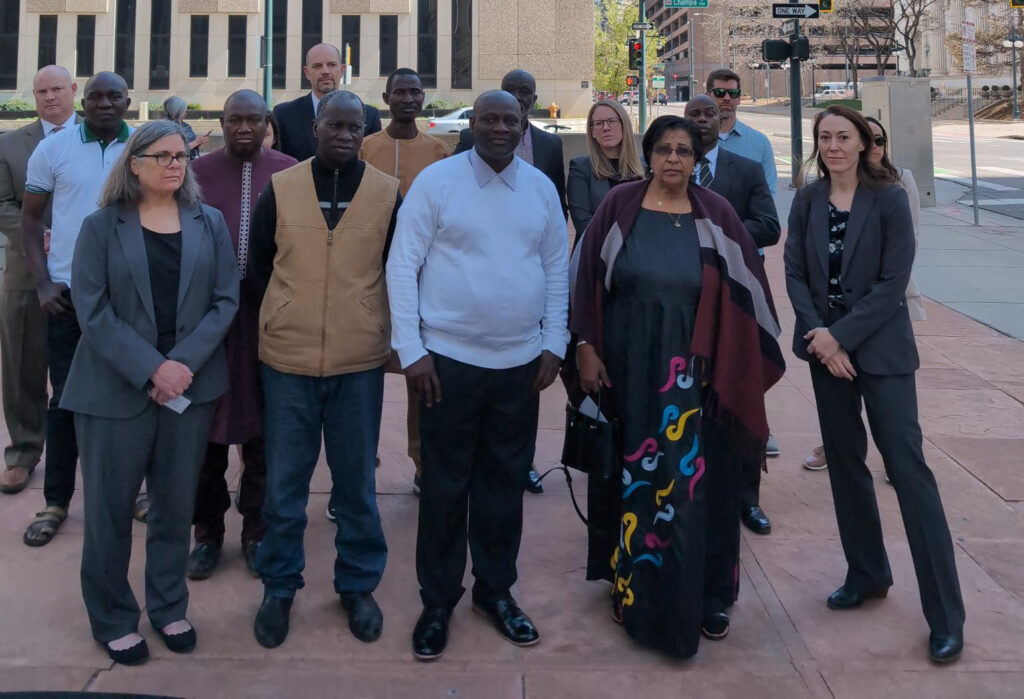
Witnesses in front of the courthouse after the Correa trial Denver
Witnesses in the trial of Michael Correa and their legal representatives in front of the Alfred A. Arraj United States Courthouse in Denver, after the announcement of the decision of the jury on 15 April 2025 (photo: TRIAL International)

During the historic five-day trial, the jury heard evidence that Mr. Correa was a member of the Junglers, a notorious death squad in The Gambia. Victims and witnesses testified that following an attempted coup against former President Yahya Jammeh’s dictatorship in 2006, Mr. Correa and other Junglers brutally tortured suspected participants in the coup, including by beating them, suffocating them with plastic bags, and subjecting them to electric shocks. The jury unanimously found Mr. Correa guilty of torture and conspiracy to commit torture. Judge Christine M. Arguello, who presided over the trial, will determine Correa’s sentence at a hearing later this year. Mr. Correa can appeal the verdict.

Correa’s trial and conviction represent an important milestone towards justice for his direct victims, and it is another step towards justice for all who suffered under Jammeh’s regime,” said Tamsir Jasseh, who currently serves as a senior advisor to the Gambian Police. “This verdict demonstrates that we can end impunity for the widespread abuses that took place during those years, both abroad and in The Gambia,” said Demba Dem, a former member of The Gambia’s Parliament. “This verdict is crucial for the healing of the victims and of Gambian society,” said Yaya Darboe, a commanding officer in the Gambian Armed Forces. All three men testified about the torture they endured at the hands of Mr. Correa.

The case against Mr. Correa was brought under the extraterritorial Torture Act, a federal law which allows the U.S. government to prosecute individuals found within the United States for acts of torture committed abroad. The case has drawn significant attention from human rights advocates and legal experts, as it is the first trial of a non-U.S. citizen under the Act. Mr. Correa is only the third person to be convicted under the Act since its enactment in 1994.

“This is a momentous trial, not only for The Gambia, but also for the United States. Countries have an obligation to investigate and prosecute perpetrators of international crimes who are found within their territory,” said Ela Matthews, Center for Justice and Accountability Senior Staff Attorney. “By prosecuting Correa, the United States has shown its commitment to fulfilling these obligations.”

Victims and Gambian civil society played a crucial role in ensuring that Mr. Correa was brought to justice, and that the trial received coverage in The Gambia. Jammeh regime victims traveled from The Gambia to Denver to observe the proceedings and 11 people testified.

According to Vony Rambolamanana, Senior Legal Advisor at TRIAL International: “Correa’s conviction, together with the recent convictions of former Jungler Bai Lowe in Germany and Gambian former Interior Minister Ousman Sonko in Switzerland, underscores the critical importance of universal and extraterritorial jurisdiction laws in bringing justice to survivors of international crimes committed in countries where impunity is rampant.

In 2021, the Gambian Truth, Reconciliation and Reparations Commission (TRRC) concluded that former president Jammeh and 69 of his associates, including Mr. Correa, committed crimes against humanity in The Gambia. The vast majority of perpetrators have yet to be held accountable. Last year, The Gambia took significant steps towards justice, including passing legislation aimed at creating a war crimes tribunal in the Gambia and securing ECOWAS’s approval to establish the tribunal.

Correa’s conviction is very significant in the quest for justice for victims of human rights violations, but many Junglers and other human rights abusers continue living in impunity. Some are even living freely in Banjul,” said Kadijatou Kuyateh, Press Relations Officer at the Alliance of Victim-Led Organisations. “The Gambia must act swiftly to establish its hybrid court to prosecute the remaining perpetrators identified in the TRRC report.

About the Center for Justice & Accountability

The Center for Justice and Accountability (CJA) is a San Francisco-based international human rights organization dedicated to working with communities impacted by torture, war crimes, crimes against humanity, and other serious human rights abuses to seek truth, justice, and redress using innovative litigation and transitional justice strategies.

About the Alliance of Victim-Led Organisations (AVLO)

The Alliance of Victim-Led Organisations (AVLO) is a coalition of Gambian civil society organizations that has been championing and representing the interests of victims of human rights violations in The Gambia.

About TRIAL International

TRIAL International is an international NGO fighting impunity for international crimes such as genocide, crimes against humanity, war crimes, torture, enforced disappearances and conflict-related sexual violence. Founded in 2002, it has offices in Switzerland, Bosnia and Herzegovina and the Democratic Republic of the Congo (DRC).

More Information

Read answers to Frequently Asked Questions here.

Or please contact:

  • Anja Härtwig, TRIAL International, in Geneva (English, French, German): media@trialinternational.org, +41 22 519 03 96
  • Ela Matthews, The Center for Justice and Accountability, in London (English): ematthews@cja.org, +44 78 627 28 939
  • Sirra Ndow, Alliance of Victim-Led Organisations, in Banjul (English): avlogambia@gmail.com, +2203737766

Denver, CO (United States) and Banjul (The Gambia), March 26, 2025 – Michael Sang Correa, an alleged member of a Gambian death squad, is scheduled to stand trial for torture starting on April 7, 2025. This marks the first time a non-U.S. citizen will stand trial in a U.S. federal court for torture committed abroad.

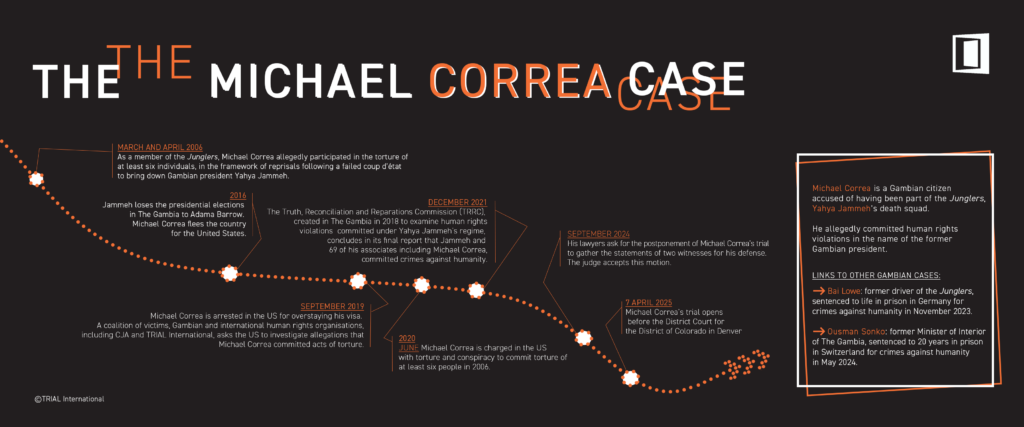
Chronology visual Michael Correa case US

Michael Sang Correa is charged with six counts of torture and one count of conspiracy to commit torture. He is allegedly a former member of the Junglers, a notorious death squad in The Gambia operating under former Gambian President Yahya Jammeh. The indictment alleges that following an attempted coup against Jammeh’s regime in 2006, Mr. Correa and other Junglers tortured suspected participants in the coup, including by beating them, suffocating them with plastic bags, and subjecting them to electric shocks.

The U.S. government filed the charges under the extraterritorial Torture Act, a criminal law which allows it to prosecute individuals found within the United States for acts of torture committed abroad. This case has drawn significant attention from human rights advocates and legal experts, as it is the first trial of a non-U.S. citizen since the Torture Act was passed in 1994, and only the third trial under the Act. A coalition of human rights organizations, including the Center for Justice and Accountability (CJA), member groups of the Alliance of Victim-Led Organizations (AVLO) and TRIAL International, played a crucial role in urging the United States to investigate allegations of international crimes attributed to Mr. Correa in The Gambia. CJA represents several of Mr. Correa’s alleged victims with co-counsel King and Spalding LLP.

The trial is a critical step towards securing truth and justice for victims of Jammeh’s dictatorship, which was characterized by widespread human rights violations, including enforced disappearances, torture, extrajudicial killings, sexual violence, and arbitrary detention.

The trial, initially scheduled for September 2024, will take place from April 7 to 18, 2025, at the Alfred A. Arraj United States Courthouse in Denver. Additional information can also be found here.


About the Center for Justice & Accountability

The Center for Justice and Accountability (CJA) is a San Francisco-based international human rights organization dedicated to working with communities impacted by torture, war crimes, crimes against humanity, and other serious human rights abuses to seek truth, justice, and redress using innovative litigation and transitional justice strategies.

About the Alliance of Victim-Led Organisations (AVLO)

The Alliance of Victim-Led Organisations (AVLO) is a coalition of Gambian civil society organizations that has been championing and representing the interests of victims of human rights violations in The Gambia.

About TRIAL International

TRIAL International is an international NGO fighting impunity for international crimes such as genocide, crimes against humanity, war crimes, torture, enforced disappearances and conflict-related sexual violence. Founded in 2002, it has offices in Switzerland, Bosnia and Herzegovina and the Democratic Republic of the Congo (DRC).


More Information

Read answers to Frequently Asked Questions here.

Or please contact:

  • Ela Matthews, The Center for Justice and Accountability, in London (English): ematthews@cja.org, +44 786 272 89 39
  • Sirra Ndow, Alliance of Victim-Led Organisations, in Banjul (English): avlogambia@gmail.com, +220 373 77 66
  • Anja Härtwig, TRIAL International, in Geneva (English, French, German): media@trialinternational.org, +41 22 519 03 96

The German Federal Court of Justice announced on November 29, 2024 that it had rejected the appeal of a former member of a Gambian death squad who was sentenced to life imprisonment a year ago for his participation in two murders and three attempted murders, constituting crimes against humanity. This was the first trial in history to be held under the principle of universal jurisdiction for international crimes committed under former Gambian President Yahya Jammeh.

Infographic depicting the chronology of the Bai Lowe case.

On November 30, 2023, Bai Lowe was convicted by the Higher Regional Court of Celle, Lower Saxony, of the attempted murder of lawyer Ousman Sillah in 2003, the murder of journalist Deyda Hydara and the attempted murder of two of his colleagues in 2004, and the murder of former soldier Dawda Nyassi in 2006. This was the first time that a court had recognized that crimes against humanity had been committed in The Gambia under the presidency of Yahya Jammeh, all thanks to the exercise of universal jurisdiction.

The defendant appealed to the Federal Court of Justice to examine whether the November 2023 conviction had been handed down in accordance with the law, and the Court found “no error of law prejudicial to the defendant”. In its decision of November 12, 2024, it therefore upheld the conviction, which is now final. “This decision shows that in Germany, even complex crimes committed abroad can be solved and brought to trial. It underlines the importance of the German International Criminal Code for the prosecution of the most serious crimes against human rights“, commented Peer Stolle, lawyer for one of the plaintiffs.

This conviction and its confirmation mark a turning point in the fight against impunity for atrocities committed under the presidency of Yahya Jammeh, who was in power in The Gambia between 1994 and 2016. The German proceedings have confirmed the existence of systematic and widespread attacks against the civilian population, orchestrated by Jammeh to maintain himself in power through violence. These decisions are therefore of major significance, not only for the four plaintiffs in the trial, but also for all the victims and survivors of the crimes committed under this regime. The Bai Lowe trial exposed one of the notorious tools of this repression: the role of the “Junglers”, a paramilitary unit created by the former President to suppress all forms of opposition.

“The confirmation of Bai Lowe’s conviction by the German Supreme Court is an important step in ongoing and future criminal prosecutions against the senior officials and principals of these crimes abroad, particularly in Switzerland and the United States, but especially in The Gambia,” commented Babaka Tracy Mputu, Legal Advisor at TRIAL International. TRIAL International and its partner ECCHR had informed the German Federal Prosecutor’s Office in 2019 of Bai Lowe‘s presence on the territory. Following his arrest in Germany in 2021, TRIAL International passed on additional information to the German prosecuting authorities and provided logistical and psychological support to the plaintiffs during the trial.

In May 2024, the application of universal jurisdiction also enabled Switzerland to bring to trial and sentence in first instance former Gambian Interior Minister Ousman Sonko, Yahya Jammeh’s former right-hand man, also for crimes against humanity committed between 2000 and 2006, to 20 years imprisonment.[1] In April 2025, the trial of Michael Correa, another alleged former member of the Junglers, is due to open in Denver, USA. He was indicted in June 2020 for the torture of individuals suspected of plotting a coup d’état in 2006.

TRIAL International now hopes that, at its next meeting in December, the Conference of Heads of State and Government of the Economic Community of West African States (ECOWAS) will give a favorable opinion on the creation of a special international tribunal for The Gambia, so that the crimes of the Jammeh era can be judged as close as possible to where they were committed.

[1] The difference in sentences (life imprisonment for the executor of a principal and 20 years’ imprisonment for a former Minister of the Interior) can be explained by the peculiarities of the legal systems of the various countries implementing universal jurisdiction, in this case Germany and Switzerland. For an in-depth analysis of the laws and practices of several countries regarding the investigation and prosecution of crimes under universal jurisdiction, please consult our series of UJ law and practice briefing papers, published jointly with the Open Society Justice Initiative (OSJI).

(Banjul, Denver, Geneva, 12 September 2024) – The trial against Michael Sang Correa for torture allegedly committed in The Gambia, originally scheduled for 16 September 2024, has been postponed.

Last week, Correa’s defense lawyers filed two motions with the court. The motions explained that the defense wanted to present testimony from two witnesses to support the argument that Correa was under duress when he committed the acts of torture alleged in the indictment. According to the motions, the witnesses refused to travel to the United States unless the United States government provided them with immunity from prosecution. The United States declined to offer that immunity.

The first motion asked the court to dismiss the case against Correa, arguing that the government was not facilitating the attendance of these witnesses. On 10 September, the court denied the motion to dismiss the charges against him. The second motion asked the court to delay the trial to allow Correa’s attorneys to travel to The Gambia to record sworn testimony from the two witnesses.

On 11 September, the judge granted the second motion. She ruled that ensuring Correa the right to present witnesses for his defense was crucial to protecting his due process rights. Due process rights are guaranteed under international law and the United States Constitution: they provide reasonable opportunity for defendants such as Correa to defend themselves against criminal charges, allow for thorough examination of the facts, and contribute to a fair and just legal process.

The trial will be rescheduled to a date in 2025.

For media enquiries:
Rebecca-Paris Senior, The Center for Justice and Accountability, in Geneva (English, French, Italian): rpsenior@cja.org

Frequently asked questions and answers


1. Who is Michael Correa and what are the charges against him?

Michael Correa, a Gambian citizen, will stand trial in September 2024 for allegedly torturing people in The Gambia in 2006. He is accused of being part of the “Junglers”, a death squad that committed human rights abuses at the direction of former President Yahya Jammeh.

In 2020, the U.S. Department of Justice charged Correa with torture and conspiracy to commit the torture of at least six people. The indictment alleges that Correa and other Junglers beat their victims, put plastic bags over their heads, and used electric shocks while they were interrogated, causing victims severe pain and suffering.

2. What is the status of the case against Correa?

Correa was first arrested in September 2019 for staying in the U.S. after his visa expired and was detained in a U.S. prison. In June 2020, he was indicted for torture and conspiracy to commit torture. He remains in prison while awaiting trial.

The next step in Correa’s case is the trial for torture charges. During the trial, the jury will listen to the evidence, including witness testimony, and it will hear arguments from lawyers for the U.S. government and for Correa. Then, the jury will decide whether or not Correa is guilty.

3. When and where will Correa’s trial take place?

Correa’s trial will take place in the U.S. District Court for the District of Colorado in Denver, where Correa was initially found and arrested. The trial is scheduled to take place between September 16 to 27, 2024. While criminal trials in the U.S. are typically open to the public, a judge may grant a request to restrict public access under exceptional circumstances, such as to protect the safety of a witness.

4. How is “torture” defined under U.S. law?

Correa has been charged under the Torture Act, which allows the U.S. to prosecute individuals within its territory for acts of torture committed outside its borders. This law defines “torture” as an act committed by a public official or person acting in an official capacity that is intended to cause severe physical or mental pain or suffering to a person in the perpetrator’s control.

5. What will happen at trial?

At trial, lawyers for the prosecution and defense will present evidence and arguments to a jury. The prosecution might ask victims to testify at the trial. After hearing the evidence, the jury will decide whether it finds Correa guilty of each charge or not. For Correa to be found guilty, the jury must find that he is responsible for the acts alleged “beyond a reasonable doubt.” The jury’s decision to convict must be unanimous, meaning that all the members of the jury must vote to find Correa guilty to convict him of the charged crime. The jury could find Correa guilty on all or only some of the seven charges of torture and conspiracy to commit torture.

6. What is the jury and how is it chosen?

The jury is made up of 12 U.S. citizens who are over 18 years old, reside in Colorado, and understand English. These 12 jurors will be selected out of a pool of prospective jurors. The pool is chosen at random from members of the general public who fulfill the requirements to be jurors. Before trial, Correa’s lawyers and the prosecutors may have the opportunity to ask each prospective juror questions. During jury selection, the prosecutors and Correa’s lawyers can ask to remove prospective jurors from the pool. This process continues until the 12 jurors and their alternates are selected.

7. Will Correa be required to testify about his crimes?

Under U.S. law, criminal defendants such as Correa cannot be forced to testify. While he is not required to testify, he can choose to testify in his own defense, but if he does so, he can be cross-examined by the prosecution.

8. What role will victims and survivors play in the trial?

In the U.S., a common law country, victims and survivors do not have a role comparable to civil parties in Civil Law countries. However, the prosecutor may call some of the alleged victims to voluntarily testify as witnesses.

Under certain conditions, the Crime Victims’ Rights Act gives victims the right to timely notice about developments in the case, and the “right to be reasonably heard at any public proceeding in the district court involving release, plea, sentencing, or any parole proceeding.”

9. What happens if Correa is found guilty?

If Correa is found guilty, the court will schedule a sentencing hearing, where a judge will decide his punishment. Sentencing hearings normally happen several weeks after the jury makes its decision. At the sentencing hearing, both the prosecution and the defense will present their arguments about what the appropriate sentence should be. Victims who meet legal requisites may also have an opportunity to present statements describing how Correa’s crimes affected them.

After this information has been submitted, the judge will decide Correa’s sentence. Correa could receive a maximum sentence of 20 years in prison for each count of torture and conspiracy to commit torture. If he is found guilty of all charges pending against him, Correa could face a total of up to 140 years in prison.

10. What happens if Correa is acquitted on all the charges?

One potential outcome is that the jury will find him not guilty of any of the charges. Because Correa does not have a valid U.S. visa anymore, he could remain in immigration detention while his immigration claims are decided. He could choose to return to The Gambia, be deported to The Gambia, or be allowed to remain in the U.S.

If Correa is acquitted on all the charges and his immigration claims are decided in his favor such that he can stay in the U.S., The Gambia could seek his extradition for prosecution for other alleged crimes.

11. Will Correa have an opportunity to appeal?

Yes. If Correa is found guilty, he could appeal for three reasons:

  1. there was misconduct during his trial;
  2. the judge made a mistake in handling the case; or
  3. the jury engaged in misconduct or made a mistake in their verdict.

However, the prosecution cannot appeal an acquittal by the jury.

12. If Correa receives a prison sentence, could he get parole or early release?

While we cannot predict whether Correa would receive early release in general, individuals convicted of federal crimes—like those that Correa has been charged with—are not eligible for parole. However, there are a few circumstances that allow for individuals convicted of federal crimes to be released early.

First, individuals convicted with federal crimes receive credit for time that they spent in prison before their conviction. Accordingly, some of the time he has spent in detention since his arrest in 2019 may be deducted from Correa’s prison sentence. Correa would have been detained for at least five years by the time he is sentenced. The specific amount of credit Correa receives for “time served” would likely be decided when the judge announces the sentence.

Second, individuals convicted with federal crimes may have their sentences reduced by up to 15% for good behavior in prison.

Under extraordinary circumstances, individuals convicted with federal crimes sometimes qualify for compassionate release from prison. Compassionate release is rare. Some reasons for compassionate release are terminal or debilitating illness, the need to care for a child with no other guardian or incapacitated spouse, or worsening physical and mental health due to old age when the individual is over 65 years old (Correa would not be eligible for compassionate release due to old age until 2044). To qualify for compassionate release, the individual would need to show that he is no longer a danger to society.

13. Can Correa plead guilty and avoid the trial?

Yes, Correa can plead guilty at any point before or during trial. He can also try to negotiate a plea agreement with the prosecutor at any point before the jury reaches a verdict, although the prosecutor may decline to negotiate. Under a plea agreement, Correa would plead guilty in exchange for a compromise from the prosecutor, such as a shorter prison sentence than what he might have received at the end of a trial.

14. What was happening in The Gambia at the time of Correa’s alleged crimes?

During his 22-year dictatorship in The Gambia, Yahya Jammeh systemically oppressed any real or perceived opponents of his regime. The government targeted journalists; human rights defenders; lawyers; student movement leaders; religious leaders; members of the political opposition; judicial officials; members of the lesbian, gay, bisexual, and transgender (LGBT) communities; and members of the security forces. These groups suffered terrible violations, including torture, extrajudicial killings, enforced disappearances, and sexual violence.

Many of these violations came to light during Truth, Reconciliation and Reparations Commission (TRRC) hearings. The TRRC was established by the Gambian government 2018 to investigate abuses committed by the Jammeh regime. Three hundred and ninety-three (393) people, including victims, perpetrators, former government officials, and members of security forces, testified during 871 days of public hearings. The TRRC’s final report was made public on December 24, 2021, concluding that Jammeh and 69 of his associates, including Michael Correa, committed crimes against humanity. Jammeh is in exile in Equatorial Guinea, where he fled after losing the 2016 presidential election to Adama Barrow and failing at his attempt to not relinquish power despite the electoral results.

15. Who were the Junglers?

The Junglers were a death squad established by former President Jammeh in the 2000s, allegedly to suppress his regime’s opponents. The group reported directly to Jammeh and are alleged to have carried out widespread human rights violations, including enforced disappearances, torture, extrajudicial killing, sexual violence, and arbitrary detention. Some members of the Junglers have already confessed to committing torture and other serious human rights abuses.

16. Why has Correa only been charged for these acts of torture when he is also alleged to have committed other crimes?

In the U.S., prosecutors have the discretion to decide which cases they bring. In making these decisions, prosecutors consider a range of factors, including available resources and documentation. The prosecutor has not disclosed why they chose to prosecute these specific alleged acts of torture and not others.

The U.S. does not have legislation to prosecute many other crimes against humanity committed outside of its borders. This limits the type of charges that a prosecutor might bring. Correa’s case highlights the urgent need for the U.S. to pass legislation criminalizing crimes against humanity. Without this law, perpetrators who are in the United States could escape accountability for some or all of their crimes.

17. Why is Correa’s prosecution taking place in the U.S.?

The U.S. government has the legal authority to prosecute Correa for torture he allegedly committed outside of the U.S. because Correa is present in the United States. The extraterritorial Torture Act allows the U.S. to prosecute individuals found within U.S. territory, regardless of their citizenship, for torture committed outside of the country. This law operates as a form of universal jurisdiction.

This is only the third time a person has been tried under the Torture Act since the statute was passed in 1994. Two other individuals were convicted under this statute: Charles “Chuckie” Taylor, Jr., the son of former Liberian President Charles Taylor, was convicted in 2008, and Ross Roggio was convicted in May 2023. Correa is the first person who is not a U.S. citizen to stand trial under the Torture Act.

18. What is universal jurisdiction?

Universal jurisdiction is a legal principle that allows countries to prosecute crimes committed in other countries, regardless of the nationality of the suspect or victim. Universal jurisdiction cases support efforts to hold perpetrators of atrocities accountable and to bring justice to victims. They send a powerful message that human rights abusers will not find a safe haven anywhere in the world.

TRIAL International, CJA, and their partners publish the Universal Jurisdiction Annual Review (UJAR), which highlights universal jurisdiction cases in the U.S. and globally.

19. Are others being prosecuted under universal jurisdiction for crimes committed during the Jammeh era?

Michael Correa was the first person to be indicted outside of The Gambia for Jammeh-era crimes, but he is not the first to face trial. Another Jungler, Bai Lowe, was convicted in Germany and sentenced to life in prison in November 2023. Former Interior Minister Ousman Sonko was tried in Switzerland in early 2024 for crimes against humanity and was convicted and sentenced to 20 years in prison in May 2024.

20. Could Jammeh and other senior officials be prosecuted in The Gambia?

As of the publication of this FAQ document, The Gambia has only prosecuted two Jammeh-era cases, against former minister of local government Yankuba Touray and former Director-General of the National Intelligence Agency Yankuba Badjie, who was convicted alongside four other ex-intelligence officials and a doctor who was found to have facilitated the officials’ crimes by forging a death certificate.

In December 2021, the TRRC issued its final report calling for the prosecution of those responsible for Jammeh-era crimes. On May 25, 2022, the Gambian government issued a White Paper accepting the TRRC’s recommendation. On May 12, 2023, the government presented an implementation plan for the TRRC recommendations. The implementation plan proposed a Special Prosecutor’s Office to investigate cases and a “hybrid” tribunal based on a treaty with the Economic Community of West African States (ECOWAS). The court would prosecute the most serious Jammeh-era crimes. On April 23, 2024, The Gambian National Assembly passed bills establishing the Special Prosecutor’s Office and the Special Accountability Mechanism, offices which will be responsible for moving forward accountability for Jammeh-era crimes. In July 2024, the Parliament of ECOWAS decided to defer consideration of the creation of the special court until December 2024. These are promising steps forward for victims, survivors, and the rule of law in The Gambia. Given how long victims and Gambian society have been waiting, the government and ECOWAS should quickly establish the Mechanism.

21. What is the significance of this case in The Gambia and the U.S.?

In The Gambia and the U.S., Correa’s prosecution represents an important step for justice. The TRRC’s final report concluded that Jammeh and 69 of his alleged associates committed crimes against humanity and recommended that they face justice for their crimes. Correa is among the first of these individuals to face prosecution. His prosecution may allow victims to speak out about Correa’s alleged crimes and will raise awareness of the human rights violations that took place during the Jammeh regime.

In the U.S., Correa’s prosecution demonstrates the importance of universal jurisdiction, which recognizes that crimes like those allegedly committed by Correa are crimes against all people, regardless of their nationality. Universal jurisdiction proceedings like Correa’s are an important tool to ensure that alleged human rights violators from The Gambia are held accountable wherever they are found. His prosecution, and the prosecution of other alleged human rights violators, is a core part of the U.S.’s obligation to investigate and prosecute perpetrators of international crimes when they are identified on U.S. territory.

22. What role are CJA and TRIAL International playing in this case?

Victims’ groups as well as Gambian and international non-governmental organizations have been working together to hold Jammeh-era officials accountable through the “Jammeh2Justice” campaign. In September 2019, the U.S. Department of Homeland Security arrested Michael Correa for staying in the U.S. after his immigration visa expired. A coalition of Correa’s victims and human rights organizations, including CJA and TRIAL International called on the U.S. to investigate claims that Correa committed torture. This led to his indictment in 2020.

CJA and TRIAL International will continue to provide legal, psychological, and other support to victims – when needed – in preparation for, during, and after the trial. CJA and TRIAL International will also work with civil society, journalists, and impacted communities to make sure information about the trial is available through newspapers, radio, and other media.

23. What role is Gambian civil society playing in this case?

Gambian civil society has played an instrumental role in advocacy efforts related to Correa’s prosecution. Gambian organizations were a part of the coalition advocating for the U.S. to investigate claims that Correa committed torture.

Since Correa’s indictment, Gambian civil society organizations, including:

have been instrumental in raising awareness about the prosecution and in supporting victims in The Gambia.

In April 2024, alongside several other Gambian civil society organizations, these groups launched the Alliance of Victim-Led Organizations (AVLO), which is dedicated to representing the interests of victims of human rights violations in The Gambia. During Correa’s trial, AVLO will be actively involved in efforts to share information about the proceedings with victims and other interested parties in The Gambia.

24. Where can I read more about the case?

Selected court documents, including Correa’s June 2020 indictment, can be accessed online via the case docket. Additionally, CJA and TRIAL International have shared information regarding the case on their websites.
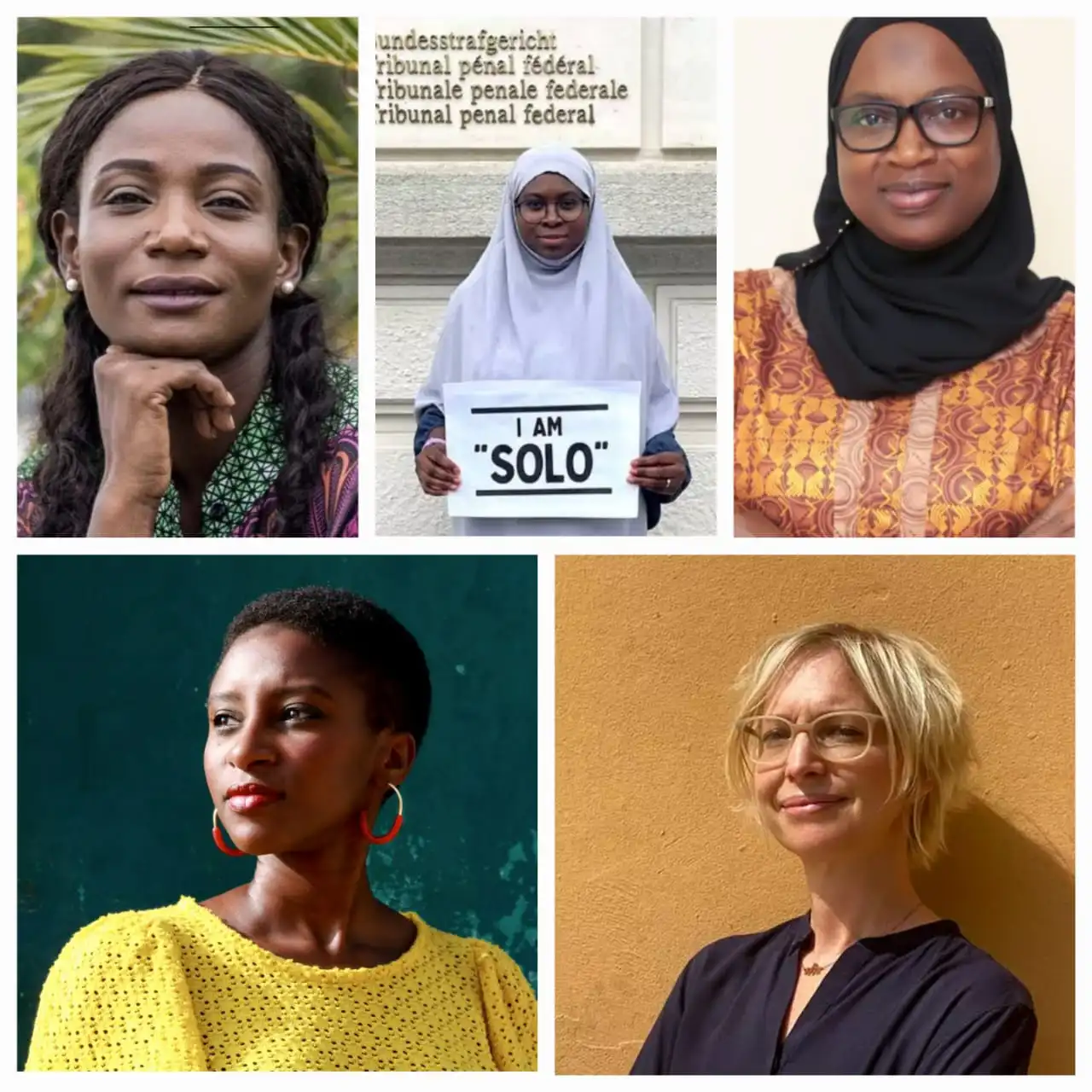
Commentary written by activists Fatou Baldeh, CEO of Women in Liberation & Leadership (WILL); Nana-Jo Ndow, founder and executive director of African Network against Extrajudicial Killings and Enforced Disappearances (ANEKED); Sirra Ndow, country director at ANEKED; Fatoumatta Sandeng, Founder & CEO – Solo Sandeng Foundation; and Marion Volkmann-Brandau, human rights lawyer. Published in the Gambian Newspaper The Republic on 28 May 2024.

Illustration article_Sonko case_The Republic

On the May 15, 2024 a court in Switzerland found Ousman Sonko, long term interior minister in The Gambia under the Jammeh regime, guilty of multiple counts of intentional homicide, torture and false imprisonment that were committed, as “part of a systematic attack on the civilian population” of the country. He is the highest ranking foreign official ever convicted by an European court.

While Sonko’s conviction marks another milestone in the pursuit of justice for victims of human rights violations in The Gambia and globally, it is also disappointing for organisations and individuals working closely with and for survivors of sexual and gender-based violence. Indeed, while Binta Jamba bravely testified that Ousman Sonko raped and tortured her for years, after having murdered her husband, the charges were dropped because the court considered it to be an “individual crime” outside its jurisdiction.

The decision disregards and distorts the cruel reality experienced by women and girls during the 22 years of the Jammeh regime: far from being a private matter, sexual violence by state officials was a criminal enterprise using state resources and means at their disposal. We are therefore alarmed that the court did not rule on the charge of rape despite it being as systematic as other crimes that Sonko has been found guilty of.

Since the historical neglect of sexualized and gender-based violence during Nuremberg and Tokyo trials, significant progress has been made in both the statutes and jurisprudence of international criminal tribunals concerning these crimes. Yet, time and time again, national courts applying the principle of universal jurisdiction as well as international ones, have decontextualised sexual violence from the broader pattern of violence. There is a tendency to view rape as ‘isolated,’ often because justice actors misinterpret it as a private or opportunistic crime (‘sex without consent’), when in fact it is a tool used by repressive regimes just as torture and killings.

Sexualised torture, rape and exploitation were common feature of the Jammeh regime and were perpetrated by many senior men, including the president himself. Several survivors and witnesses who spoke before the Truth, Reconciliation and Reparations Commission (TRRC) provided detailed accounts of how state officials, while acting in their official capacity, sexually assaulted women on many occasions. For example, sexual violence in detention was common as early as 1995 and affected women as well as men. What these testimonies revealed is certainly just the top of a horrific iceberg.

Over the two years of its existence, the TRRC heard prominent enablers of the past regime and confronted them with many of the allegations made against them. However, they were never asked about their implication in sexual and gender-based violence. As a matter of fact, not once were witnesses from the security sector asked publicly about their knowledge of, or participation in, such crimes.

And neither the TRRC nor the Swiss Court seemed to have investigated what could have well been a pattern of sequestration and rape by Ousman Sonko. When Binta Jamba testified before the TRRC about her ordeal, she mentioned that on two occasions she was held captive in a house where she was raped and beaten by Sonko. The soldier who freed her from the room, told her that his “boss brought several other women here”. Who are these other women? And could Sonko really have had them guarded by a soldier if he was not in a position of power?

Sexual violence committed by officials is not a “private matter”. If transitional justice mechanisms, such as truth commissions and courts, fail to adequately investigate sexual and gender-based violence, nothing will change for the many survivors and perpetrators will continue to enjoy the impunity they cherish.

As The Gambia is in the process of setting up an Hybrid Court to prosecute the many crimes committed under the Jammeh regime, we call on the national and foreign jurisdictions to write history by fully and truthfully investigating and prosecuting sexual and gender-based violence at all levels. Only then will survivors feel that justice was served, for all.

Originally published in the Gambian newspaper The Republic.

The conviction of former Gambian Interior Minister Ousman Sonko in Switzerland for crimes against humanity on 15 May 2024 is historical in many ways. However, the decision by the Swiss Federal Criminal Court’s (FCC) to dismiss all charges of sexual violence casts a shadow over this landmark verdict. Ousman Sonko was found guilty of three murders, multiple acts of torture, illegal deprivations of liberty in conditions amounting to torture, all committed between 2000 and 2016 during the Yahya Jammeh dictatorship. However, the Swiss court failed to hold Ousman Sonko responsible for multiple rapes committed in the early 2000s and in 2006. While confirming that they had taken place, the court ruled that one of the two survivors of rapes could not be considered as part of the civilian population that was under attack and that they were individual acts committed outside the systematic attack against the population. It therefore had no jurisdiction to prosecute them.

TRIAL International believes that the FCC’s reasoning reflects a lack of understanding of the context of over two decades of repression in The Gambia, particularly with regard to sexual violence. The Yahya Jammeh’s regime was characterized by a widespread gender-based violence enabled by a well-conceived policy of protection, normalization and impunity of high-ranking officials, including Ousman Sonko. Although there is a culture of silence around such acts in The Gambia and therefore not many victims come forward for fear of stigma and retaliation, the victims in this case are emblematic examples, and by no means isolated incidents, of this sophisticated system in which sexual and gender-based violence was used as a weapon of repression. As emphasized in the final report of the Truth, Reconciliation and Reparations Commission (TRRC)[1], the grave and repeated acts of sexual violence should not have been read outside the political context of the country at the time.

In the Gambia, The Alliance of Victim-Led Organisation (AVLO), The Women’s Association for Victims’ Empowerment (WAVE) and Women in Liberation and Leadership (WILL) – react in one voice: “Not convicting Ousman Sonko is a big blow to and a setback in the fight for justice for victims and survivors of sexual and gender-based violence (SGBV) and civil society actors working with them in The Gambia. In a context where it is a daily struggle to get victims to come forward, this will push them further into the darkness where impunity will thrive. Regrettably, this could also potentially have an impact on the accountability processes that we are preparing the ground for in the Gambia”.[2]

Indeed, the dismissal of these charges is not only a failure to deliver justice to the two plaintiffs; it is a failure to acknowledge the systemic use of sexual violence as a tool of oppression. The FCC’s decision reinforces the dangerous narrative that sexual violence is a private matter and that it does not enter within the justice-seeking scope of international criminal law. On 15 May 2024, the court missed a critical opportunity to overcome the patriarchal biases that are still present in international case law.

According to Annina Mullis and Caroline Renold, lawyers of the two plaintiffs affected by this decision, “it is yet another example of the general disregard for gender-based and sexualized violence. Instead of recognizing the structural aspects of the widespread sexual and gender-based violence in The Gambia during the rule of Yahya Jammeh, the FCC rejected all evidence requests submitted to demonstrate the systematic nature of SGBV in the country and yet at the same time deemed the charges brought by our clients against the defendant as outside the political. Our clients will of course appeal this decision.”

TRIAL International recalls that this issue remains persistent when it comes to the prosecution of international crimes and that sexual violence and survivors of such acts remain largely invisible in courts, perpetuating a culture of impunity. The organization works tirelessly to ensure justice for victims and survivors of sexual violence, including in Bosnia and Herzegovina and the Democratic Republic of the Congo.

The Organization remains steadfast in its commitment to fight for justice for all survivors of international crimes, including those of sexual violence and will continue to support the plaintiffs in their quest for justice.

[1] The 2021 TRRC final Report, Volume 10: “Sexual and Gender-based violence” is available for download here: https://www.moj.gm/downloads

[2] For more voices from The Gambia, read “Sonko case: How a Swiss court failed survivors of sexual violence in The Gambia, and worldwide“.

(Geneva, 15 May 2024) – Ousman Sonko, Gambian former Minister of Interior, was convicted today of crimes against humanity by the Swiss Federal Criminal Court (FCC). The FCC found him guilty of multiple crimes committed between 2000 and 2016, under the rule of Gambian ex-President Yahya Jammeh, and sentenced him to 20 years in prison. Mr. Sonko is the highest-ranking official ever convicted in Europe for international crimes under the principle of universal jurisdiction. His was also the second trial for crimes against humanity in Swiss judicial history.

In its verdict delivered today, the FCC found Ousman Sonko guilty of the killing of a perceived political opponent in 2000; of torture and illegal detention in connection with a coup plot in March 2006; of the killing of a politician in 2011 and of deprivations of liberty as well as acts of torture – including one killing – of peaceful demonstrators in 2016. The FCC further ordered Mr. Sonko to pay compensation to the plaintiffs, according to the harm suffered.

Ramzia Diab Ghanim, one of the ten plaintiffs in the case, comments today’s verdict: “This decision gives us the closure we had been waiting for long and shows that there is no hiding place for anyone who perpetrated international crimes in The Gambia, not even the highest-level individuals. However, I am disappointed that the Court failed to recognize that sexual violence is also an attack against us civilians.”

Despite this historic conviction, the Court abandoned all sexual offense charges related to 2000 onwards and 2006. Without judging that they did not take place, the Court considered that, in 2000 onwards, they were isolated from the context of attack directed against the civilian population and thus could not constitute crimes against humanity. The Court also found that electric chocs imposed on the genitals should be not considered as sexual violence but as torture. TRIAL International regrets this decision and will continue to support the plaintiffs, should they decide to appeal these aspects.

Indeed, the parties may contest the judgment by lodging an appeal with the Court of Appeals of the FCC.

Ousman Sonko was arrested in Switzerland in January 2017, a day after TRIAL International filed a criminal denunciation against him. Following an investigation that lasted over six years, the Office of the Attorney General of Switzerland (OAG) indicted Mr. Sonko in April 2023. His trial took place in January and March 2024 before the FCC in Bellinzona.

The conviction was made possible thanks to Swiss law, which recognizes universal jurisdiction for certain serious crimes under international law, allowing for the prosecution of such crimes, regardless of where they were committed and of the nationality of either suspects or victims.

TRIAL International supported nine plaintiffs who traveled to Switzerland in January 2024 to be heard by the court. As the trial was held in German, the organization has advocated strongly, but largely in vain, for the proceedings to be translated and made accessible to victims and the Gambian population. TRIAL International also ensured the regular publication of summaries of the hearings throughout the proceedings.

Today’s conviction sets a historic precedent in the fight against impunity worldwide”, stated Philip Grant, Director of TRIAL International. “This verdict not only brings justice to the victims of these heinous crimes but also sends a strong signal to high-level perpetrators across the globe, including ministers: justice can catch up with you”, he added.

This conviction is another step on the long road to justice for all victims of the atrocities committed during Jammeh’s 1994-2016 reign of terror. It was the second trial based on the principle of universal jurisdiction for crimes committed in The Gambia. The first was the case of Bai L., a former member of a paramilitary unit known as the “Junglers”, created by the former president. He was sentenced by a German court to life imprisonment for crimes against humanity in November 2023. Another alleged member of the same death squad, Michael Correa, is scheduled to go on trial in the USA in September 2024. He is charged with torture and conspiracy to commit torture.

Recognizing Ousman Sonko’s role in the abuses committed during Jammeh’s dictatorship not only contributes to reducing impunity for the violations committed in The Gambia during Mr. Jammeh’s regime, but may also spur domestic prosecutions, propelling the transitional justice process initiated in 2017. In December 2021, the final report of The Gambia’s Truth Reconciliation and Reparations Commission’s concluded that Jammeh and 69 of his associates, including Ousman Sonko, had committed international crimes or grave human rights violations and called for their prosecution. The Gambian government published an implementation plan in May 2023. On 22-23 April 2024, the Gambian National Assembly thus passed a Special Prosecutor’s Office Bill and a Special Accountability Mechanism Bill. The Acts will have to be signed by the President before entering into force.

For more details, see the press release of the FCC.


This article is part of the daily summaries of the trial of Ousman Sonko, former Interior Minister of The Gambia, which took place between January and March 2024 in Bellinzona, Switzerland. During this time, TRIAL International did its best to capture the most important points discussed during the hearings and cannot be held responsible for any errors or omissions.

In accordance with the procedural code, Ousman Sonko was given the opportunity to address the Court before it began its deliberations.

In particular, he stated in English that he regretted that the Court did not provide simultaneous interpretation of the closing arguments of the other parties, as he was not able to understand what had was argued.

For this reason, he could not comment on the conclusions presented by the parties. The lack of translation was a problem for him throughout the course of the trial, since 8 January 2024, for him but, above all, for the people interested in the proceedings: The Gambians.

He also stated that he was the subject of violations of his rights throughout the proceedings, in particular by not receiving the transcripts of his testimony in a timely manner.

He further stated that some plaintiffs have adapted their statements during the trial to make them fit the charges brought against him and that he regretted that they have discredited themselves in this way by lying. However, he did not blame them and understood how important this trial was for them.

Torture was unacceptable to him.

In the responsibilities that he had exercised, he had always taken care to prevent this as far as the forces under his control and authority were concerned, and this was the reason why the NIA had kept the police at bay, and denied them access to the persons whose transfer to the NIA had been ordered in April 2016.

There was never any attack on the plaintiffs as political opponents, journalists or for any other reason. Some plaintiffs or victims were involved in attempted coups and it was legitimate to investigate these events. However, he had not been part of the investigation panel in 2006, even though he has visited it once, twice, perhaps more times, to see if any information was useful for his mission as IGP.

The use of torture by people now known as the Junglers was clearly unacceptable, but the police – forces under his control – had not been involved. He would not have accepted their involvement.

He was not involved in the killing that took place in October 2011 by the hands of the Junglers and there was nothing serious in the case file to support the contrary.

The demonstration of 14 April 2016 was illegal and it would have been sufficient for the organizers to apply for the authorization required by law in order to avoid the police intervention. The police intervened in a professional, proportionate and legal manner. However, he was not present at the PIU at the time of the arrests.

The crimes that followed at the NIA left a lasting mark of shame on The Gambia which he strongly condemned.

He has been detained for seven years without trial and in degrading conditions, including almost two years in solitary confinement, which has affected his physical and mental health.

“You seem to be interested in what has happened in my country, the conditions in its prisons, the actions of its police and its authorities. You take a condescending view of the resources available to us in government to try to ensure its development. Naturally, and probably without really thinking about it, you are part of a history of colonialism and racism. You have to understand that we can’t work miracles under these conditions. If a country as rich and developed as yours is unable to provide its prisoners with dignified conditions of detention, how do you expect us to be able to do so?” (…)

“You have let me express myself to you more than at any time in the last 7 years, but I don’t know if you have heard me”. (…)

My country does not need expiatory victims immolated before foreign judges. I hope that through my testimony I have been able to contribute to the work of reconciliation that the TRRC has begun, and I hope that all of us Gambians will be able to build the future of our country with respect for everyone, by honoring the memory of those who have disappeared and by assuring all those who have suffered of our compassion and our desire that the mistakes of the past will not be repeated.”

Ousman Sonko’s final words to the FCC, 7 March 2024

Final: The court informed the parties that the verdict date would be communicated at a later stage.

Read more:


This article is part of the daily summaries of the trial of Ousman Sonko, former Interior Minister of The Gambia, which took place between January and March 2024 in Bellinzona, Switzerland. During this time, TRIAL International did its best to capture the most important points discussed during the hearings and cannot be held responsible for any errors or omissions.

The defense argued that the Prosecutor had failed to make a distinction that was, however, quite clear from the record, but also from the work of the TRRC: on the one hand, there were the powers that were the sole responsibility of the President, namely the Gambian Armed Forces and consequently the Junglers that emerged from them, as well as the NIA. On the other hand, there was the government, its ministries and its administration. As IGP and later as Minister of Interior, Ousman Sonko had been part of the latter.

The rule of law prevailed in The Gambia and the abuses were limited to the actions of an informal group, the so-called Junglers, on the one hand, and a certain unit of the NIA on the other.

Ousman Sonko had to flee The Gambia to save his life and the threats that he received from the Junglers were part of the case file.

For the defense, it was still not clear what kind of organization or what plan the Prosecutor was referring to.

Since the beginning of the investigation, the Office of the Prosecutor has tried to create confusion in particular by deliberately and indiscriminately mixing all the security services, not informing the accused of the charges pending against him, limiting his right of access to the file and keeping him in degrading conditions of detention. Numerous violations of the accused’s procedural rights have been observed during the investigations.

The Prosecutor wanted the Court to believe that Ousman Sonko was the strategist, the organizer, the planer, etc. but there was no evidence to support these allegations. On the contrary, it had been proven that some of the plaintiffs or victims were criminals, coup plotters or non-law-abiding citizens. They were not targeted because they were part of the civilian population, but were they targeted individually in response to their actions.

It was then recalled how one of the plaintiffs, allegedly victim of rapes from 2000 onwards, lacked credibility. In addition, the Junglers and the NIA were the direct perpetrators of the abuses described in the indictment, without the involvement of Ousman Sonko. Furthermore, since the functions of the NIA – like those of the military – fell within the reserved powers of the President and were not discussed within the government. As a result, it could not be concluded there was any form of co-perpetration with respect to the facts described in the indictment. Again, Ousman Sonko – neither as IGP nor as Minister – had never exercised any control or authority over the NIA.

For all the reasons presented to the Court, Ousman Sonko stood by all his conclusions.

Coming next: Ousman Sonko’s final words.


This article is part of the daily summaries of the trial of Ousman Sonko, former Interior Minister of The Gambia, which took place between January and March 2024 in Bellinzona, Switzerland. During this time, TRIAL International did its best to capture the most important points discussed during the hearings and cannot be held responsible for any errors or omissions.

In accordance with the code of criminal procedure, the parties were allowed to provide rebuttal arguments.

“Ousman Sonko, the second most influential person from the reign of Yahya Jammeh, is on trial. There is no question that Yahya Jammeh and all his supporters should be prosecuted and brought to justice for the crimes they have committed against the Gambian civilian population. This is a clear outcome of Gambia’s long-standing efforts to come to terms with the past. In accordance with the principle of universality, Switzerland has the competence and the obligation to investigate crimes against humanity if the perpetrators are suspected and present on its territory. This is precisely the case with Ousman Sonko. His flight to Switzerland and his stay here triggered Switzerland’s responsibility to prosecute.”

(Extract of the Prosecutor’s rebuttal of 7 March 2024)

Crimes against humanity

It was again demonstrated – and supported in particular by Swiss case law – that there are no obstacles to the prosecution and judgement of the crimes in question, including those that took place before 2011.

The prohibition of crimes against humanity is considered customary international law and the arguments of the defense that the legal elements were not fulfilled in this case could not be followed.

In the case of Ousman Sonko, the attack, its systematic and widespread character – as sufficiently described in the indictment – and the civilian nature of the targeted population were all proven elements. With regard to the latter, it was emphasized that the defense implying that some victims were criminals in the first place – or putschists with regard to the 2006 events – was irrelevant and not in line with case law.

Bai L.’s conviction in Germany was, in fact, further evidence that the contextual elements of the crime were met in The Gambia.

The persecution of journalists in the Gambia has been sufficiently proven and the Bai L. case was another example in support of this fact.

With regard to the defendant’s participation, it was recalled that he had been one of the strategists, planners and organizers and that he had always had an influential position in the overall structure of the cooperating authorities within the State.

Individual acts

Murder of a member of the State Guard in 2000 and subsequent sexual violence against the victim’s widow from 2000 onwards.

With regard to the murder, it was pointed out that the defense has ignored the results of the investigation as well as the findings of the TRRC in its closing arguments. Both actually proved that the victim was murdered, that the defendant was involved, and that the official government version to cover up this crime was a lie.

It was then recalled that the plaintiff’s credible statement regarding the sexual crimes she suffered was sufficient evidence to prove that the accused had committed the crimes. The allegation that she has accused him in revenge for the elimination of her husband was simply not plausible.

Acts of torture and deprivation of liberty in 2006

It was argued that the defense alibi that he was not in the country was not proven in the case file.

Further, it was further emphasized that the TRRC’s findings, as well as the results of the investigation, were evidence that Ousman Sonko had been part of the panel, had discussed and made important decisions together with other members. The defense’s argument that the police had been placed under the control of the NIA – where tortured was described by the UN Special Rapporteur as “routine” and “regular” – was entirely new and not supported by any evidence in the case file. Moreover, the victims who were subsequently detained were under the control of the Panel. As a result, it was argued that Ousman Sonko shares a criminal responsibility for the fate of the detainees.

Contrary to the defense’s argument, the said subsequent detention of the plaintiffs was unlawful, in particular because they were kept in custody without an arrest warrant – which was contrary to the Gambian law – and because they were not brought before a judge within the 72-hour period required by the Gambian constitution.

As for the sexual offenses that occurred during these events, and during torture, they should be tried on their own merits, in addition to the torture charges.

Killing of a politician in October 2011

It was reiterated that the victim status was fully included within the notion of “civilian population” and that there was a clear nexus between this individual offense and the attack that took place. Even if this was disputed, there was no doubt – in the view of the Prosecutor – that the accused has given instructions for the Junglers to have access to the victim when he was hospitalized. It was also proven that Ousman Sonko knew of the ins and outs of the Mile 2 detainees and that he was always aware of the President’s fear of this political opponent.

Acts of torture, murder and deprivation of liberty in 2016

The lack of evidence was argued in relation to the defense argument that the 14 April 2016 demonstration was violent. In fact, the accused written notes – together with the witnesses’ statements and material evidence – showed that it was peaceful. Likewise, it had to be concluded from the accused’s statement, that it was controlled “without any problem or resistance”. In any case, this argument could not justify the subsequent acts of torture.

It was again notably emphasized that the accused had shared the responsibility forwhat had happened to the detainees at the NIA after his police officers had handed them over to the agency, knowing what would happen to them there.

It was wrong to read from the so-called NIA-9 verdict that the accused was not present at the PIU on 14 April 2016. In fact, these proceedings did not investigate Ousman Sonko’s individual responsibility, but rather the NIA’s involvement in torture. Nevertheless, the judgment was indeed useful to understand the factual development of the events that took place on 14 and 15 April 2016 and what had happened to the victims at that time.

Irrespective of the presence of the accused at the PIU on the day of the arrests, it was clear that Ousman Sonko gave orders to take the detainees to be the NIA. Furthermore, it was never alleged that the accused himself committed acts of torture at that time, but rather that his criminal responsibility stemmed either from his active or passive co-participation in the crimes or, subsidiarily, from his hierarchical position over the acts committed by his subordinates at that time.

The case file also clearly demonstrated the accused’s responsibility for the conditions of detention imposed on the plaintiffs following their arrest and torture.

Coming next: Rebuttal of the defense.


This article is part of the daily summaries of the trial of Ousman Sonko, former Interior Minister of The Gambia, which took place between January and March 2024 in Bellinzona, Switzerland. During this time, TRIAL International did its best to capture the most important points discussed during the hearings and cannot be held responsible for any errors or omissions.
Disclaimer: The following highlight aims to objectively report the main arguments presented by the defense of Ousman Sonko in its closing arguments. TRIAL International does not endorse the following statements. The organization recalls that it does its best to summarize as accurately as possible what was said during the trial and cannot be held responsible for any errors or omissions.
In particular, the defense concluded that Ousman Sonko should be acquitted of all charges. All civil claims of the private plaintiffs should be dismissed. It also requested that compensation be granted for his deprivation of liberty, including for the illegal detention time and food deprivation to which he was allegedly subjected.

These conclusions were supported by the following reasoning:

“In the context of the present proceedings, there are essentially two categories of people who have told us about the personality of Ousman Sonko. On the one hand, there are those who are very negative towards him, these are people who tell us that they did not know him, never worked with him or the government of the time and are generally illiterate without any education. And then there are the others, the people who met Ousman Sonko on a daily basis, who worked with him and therefore know who they are talking about.”
Arguments on crimes against humanity

After recalling the genesis of the concept of crimes against humanity in history and under international law, the defense noted that the definition of the crime in Swiss law differs from that adopted in the Rome Statute of the International Criminal Court (ICC), it does not require that such an offense be committed in application or continuation of a policy of a state or organization.

Nevertheless, in order to interpret the Swiss provision, it was necessary to examine in particular the international case law, since there was no existing – definitive – legal precedent in this country regarding this crime. (N.B. The first conviction for crimes against humanity in Switzerland is referred to as the Kosiah case. The written motivation on the conviction and sentencing of Alieu Kosiah was notified on 1 March 2024 to the defense, who is also Ousman Sonko’s council. The 30-days period for filing an appeal with the FCC is currently running.)

In light of the above – and as already argued at the opening of the Sonko trial in January 2024 – the defense argued that the fundamental principle of non-retroactivity of the law should lead the Court to conclude that, since the Swiss provision on crimes against humanity (Art. 264a of the Swiss criminal code – SCC) entered into force in January 2011, it could not be applied to acts that took place before that date. (N.B. The defense was referring to the 2000 and 2006 events, which should therefore not be prosecuted or judged.)

It was further argued that most of the charges in question should also be considered time-barred, which could not lead to a conviction.

Furthermore, it could not be concluded in the present case that the so-called attack against the population described in the indictment between 1994 and 2017 constituted a continuous offense. It was argued that the nature of the charges in question was not such that it could be concluded that there was a unity of action between each of them. As a result, it was not possible to apply the Swiss jurisprudence according to which the new law (Art. 264a SCC) would apply in the case of continuous offenses.

With regard to the contextual elements of the crime, it was denied that a systematic or generalized attack took place in The Gambia during the presidency of Yahya Jammeh (1994-2017) and it was further argued that the indictment did not describe any other acts that could be taken into account in the examination of the existence – or not – of the said attack. As a result, such an examination should only be based on the specific crimes described (N.B. mostly those denounced by plaintiffs) which – according to the defense – were not of the same nature and consequently could not support the existence of a systematic and widespread attack.

As a counter-argument, the defense claimed that the Swiss administrative authorities and courts, when called upon to decide on the return of Gambian nationals seeking asylum in the country, had always judged that there had been no situation of generalized violence in The Gambia.

In conclusion, the defense stated that the indictment did not describe the generalized or systematic nature of the attack as alleged by the Prosecutor.

Furthermore, it was claimed that the plaintiffs did not meet the characteristics of a “civilian population”, in particular because some of them were soldiers (see reference to the 2000 events), some others were civilians involved in a coup d’état or journalists who had published false information (see reference to the 2006 events) or civilians who had organized an illegal demonstration (see reference to the April 2016 events).

The analysis of the contextual elements in the Sonko case had to be distinguished from the analysis carried out by the German judiciary in the case of Bai L., a former member of the Junglers convicted of crimes against humanity in 2023. While in the latter case there was a systematic repetition of identical crimes committed by a group of persons formed for this purpose, in a short timeframe and a limited geographical area, was applicable, the situation in the Ousman Sonko case was quite different, in particular because it covered a much longer period of time and because there was no link between each of the crimes within which the accused was charged.

“This German judgment decides only on the qualification of the acts described in the indictment against Bai L. and is not intended to establish once and for all that there was a situation of generalized attack against the civilian population in The Gambia, regardless of the time, place, acts or persons involved.”

Given that there was no “attack”, Ousman Sonko had no knowledge of its occurrence and was therefore lacking the awareness and will to participate.

The defense also criticized the plaintiffs’ attempts to construct a form of persecution of the Mandinka population by the Gambian regime of Jammeh, who belongs to the Diola ethnic group. It was further alleged that the plaintiffs were sowing some discord and working against the desired reconciliation of the Gambian people in all its parts.

Arguments on the individual acts

In view of the absence of the contextual element of crimes against humanity alleged by the defense, it was concluded in particular that Switzerland had no jurisdiction to prosecute or try Ousman Sonko for the murder of a State Guard member in 2000, and that the offense was in any case time-barred.

For the same reasons, Ousman Sonko had to be acquitted of the charges of rapes against the widow of the aforementioned individual. In addition, the facts were not sufficiently proven, since they were based only on the plaintiff’s statements, in which numerous inconsistencies and lies were found. In any case, Ousman Sonko was not present in The Gambia at the end of 2001/beginning of 2002 and therefore had an alibi.

The defense acknowledged the veracity of the acts of torture suffered by the plaintiffs in March 2006 but denied Ousman Sonko’s responsibility. First, they stressed that the Government was responding to a coup attempt. Secondly, it was argued that – although a form of complicity could be identified between the investigation panel and the Junglers, and that it could be maintained that Ousman Sonko was present at the first day of the Panel, possibly at other times– it was not proven that the accused had been there after the plaintiffs had been tortured, nor that he had actually been part of the panel or that he had had any kind of power there. It was the NIA that was in control of the events – including of the police at the time – and the Junglers were only responding to the President. Furthermore, Ousman Sonko had never exercised any kind of control or effective authority over the NIA or the Junglers and therefore could not be found guilty of the charges of torture in question.

With regard to the detention of the plaintiffs, Ousman Sonko, as IGP in 2006, did not have the power to order the detention – or release – of individuals and did not have control over prisons. Therefore, he could not be found guilty of these charges.

In any case, Switzerland had no jurisdiction over these facts, which were also timed-barred. Furthermore, the UN Convention against Torture could not be applied, because of the lack of a specific provision prohibiting torture in the Swiss criminal code, where it is criminalised in the context of crimes against humanity.

It was then reiterated that the murder of the politician in 2011 could not be part of any broader attack, adding that Ousman Sonko had not played any role in the commission of this crime. The TRRC’s findings on this event were not relevant.

Finally, it was argued that the events of 14 April 2016 could not be considered as part of crimes against humanity and that Ousman Sonko did not participate in the torture of the plaintiffs, nor did the forces under his command. The defense also argued that the demonstration of 14 April 2016 was not peaceful, that the presence of Ousman Sonko at the PIU on the day of the arrests had not been proven, that he had never facilitated the NIA to commit torture (and that there had been no plan to do so), that it had not been proven – taking into account the so-called “NIA 9 trial “, which is a Gambian domestic criminal case that established the responsibility of the NIA for these facts – that he had been present at the NIA headquarters during the events.

In view of the conclusions of the defense in favor of the total acquittal of the accused, it was requested that Ousman Sonko be compensated for the time spent in prison in Switzerland, in conditions which, according to the defense, were not always compatible with the fundamental guarantees provided by international conventions.

Coming next: Round of rebuttals (on day 17 of the trial):


This article is part of the daily summaries of the trial of Ousman Sonko, former Interior Minister of The Gambia, which took place between January and March 2024 in Bellinzona, Switzerland. During this time, TRIAL International did its best to capture the most important points discussed during the hearings and cannot be held responsible for any errors or omissions.
Arguments on the parties’ credibility

The plaintiffs’ legal representatives started their closing arguments by supporting the Prosecutor’s case for the conviction of Ousman Sonko for crimes against humanity.

In general, it was argued and illustrated that Ousman Sonko had repeatedly and deliberately misled the Swiss prosecuting authorities from the beginning of the investigation. He was also selective with the evidence collected – including of the TRRC findings – and only used it when they were suiting him. He also regularly shifted the responsibility to others.

“It is of course the right of every accused person to remain silent, or to give vague or contradictory answers whenever and wherever it suits him. However, it is also the case that evasive and vague statements as well as inconsistencies in the description of the facts of the case seriously undermine the credibility of a person and the credibility of their statements according to Swiss case law.”

On the 14 April 2016, the defendant’ testimony was inconsistent in many respects. For example, he stated that he had to flee the country because he had refused orders of the President – the orders that corresponded to the written notes found with his personal belongings to hand over the detainees to the NIA – then, he explained that he could remember the deployment of the PIU as riot control where the demonstration had taken place. He later decided not to comment further. He was also unwilling to provide information about his telephone contacts on 14, 16 and 19 April 2016, while on the latter date, his phone analysis showed that a call had been transferred to “DG NIA”. His memory also remained selective with regard to other details, in particular, his whereabouts on the date of the events. Indeed, while he explained that he was not present at the PIU on 14 April, he explained that he was there on 16 April – on a Saturday – to do “absolutely nothing”. During another hearing, he stated that he was there “because of this unauthorized demonstration”.

Other examples were given to highlight the defendant’s lack of credibility regarding these events, throughout the trial. In particular, in light of the available evidence, it was not credible that he only learned of the death of one of the detainees on 16 April 2016, as the rumor of his death had spread rapidly among the public and the UDP. Similarly, it is absurd and contradictory to claim that he only learned of the torture of other plaintiffs during the course of the Swiss investigation, particularly considering the numerous reports published on the subject as early as April 2016.

Ousman Sonko’s claims that his subordinates – the then Director of Prison and the former IGP – acted on their own authority or without his consent were unrealistic and clearly contradicted by the evidence gathered. Moreover, both testified before the TRRC that there were serious and systematic police failures in relation to the crimes committed under the Jammeh regime.

“It speaks volumes that the accused denies serious and systematic police and prison misconduct that even his subordinates have admitted.”

Despite the accused’s attempts to absolve himself of responsibility, the available evidence in the case also clearly showed that it was the Minister of the Interior who coordinated the cooperation between the NIA and the police, including the cover-up of the torture.

“The denial of the fact that the private plaintiffs were severely tortured on 14 April 2016, which was obviously known to him and the general public, shows once again how unbelievable the defendant’s statements about his role are. In May 2016, no one in The Gambia – except Sonko – would claim not to have witnessed the disappearance and torture of our clients.”

Contrary to the statement of the accused, the plaintiffs provided the prosecuting authorities with accurate and detailed accounts of the events they experienced. This was also the case with the plaintiff who died in 2023.

“We would like to emphasize that the private plaintiffs are extremely strong personalities of integrity who are not afraid to stand up for democratic rights even under a state of torture. They have no need to falsely accuse Ousman Sonko, which speaks for the credibility of their statements. For all the victims who know the Jammeh regime well, there is not a shred of doubt that the defendant was partly responsible for the events alleged in 2016. Accordingly, it was partly an ordeal for the plaintiffs to have to listen to the defendant, who acted as if he had nothing to do with the events.”
Arguments on the contextual elements and on the specific crimes in question

After recalling the legal criteria for qualifying an “attack against the civilian population” (see previous highlights), it was argued that it was not legally required that such an attack would have been part of an explicit formal policy. Indeed, as had already been argued, the existence of such a policy could well be implicit.

From the case file, it was concluded that attacks against the population began at the latest in 2000 and continued until 2016, spreading to all regions of The Gambia and affecting a large number of people, both civilians and military (considered civilians in peacetime). As recently as 14 April 2026, 26 to 29 people were arrested, and on 16 April 2016, 19 people were arrested. Thus, the attack had to be considered widespread.

It should also be noted that the attack became more sophisticated over the years, with the Gambian police – particularly the PIU – playing an essential and indispensable role in the well-oiled machinery of repression.

Indeed, it was central to the repression of the Jammeh regime that both the police and the special forces of the PIU, as well as the prisons, cooperated with the NIA. It was also notorious that people detained at the NIA were tortured, and it was an integral part of the repression that opposition activists, journalists, and others perceived as opponents of the regime disappeared for months at a time, particularly at Mile 2, where they were largely or completely isolated from the outside world and held incommunicado in inhumane conditions. The judiciary was also part of the system, which was particularly highlighted in the findings of the TRRC. Thus, the attack had to be considered systematic.

Arguments on the individual offenses

Although the accused denied his criminal responsibility for all the crimes that took place on 14 April 2016, he did not deny that the plaintiffs were victims of torture and that one of them died as a result of these acts. Nevertheless, he believed that he could evade his responsibility by arguing that the arrests were lawful because the demonstration was not authorized and because the responsibility for the torture rested solely with the NIA. But these arguments were weak, especially since the prohibition of torture also applies when persons detained with the accused are handed over to torturers (so-called outsourcing of torture to third parties), which was the case on 14 April 2016 with the involvement of Ousman Sonko.

The deprivation of liberty suffered by the plaintiffs after their arrest, both at the NIA and at Mile 2, violated the most basic rules of international law, as well as Gambian procedural rules. Moreover, the plaintiffs were not brought before a court until May 2016, well beyond the three days allowed by law, were severely injured, and the court hearing clearly violated fundamental rules of international law, as the plaintiffs’ statements used by the court were taken at NIA in the context of or under the impression of torture – an element confirmed by the TRRC investigations – which is prohibited under international law.

“The verdict of this “detention trial” does not exist. Despite repeated requests for legal assistance from the Gambian authorities, the verdict has never been obtained. This alone casts doubt on the rule of law of the proceedings at the time.”

Regarding the inhumane conditions in which the plaintiffs were kept during their detention – amounting to torture as crime against humanity – it was recalled that they were all detained as political prisoners, with no access to their families or lawyers, no serious medical treatment and difficulties to access food. These custodial conditions massively prolonged their suffering caused by torture and exacerbated by the lack of essential treatment and the plaintiffs had only been released months after their arrest, only once Yahya Jammeh had lost the elections.

“The particular conditions of detention experienced by our clients in Mile 2 and Janjahbureh prisons must be seen as an integral part of the torture regime. In particular, the conditions of isolation without access to relatives – which, as we have heard from the accused himself, would have been essential for the food supply in prison – without legal access to lawyers, without much-needed access to medical care, were part of a system designed to cover up torture and to intimidate government critics.”

The accused could not evade his responsibility in this regard by saying that he had done what he could to improve the conditions of detention, as the plaintiffs were simply not held in normal prison conditions but were treated particularly badly especially because of their status: they were critics of the government and dared to speak out against Yahya Jammeh and his dictatorship.

Ousman Sonko had clear knowledge of the context in which the crimes were committed in April 2016 and it was also proven that he had the requisite intent to commit torture, murder, to deprive the plaintiffs of their liberty and subject them to harsh conditions.

“The sheer weight of the reports of torture and serious human rights violations over the years in The Gambia speaks volumes. The accused would literally have to live behind the moon not to know that under Yahya Jammeh there was a repressive regime in The Gambia. It is simply absurd for the former Interior minister of thar country, who, mind you, held this position for around 10 years – something he seems to be proud of to this day – and who before that was also a high-ranking official in the police and the State Guard before that, to claim that he was unaware of the systematic and widespread repression in his own country. He, who was in charge of central services such as the police and prisons, which have been criticized from many sides over the years.”

These crimes must be qualified as aggravated in view of the brutality of the acts of torture committed – sometimes combined with sexual violence and the use of various objects to beat the victims – which led to the death of one person, which causes were concealed, and in view of the ruthless character of the Jammeh’s repressive regime.

Arguments on the modes of liability

The role of the accused as co-perpetrator in the commission of the offenses in question was discussed.

In particular, it was recalled that Ousman Sonko had held a high position for many years and was very influential in 2016. He had been in charge of the police, the PIU and the prison services, whose heads reported directly to him and were bound by his instructions. The accused was a close associate and confidant of Yayha Jammeh as well as a loyal servant of the system. He had committed atrocities himself– at least at the beginning of his career, and later had delegated or facilitated them, even helping to cover up the crimes. It was further pointed out that the torture under the Jammeh had always been carried out in close cooperation and coordination between the police, prisons and the Junglers or the NIA. Ousman Sonko himself had been in close contact with the NIA, as if he had been a central actor of the cooperation between the various forces. Indeed, as highlighted by the investigation, the accused made a decisive contribution to the establishment, development and survival of the Gambian repressive regime.

The above contradicted with Ousman Sonko’s claims that he had only a decorative role at the head of the Ministry of the Interior, which were not credible and once again pointed out to the inconsistencies coming out of his testimony regarding his operational role as Minister.

With regard to the 14 April 2016, the available evidence established that Ousman Sonko had been present at the PIU on the exact day of the events but more importantly that he had given specific – or at least blanket – instructions for the plaintiffs to be taken to the NIA headquarters, respectively to Mile 2 Prison and from there to the NIA headquarters. He had done so in the knowledge that persons apprehended by the NIA were regularly subjected to severe violence and torture. However, it is not decisive whether the accused had authority over the NIA or not, the only relevant point is that it was his subordinate officers from the PIU and Mile 2 who had handed over the plaintiffs to the NIA, where they were subsequently tortured and killed, or kept in detention.

Legally, such conduct was consistent with the case law and literature applicable to the co-perpetrator.

Furthermore, it was argued that if the accused’s version – according to which he did not know anything on the day of the events, but had been informed that a violent demonstration was taking place and had done nothing at the time, while two days later he had rushed to the PIU office because he was worried about another demonstration taking place – was accepted by the court, such passive behavior should also lead to his criminal responsibility, since he was the one responsible.

Subsidiarily – and finally – it was argued that his criminal responsibility could be derived from his position of hierarchical superior.

In support of this argument, it was explained that, as Minister of the Interior, he had to be regarded as a “manager within the administration”, that the transfer of the detainees to the NIA had been carried out by his “subordinates”, and that there was a direct legal and factual superior-subordinate relationship between the police/prison officers and the accused. It was further argued that his subordinates handed over the detainees to the NIA in the full knowledge that brutal torture was regularly taking place. Similarly, the subsequent illegal detention was ensured by the defendant’s subordinate prison staff, both at Mile 2 and Janjahbureh, over whom he had effective control. In this sense, it is clear from the case file that Ousman Sonko did not intervene to stop the illegal acts committed by his subordinates (prevention – a priori of the crime), nor did he take any measure to punish those involved (prosecution or administrative sanction – a posteriori), while he himself knew not only of the attack against the civilian population, but also that the NIA was a torture agency and that the applicants were being deprived of their liberty.

The final words were addressed to the plaintiffs, who were described by their lawyer as incredibly courageous and resilient individuals – both at the time when they suffered these horrific crimes and throughout the proceedings in Switzerland.

The plaintiffs’ representatives concluded that Ousman Sonko must be found guilty as charged, appropriately punished, pay reparations to the plaintiffs, as compensation for the harm suffered.

Coming next: The closing arguments of the Defense.


This article is part of the daily summaries of the trial of Ousman Sonko, former Interior Minister of The Gambia, which took place between January and March 2024 in Bellinzona, Switzerland. During this time, TRIAL International did its best to capture the most important points discussed during the hearings and cannot be held responsible for any errors or omissions.

The legal representative generally supported the Prosecutor’s closing arguments in favor of the conviction of Ousman Sonko for crimes against humanity.

Arguments on the contextual elements of crimes against humanity

The counsel for the plaintiffs reiterated that the policy of violent suppression of any opposition by the Jammeh regime was implemented by all security forces, that coordination between them was agreed at the highest level of the State, and that the establishment of panels to “investigate” coup attempts was a common system to attack, intimidate and silence the civilian population in the broadest sense.

Assessment of the evidence

First, it was noted that the plaintiffs’ testimony was characterized by its consistency, clarity and lack of contradiction. Second, their free statements before the Court were eloquent and convincing. The internal coherence of the statements showed that there was an identical and well-rehearsed modus operandi that was carried out several times. Their testimony was further corroborated by other material evidence in the case file.

With regard to the three witnesses interviewed in the course of the investigation – who were part of the panel representing the NIA and the State Guard, and some of whom were high-ranking members – it had to be taken into account in assessing their credibility that they may have feared incriminating themselves. Indeed, one of the witnesses remained very evasive, another incriminated himself – and thus largely confirmed the plaintiffs’ statements – and should therefore be given more credibility. Finally, the third witness remained ambivalent, giving many details but remaining evasive on some other aspects, especially when it came to his own role.

In any case, the three confirmed that the panel was composed of all the security forces and that Ousman Sonko, as IGP, was repeatedly present at the panel’s meetings.

As for the work of the TRRC – which the defense only used when it was to its advantage – it was useful evidence for the Court to form its internal conviction, especially since the entire proceedings were conducted in public.

It was also argued that the defendant continued to evade, contradict, and make manifestly false statements, as well as selective use of his rights.

“Ousman Sonko is obviously a very smart man, an excellent politician who can answer questions without giving answers. But one is always left somewhat unsatisfied when listening to him. He does not present a coherent and understandable alternative set of facts that would allow the judge to evaluate the evidence differently.”

Overall, the information provided by the accused was neither coherent nor consistent in itself, nor consistent with the other files, the interrogations, the Gambian legal assistance file, nor the TRRC proceedings. Finally, it was not consistent with common life experience or with any kind of logic.

Argument on each charge

In essence, the evidence in the case file showed – and thus proved – that on 21, 24, 28 March 2006, three applicants were arrested for their alleged involvement in an attempted coup on 21 March 2006.

They were all taken to Mile 2 and the NIA headquarters without a warrant and without having seen a judge. Their detention lasted until 19 April 2006 for two of them and 4 weeks for the third victim, who was arrested and detained again for several weeks in October of the same year. These detentions were illegal under Gambian law and therefore arbitrary and contrary to international law. They were held in appalling conditions.

In addition, all three were victims of various forms of torture, which, according to the Prosecutor, should be judged in the light of the aggravated offense of crimes against humanity.

Modes of liability

It was argued that Ousman Sonko should be recognized as an accomplice in the commission of the crimes in question because he played a decisive role in the joint decision to commit the offense, as well as in the joint coordinated execution of the crimes and because he jointly contributed to their commission.

Indeed, the accused had been a powerful man within the repressive system in place, as IGP. He had actually supported the implementation of Jammeh’s regime policy of attacks against the civilian population and occupied three of the most important positions in the apparatus, where President Jammeh only appointed people he fully trusted. Several witness testimonies – as well as material evidence available – confirmed this particularly close relationship that existed between the accused and the former President. In addition, it was noted that the accused was appointed as Minister of Interior shortly after having dealt with the March coup attempt for the President.

Furthermore, as IGP, Ousman Sonko was at the center of the Gambian security forces – which collaborated at all levels – and, thus, at the center repression apparatus:

“All the security forces worked together to keep the Jammeh regime in power by suppressing all dissenting voices. This was done through the arbitrary detention, torture and murder of critics of the regime. The accused made a significant contribution to the establishment of the repressive Gambian regime directed against the civilian population, with the aim of maintaining this regime in power.”

It was further argued that the accused could not evade his responsibilities deriving by claiming he had no de jure or de facto control over the NIA or the Junglers, especially since the strategic and operational cooperation of all the security forces was aimed at keeping Yahya Jammeh in power.

With regard to the specific events of March 2006, it was recalled that Ousman Sonko was immediately informed by the army chief of the coup attempt and, considering his official position as well as his status as Jammeh’s closest confident, he was the one responsible for the State’s response to the serious threat of a coup d’état.

It has been established– in particular through the statements of the plaintiffs’ statements as well as through several witnesses’ statements – that Ousman Sonko was indeed part of the panel set up to investigate the coup and that it included all Gambian security forces, including the State Guard and the Junglers. He actually confirmed that he had to appoint the police members of the panel. As for the panel’s supervision, it was proven that, as IGP, he was amongst the three responsible ones and that decisions were taken in collaboration between them. In addition, it was established from the statements in the case file that the defendant was present when the plaintiffs were released.

In light of the above, Ousman Sonko’s statement that he knew almost no one on the Panel was completely implausible and had to be rejected an attempt on his part to evade his responsibility. Likewise, the accused’s statements – which varied considerably during the course of the investigation – that he had only been present for one hour on the first evening of the Panel’s interrogation, that he had not witnessed any acts of violence and that he had not seen any armed men, in particular no Junglers, must be considered as completely untrustworthy. Moreover, it was contradicted by all plaintiffs and witnesses heard in the course of these proceedings.

Overall, the defendant also failed to make an alternative story – in which his criminal responsibility would not be at stake – credible.

“Without the police authority and its powers, the panel could not have functioned, the civilian population would not have been attacked and the crimes would not have been committed. As head of the Panel, Ousman Sonko decided on arrests, detentions, interrogations, torture and even rape and the release of suspects. This was done in cooperation and collaboration with all security forces. By virtue of his position of power as IGP, as a close confidant of the President, as supervisor of the panel and as superior of the police officers who were part of the Panel, he had the kind of control over the entire process that only an accomplice can have.”

It was then argued that Ousman Sonko acted with the knowledge and intent to commit all the crimes he is with which he is charged. In particular, he knew that torture, including sexual violence, was illegal under the Gambian and international law, as well as how the regime dealt with critics. He also knew the Junglers involved in the events (both their existence as a group and the individuals within that group and the exactions for which they were known).

Any statement to the contrary made by the accused could not be believed, as they were obviously made in order to evade any responsibility.

The plaintiffs’ legal representative concluded that Ousman Sonko should be found guilty as charged, punished appropriately and that reparations should be allocated to the three plaintiffs, as compensation for the damage they suffered.

Coming next: Closing arguments on the 14 April 2016 events.


This article is part of the daily summaries of the trial of Ousman Sonko, former Interior Minister of The Gambia, which took place between January and March 2024 in Bellinzona, Switzerland. During this time, TRIAL International did its best to capture the most important points discussed during the hearings and cannot be held responsible for any errors or omissions.

The Plaintiffs’ counsel began her closing arguments by generally supporting the Prosecutor’s case for the conviction of Ousman Sonko for crimes against humanity, particularly in support of her clients who were victims of atrocities in 2000 and 2006.

Pleading on the contextual elements of the crimes against humanity

The argumentation started with a reminder of the Gambian context with a particular focus on the years 2000 to 2006.

“Between 1994 and the end of 2016, anyone who opposed, wanted to oppose, or was even suspected of opposing the regime risked being arbitrarily arrested, tortured, or otherwise ill-treated. Risked being subjected to sexualized violence. Risked being disappeared. Risked being extrajudicially executed or murdered. Under Jammeh, a construct of interlocking security agencies was established, resulting in a system of ‘joint exercise of power’.”

There was no doubt that the security agencies of the Gambian state apparatus were working together in a well-coordinated manner and that Yahya Jammeh was not acting alone. During the investigation, Ousman Sonko even stated that there were weekly meetings of the National Security Council to discuss national security issues and that he had participated in these meetings both as Inspector General of Police (IGP) and as Minister of the Interior. The brutal crimes committed in the name of the state took place in a climate of absolute impunity, and the perpetrators were not held accountable, but rather were being rewarded with promotions and favors: the defendant benefited from the system and was promoted.

It was also emphasized that the regime has committed many violations over the years, leading to the conclusion that the civilian population is under attack. The violent suppression of a student rally in April 2000, the attempted assassination of a lawyer critical of the regime in December 2003, the murder of the editor of The Point in December 2004, and the killing of more than 50 West African migrants in July 2005 were cited as examples.

In this case, both the general and the systematic nature of the above-mentioned attack were well established. However, in order to reinforce the general character of the attack, it was emphasized that the Gambian society is highly interconnected due to the small size of the country, but also due to the extended family system and, beyond that, the Gambian social environment. This leads to the conclusion that, in addition to the number of victims, the temporal and geographical elements that support the general character of the attack, each individual crime resulted in a higher number of people affected because of the Gambian social structure.

With regard to the systematic nature of the attacks, it was also emphasized – in addition to the arguments of the prosecutor – that the cooperation between the different services was embedded in the structure of the dictatorship from the very beginning: already in 1997, the PIU and the NIA were involved in the violent repression of UDP members, which led to arrests and acts of torture.

The attacks also targeted certain categories of people, such as journalists and, more generally, the media, from the early years of the regime, which was also highlighted in the findings of the TRRC. It was also important to note that journalists from government-owned newspapers were not spared: persecution of journalists from the Daily Observer was evident throughout the years, for example in 2001 and 2006.

It was therefore clear that the journalists arrested and tortured in March 2006 had been targeted by the regime in connection with their work and their coverage of the coup attempt.

“In reviewing this testimony and studying the file in general, it became clear that, contrary to the defendant’s assertions, the suppression of the press through the targeted persecution of critical journalists and media outlets was an integral part of the regime’s logic from the very beginning. (…). As a result, the defendant’s attempts to portray the press in The Gambia as supposedly free fall flat.”

With regard to Ousman Sonko’s knowledge of the aforementioned systematic and generalized attacks against the Gambian civilian population, it was emphasized that, although he claimed to have learned of the crimes of the Jammeh regime only through the TRRC or the present proceedings, it was clear from the record and from the testimony heard before the Court that the accused was part of the inner circle of power around the former President from the beginning to almost the end. As highlighted by the Prosecutor, the accused participated in Jammeh’s coup in 1994 and joined the State Guard in 1995. He then gradually rose within the apparatus, becoming IGP without any police training or experience, and eventually reaching the position of Minister of Interior.

“In court, the accused showed himself to be a man who – despite the knowledge that he can no longer deny after the TRRC and the present proceedings – still supports the repressive policies of the state’s collective of perpetrators today. If the accused today, knowing the extent of the brutality of the regime, still justifies its policies, then I conclude that he was also in agreement with them at the time of the alleged offenses.”

Given the military and central office positions he held from 1995 to 2016, the accused cannot credibly claim to have been unaware of the gross human rights violations and numerous crimes that took place. The accused could not have occupied key positions of power for years without knowing about such attacks.

Indeed, there is no doubt that the accused was aware of the policy of systematic persecution of real or perceived critics of the regime in the context of his respective position, whether in the military, as IGP or as Minister of the Interior. In September 2016, he left the country as soon as possible after falling out of favor with Jammeh, knowing full well what awaited him in that situation: arbitrary detention, torture, disappearance and/or death.

Arguments on the individual charges

With regard to the murder of a member of the State Guard in January 2000, the representative returned to the testimony of the various witnesses, as well as the testimony of the widow of the deceased – who is a plaintiff in the case – and compared it with the testimony of the accused on these events.

In essence, it was argued that the witnesses – a former member of the State House Battalion and a former Jungler – provided credible information about the planning as well as the operation that led to the killing and in which the defendant was involved. The plaintiff, for her part, provided credible information that was also consistent with the testimony of the witnesses. It was added that the plaintiff commented in great detail, in a coherent and consistent manner, on the events she remembered on the day her husband was lured into an ambush.

Ousman Sonko, for his part, selectively exercised his right to remain silent on these charges, which was not to his advantage. While he told the court that he could not comment due to a duty of confidentiality, he made some isolated statements during the investigation. In particular, he said that the plaintiff was wrong when she stated that he had taken the victim’s position after his death.

It was also emphasized that Ousman Sonko had been identified by the TRRC as part of a collective of perpetrators responsible for this murder.

At the time of the crime, the accused had already been in the army for 12 years and had served in the State Guard since 1995. He was in the same unit as the victim. He knew what he had to do to take his place at the president’s side, and any means were acceptable to him. The killing was part of a list of systematic violations that already existed at the time of the offense, which means that the crime was committed as part of the attack against the civilian population that took place, and no grounds for justification or exclusion of guilt are apparent or have been raised to date.

As requested by the Prosecutor, it was concluded that Ousman Sonko should be convicted of aggravated murder as a crime against humanity, given the atrocity of the acts in question.

With regard to the charges of sexual violence, which Ousman Sonko is accused of having committed on several occasions against the widow of the deceased, the course of events was reconstructed on the basis of credible and consistent statements made by the plaintiff. According to her statements, very soon after the murder of her husband, she lost her job, her children were no longer allowed to enroll in school by order of the Minister of Education, and the defendant began to “search for her”, even during the period of mourning. This was followed by an “intensive phase” of sexual abuse and threats over many months. The sexual assaults continued from mid/end 2000 until late 2001/early 2002, when they increased again. Severe violence occurred again in January 2005 when the plaintiff returned to The Gambia for a short stay.

“I wouldn’t be here if my client didn’t care about one thing: justice. Justice after all these years. For the murder of her husband. For what was done to her. For what her family, especially her children, have had to go through as a result of the defendant’s actions.”

Although he never responded in detail to these charges, Ousman Sonko stated that he had not been in the country at the time of the crimes. However, the evidence in the case file showed that he had only been absent twice, each time for one week, making these absences insignificant and of negligible duration, and therefore not convincing.

The events suffered by the plaintiff should lead the Court to find Ousman Sonko guilty of aggravated deprivation of liberty, aggravated torture and aggravated violation of sexual self-determination through rape as crimes against humanity, emphasizing that he acted with the specific intention of punishing or possessing her as the widow of his eliminated opponent. Consequently, the sexualized violence perpetrated by the accused can also be included in the concept of torture.

“He wanted to intimidate her and forbid her to talk to anyone about what was happening. He wanted information, asking her if she had talked to anyone, if she had applied for asylum in the United States. He wanted to humiliate her. He wanted to dominate her. He wanted to destroy her. In this case, Ousman Sonko undoubtedly had a specific purpose for his actions.”

According to the available evidence in the case file, Ousman Sonko had a reputation as a “womanizer”, which should be understood as “a man who takes what he wants”, and it was clear from the file that he acted in the exercise of his function or at least by using his power or the resources available to him by virtue of his position. It was also clear that the plaintiff was not an accidental victim, but had been specifically targeted.

For these reasons, the acts in question should not be considered as personal or isolated acts, but as having taken place in the context of the widespread sexualized violence against women during the Jammeh regime.

“Sexualized violence was used in The Gambia as a targeted means of political repression against dissidents or people accused of having links to a dissident stance. This explicitly affected people of all genders. Sexualized violence targets the innermost core of a person and has the potential – often deliberately used in dictatorships or wars – to destroy individuals and entire communities, perhaps not physically, but psychologically. The systematic use of sexualized violence was part of the assault on civilians in The Gambia from 1994 to the end of 2016.”

With regard to the allegations of torture and deprivation of liberty made against two journalists – private plaintiffs – in March 2006, it was recalled that both of them had given credible accounts of the events they had experienced, with relevant and accurate details. Their testimony was further corroborated by several pieces of evidence and newspaper articles.

While the accused did not dispute the testimony of the two victims, he denied any knowledge or involvement in these events. In particular, he claimed that his deputy – in coordination with other high-ranking individuals – had been responsible for the deployment of the police after the coup attempt in March 2006. He also denied any responsibility as a member of the Investigation Committee before the prosecutor, although his statements in this regard became vaguer before the court.

“The defendant’s statements to the court regarding the charges against my clients were characterized by his usual evasiveness and constant elusions: Ousman Sonko had either not seen any violations of the law, could not remember them, or the services under his control were not involved and therefore he was not responsible.”

The events that the plaintiffs experienced as journalists in March 2006 should lead the Court to find Ousman Sonko guilty of aggravated deprivation of liberty and aggravated torture, as well as aggravated violation of sexual self-determination, as crimes against humanity.

It was emphasized that the electric shocks inflicted on the genitals of one of the plaintiffs should be recognized as a form of torture through sexualized violence. In order to fully reflect the injustice of this gendered aspect of torture, the facts of the case had to be explicitly assessed from this perspective. At the time the plaintiff was subjected to gender-based violence, he was in a state of absolute defenselessness. He was incarcerated and therefore completely restricted in his freedom of movement and at the mercy of his torturers.

The plaintiffs’ legal representative concluded that Ousman Sonko should be found guilty as charged, should be appropriately punished, and that reparations should be awarded to the three plaintiffs as compensation for the harm suffered.

Coming next: The closing arguments of the legal representative of the other victims of the 2006 events.