Case
Read our recap of the third and last week of the appeal trial of Ousman Sonko, which took place from 14 to 16 April 2026 in Switzerland, “The Appeal Concludes” here.
Read our recap of the second week of the appeal trial of Ousman Sonko, which took place from 7 to 9 April 2026 in Switzerland. “The Hearing of Ousman Sonko” here.
Read our recap of the first week of the appeal trial of Ousman Sonko, which took place from 30 March to 2 April 2026 in Switzerland, here.
Nearly a decade after his arrest, and almost two years after a landmark conviction, appeal proceedings open today in Bellinzona, offering a renewed opportunity for victims of Jammeh-era crimes to seek justice. Read our press release.
We have prepared Frequently Asked Questions about the appeal trial of Ousman Sonko, which is opening on 30 March 2026 in Switzerland and should last for around 2 weeks.
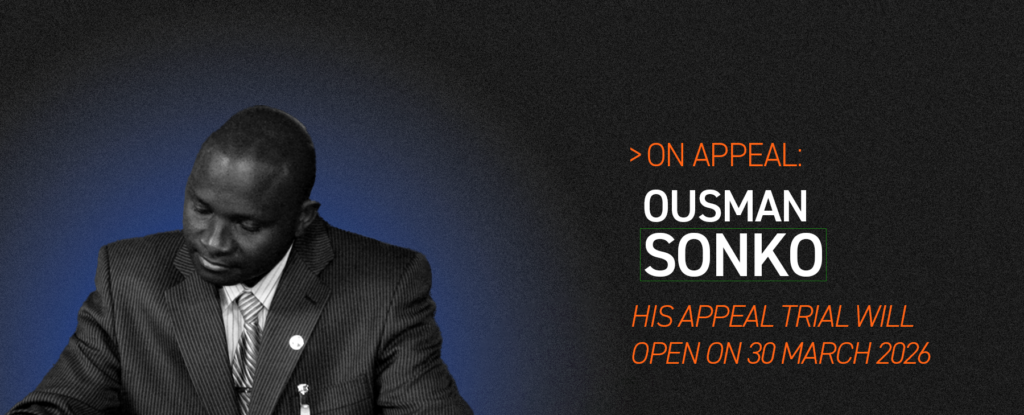
The appeal trial of Ousman Sonko, former Interior Minister of The Gambia, will open on 30 March 2026 before the Higher Appeals Chamber of the Swiss Federal Criminal Court (FCC).
An article by our legal adviser, Benoit Meystre, offering an in-depth analysis of the landmark conviction of Ousman Sonko in Switzerland for crimes against humanity, was published on Opinio Juris. It analyses the written judgement, stating that it represents a milestone for international justice and the fight against impunity. The article highlights both the positive developments and the concerning aspects of the Tribunal’s reasoning, which may have broader implications for future cases. This analysis is particularly relevant for Gambian individuals and civil society organizations, who have been at the forefront of the push for justice, as well as for legal practitioners and scholars interested in the evolving use of Universal Jurisdiction.
Following the oral verdict handed down on 15 May 2024, the Federal Criminal Court has now published the written reasons of its decision. On 445 pages, it replaces the crimes against humanity brought against Ousman Sonko between 2000 and 2016 in a historical, political and institutional context of attacks against the Gambian population.
This judgment is the culmination of a long struggle for justice, led by several survivors of crimes committed by the Gambian regime. It is bound to strengthen the transitional justice process underway in the country, despite being written in German only.
TRIAL International deeply regrets that the Court did not make a translation, at least into English, available to the parties and the public. It further notes that several elements of the judgment raise concerns. This is particularly the case of:
These issues should be debated on appeal, the date of which has not yet been set. We hope that this trial will provide greater access to the parties in the trial and the Gambian public.
The conviction of former Gambian Interior Minister Ousman Sonko in Switzerland for crimes against humanity on 15 May 2024 is historical in many ways. However, the decision by the Swiss Federal Criminal Court’s (FCC) to dismiss all charges of sexual violence casts a shadow over this landmark verdict.
Ousman Sonko was found guilty of three murders, multiple acts of torture, illegal deprivations of liberty in conditions amounting to torture, all committed between 2000 and 2016 during the Yahya Jammeh dictatorship. (PR of the FCC, in French, German and Italian) However, the Swiss court failed to hold Ousman Sonko responsible for multiple rapes committed in the early 2000s and in 2006. While confirming that they had taken place, the court ruled that one of the two survivors of rapes could not be considered as part of the civilian population that was under attack and that they were individual acts committed outside the systematic attack against the population. It therefore had no jurisdiction to prosecute them.
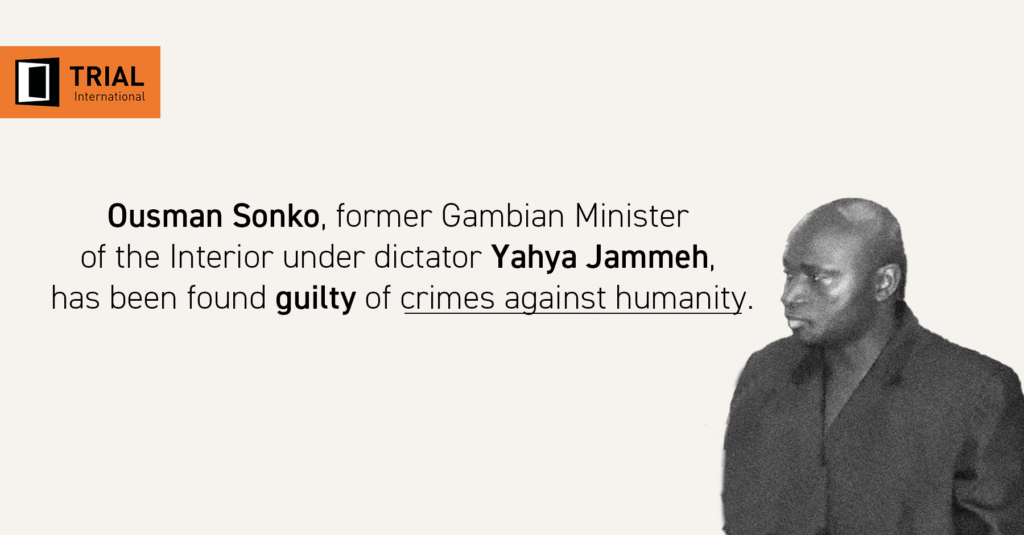
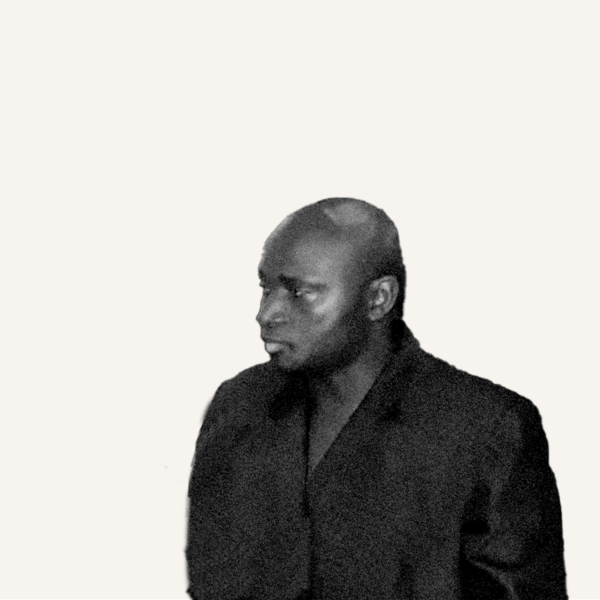
Ousman Sonko, Gambian former Minister of Interior, was convicted today of crimes against humanity by the Swiss Federal Criminal Court (FCC). The FCC found him guilty of multiple crimes committed between 2000 and 2016, under the rule of Gambian ex-President Yahya Jammeh, and sentenced him to 20 years in prison. Mr. Sonko is the highest-ranking official ever convicted in Europe for international crimes under the principle of universal jurisdiction. His was also the second trial for crimes against humanity in Swiss judicial history.
The Swiss Federal Criminal Court has just informed that the verdict in the trial of Ousman Sonko, former Minister of Interior of The Gambia, will be rendered in Bellinzona on 15 May 2024 at 11:00.
In accordance with the procedural code, Ousman Sonko was given the opportunity to address the Court before it began its deliberations.
After the rebuttal of the Prosecutor and the plaintiffs’ councels, it was the turn of the defense to present their conclusions.
In accordance with the code of criminal procedure, the parties were allowed to provide rebuttal arguments. It started with those of the Prosecutor and the plaintiffs’ counsels.
During its closing arguments, the defense concluded that Ousman Sonko should be acquitted of all charges. All civil claims of the private plaintiffs should be dismissed. It also requested that compensation be granted for his deprivation of liberty, including for the illegal detention time and food deprivation to which he was allegedly subjected.
The plaintiffs’ legal representatives started their closing arguments by supporting the Prosecutor’s case for the conviction of Ousman Sonko for crimes against humanity. Read Days 15 and 16.
The legal representative generally supported the Prosecutor’s closing arguments in favor of the conviction of Ousman Sonko for crimes against humanity. Read Day 15.
The Plaintiffs’ counsel began her closing arguments by generally supporting the Prosecutor’s case for the conviction of Ousman Sonko for crimes against humanity, particularly in support of her clients who were victims of atrocities in 2000 and 2006. Read Days 14 and 15.
After pleading Ousman Sonko’s responsibility for each and every charge, the prosecutor went on to discuss sentencing. Read Day 14, Part 3: The sentencing.
After describing the Gambian context and Ousman Sonko’s knowledge of the generalized and systematic attacks against the civilian population since the early years of Yahya Jammeh’s presidency, the Prosecutor addressed the Court on the accused’s criminal responsibility for the various specific crimes with which he is charged. Read Day 14, Part 2: The Charges.
After having formally opened the session, the Court rejected the defense’s request to postpone the closing arguments to April 2024 in order for him to get more time to prepare his arguments and review the case in light of very recent case law. Read Day 14, Part 1: The Context.
Between 8 and 26 January 2024, the first phase of the trial of Ousman Sonko for crimes against humanity took place in Bellinzona, Switzerland.
During these three weeks, the Court heard eight plaintiffs who made the trip to Switzerland to tell their stories as well as three witnesses. Ousman Sonko was also heard on the charges he is accused of: a murder and multiple sexual offenses in 2000 onwards, acts of torture and deprivation of liberty in 2006, a murder in 2011 and acts of torture and deprivation of liberty in 2016, as well as on the general context during the Jammeh regime.
On 26 January 2024, the Court suspended the trial as the parties’ cases were presented.
During this second phase of the trial starting today – and that could last until 8 March 2024 (possibly until 11 March) – the Prosecutor, the plaintiffs’ legal representatives as well as the defense will make their closing arguments.
The trial schedule is available on the Federal criminal Court’s website (top right) in French, German and Italian.
Coming next: the Prosecutor’s closing arguments.
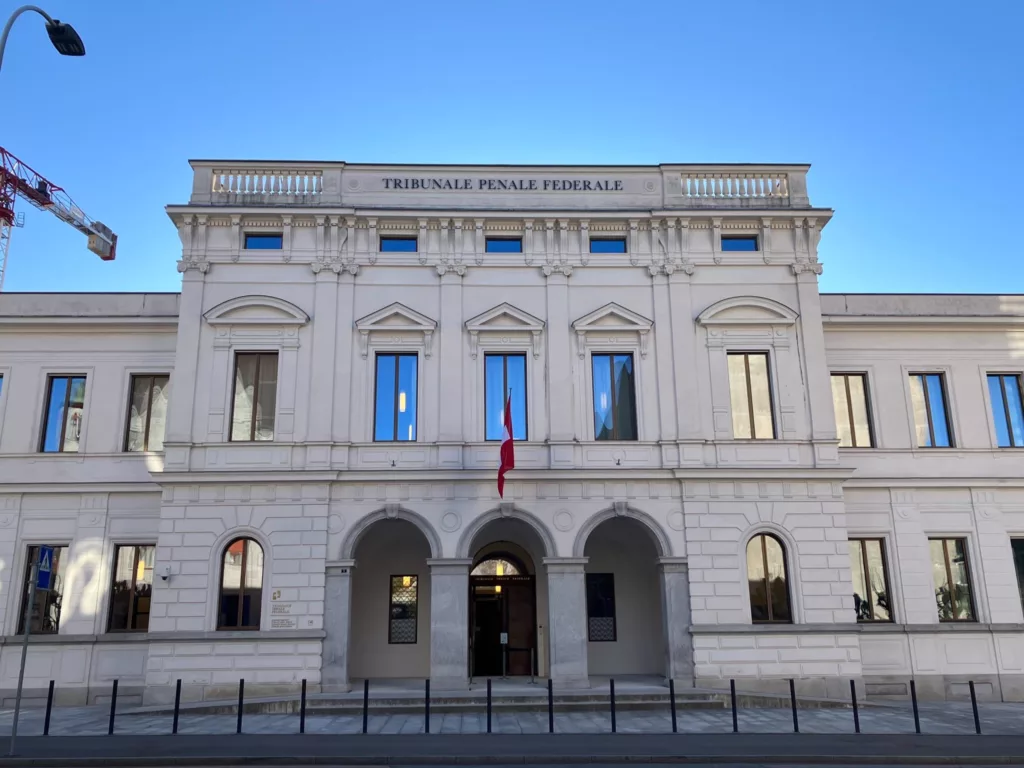
The trial of former Interior Minister of The Gambia, Ousman Sonko, for crimes against humanity allegedly committed under the regime of former dictator Yahya Jammeh, has been ongoing for almost 3 weeks. TRIAL International kept posting daily and weekly summaries from the proceedings.
The 23rd of January 2024 marked the termination of all the parties’ hearings. In accordance with the procedural code, the parties were then given the opportunity to request additional evidence.
The Prosecutor and the plaintiffs recalled that several persons could still be heard in order to support the existence of a system set up to repress the civilian population in the frame of the 2006 events and that the complete casefile that led to the recent conviction of Bai Lowe in Germany be added as evidence material, as well as the asylum claim made by the accused in Sweden. Read Days 12 and 13.
As part of an attempted coup d’état in March 2006, Ousman Sonko is being accused, as an accomplice of a group of perpetrators, of having tortured various people, including members of the army, politicians and journalists, of having illegally deprived them of their freedom, as well as of having committed a rape in Banjul, The Gambia. Read Day 12.
As part of an attempted coup d’état in March 2006, Ousman Sonko is being accused, as an accomplice of a group of perpetrators, of having tortured various people, including members of the army, politicians and journalists, of having illegally deprived them of their freedom, as well as of having committed a rape in Banjul, The Gambia. Read Day 11.
| As part of an attempted coup d’état in March 2006, Ousman Sonko is being accused, as an accomplice of a group of perpetrators, of having tortured various people, including members of the army, politicians and journalists, of having illegally deprived them of their freedom, as well as of having committed a rape in Banjul, The Gambia. Read Days 9 and 11. |
The trial of Ousman Sonko opened on 8 January 2024 before the Swiss Federal Criminal Court (FCC). A panel of three judges is examining the former Gambian Minister of Interior’s responsibility over the numerous crimes against humanity that he is accused of having committed between 2000 and 2016, under the regime of former President Yahya Jammeh.
During the three-weeks trial, Ousman Sonko is represented by a defense team of four. Nine plaintiffs are heard over two weeks. They are represented by their lawyers and supported by TRIAL International, who filed the criminal denunciation against Ousman Sonko in 2017.
After the hearing of Ousman Sonko on 18 January 2024, a plaintiff was called to provide a statement on his arrest and subsequent torture in 2006.
His hearing was interrupted at the end of the day and scheduled to continue on 19 January 2024.
The defense informed the Court and the parties in the evening that it would be unable to represent his client on the following day.
Because the trial cannot continue without the presence of the defense, the Court, in accordance with the procedural criminal code, suspended the proceedings and informed the parties they would resume on Monday 22 January 2024, 08:30 (CET).
As a result, the remaining plaintiffs will have to be questioned next week, therefore the Court agreed that their stay be extended.
The other plaintiffs who were supposed to leave Switzerland on 20 January 2024 – as they already testified – would not have been able to hear the accused’s further questioning next week without finding additional means to extend their stay. Nevertheless, it remains unclear whether the Court will eventually refund them, entirely or even at all.
| With regards to victims’ access to justice, TRIAL International strongly believes that the plaintiffs’ attendance of Ousman Sonko’s hearing and confrontation with the facts at stake can contribute to their healing process as well as provide each and everyone with the closure they have been awaiting for years now. TRIAL International reiterates that the plaintiffs should have been invited, and their costs covered, to attend the full length of the trial in the first place, as victims’ participation to these trials is of utmost importance and aligns with the principle of universal jurisdiction which allows victims to be heard before foreign jurisdictions on the serious crimes they have suffered. |
Ousman Sonko is being accused, in complicity with a group of perpetrators, of having tortured several political opponents and illegally depriving them of their liberty in the context of a political demonstration organized in April 2016 in Banjul. Within this context, Ousman Sonko is in particular suspected of having tortured and then killed one of the organizers of the demonstration.
| Procedural highlight: The Court accepted the Gambian newspaper articles regarding the execution of nine inmates in 2012 as evidence to be added to the casefile. |
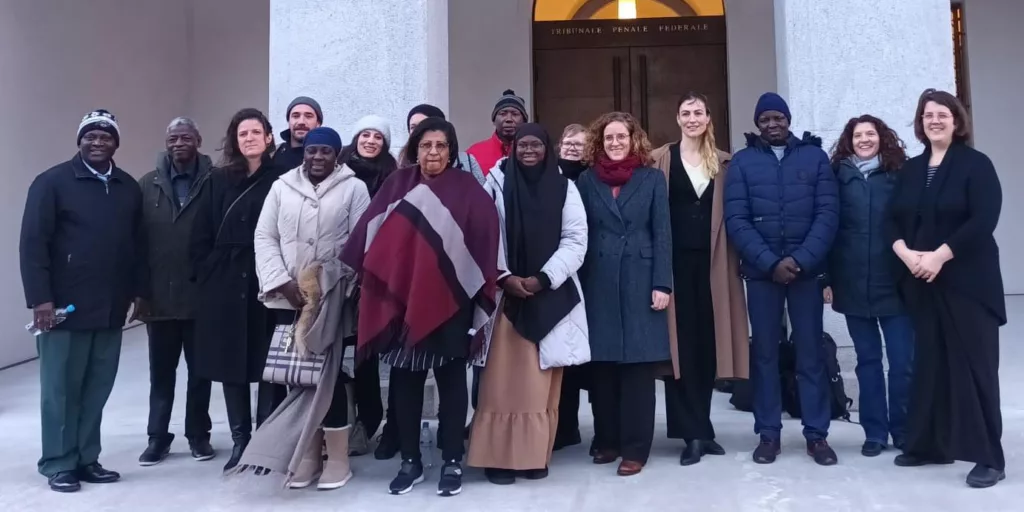
©TRIAL International / plaintiffs, plaintiffs’ lawyers and TRIAL representatives before the FCC in Bellinzona during the second week of the trial.
Ousman Sonko is being accused, in complicity with a group of perpetrators, of having tortured several political opponents and illegally depriving them of their liberty in the context of a political demonstration organized in April 2016 in Banjul. Within this context, Ousman Sonko is in particular suspected of having tortured and then killed one of the organizers of the demonstration. Read these days.
Ousman Sonko is accused of having intentionally killed Baba Jobe – a former member of the National Assembly – in Banjul in October 2011, in complicity with a group of perpetrators.
Ousman Sonko contested all the charges brought against him in relation to this event. A witness was called to testify upon the prosecution’s request. Read Day 6.
(8-12 January 2024, Federal Criminal Court, Bellinzona, Switzerland)
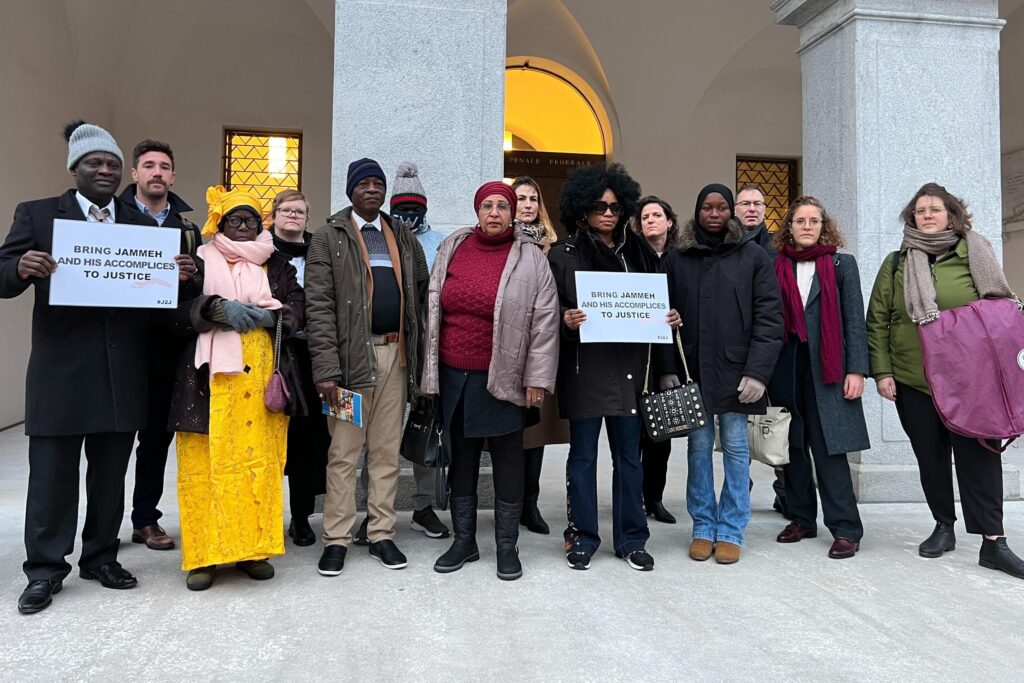
The trial of Ousman Sonko opened on 8 January 2024 before the Swiss Federal Criminal Court (FCC). A panel of three judges is examining the former Gambian Minister of Interior’s responsibility over the numerous crimes against humanity that he is accused of having committed between 2000 and 2016, under the regime of former President Yahya Jammeh.
During the three-weeks trial, Ousman Sonko will be represented by a defense team of four. Nine plaintiffs are heard over two weeks. They are represented by their lawyers and supported by TRIAL International, who filed the criminal denunciation against Ousman Sonko in 2017.
The third plaintiff to be called to the stand in relation to the 2006 events is a former Gambian politician and member of the National Assembly. In March 2006, he was arrested within the frame of the investigation related to a suspected coup d’état against de Gambian government. Read day five.
The first plaintiff to be called to the stand is a Gambian citizen who started his career within the Gambian police force before being integrated in the national army. In March 2006, his military superior – Ndure Cham – was accused by the Gambian government to have fomented a coup d’état. The plaintiff was arrested within the frame of the investigation related to this event. Read day four.
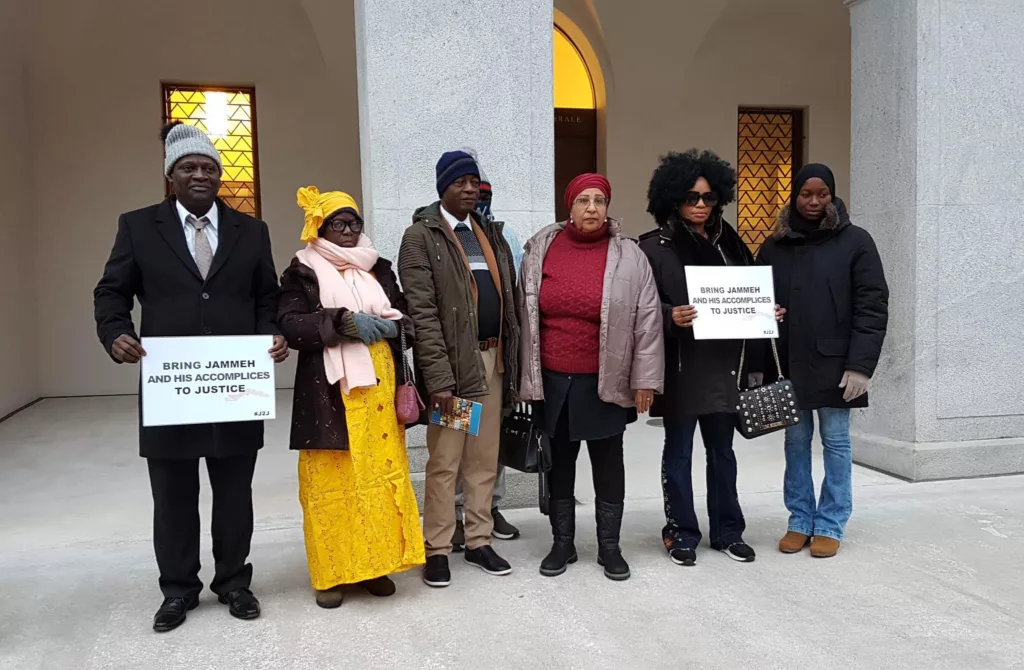
Ousman Sonko is being accused, among other charges, of having participated in the murder of Almamo Manneh, former member of the State Guards, in January 2000 and, of having sexually assaulted his widow between the years 2000 to 2002 as well as having tortured, raped and sequestrated her in 2005. Read our recap for day three.
The proceedings resumed at 1 PM sharp with the Court’s reading of its decision on the preliminary questions discussed during the first day. Read our recap for day two.
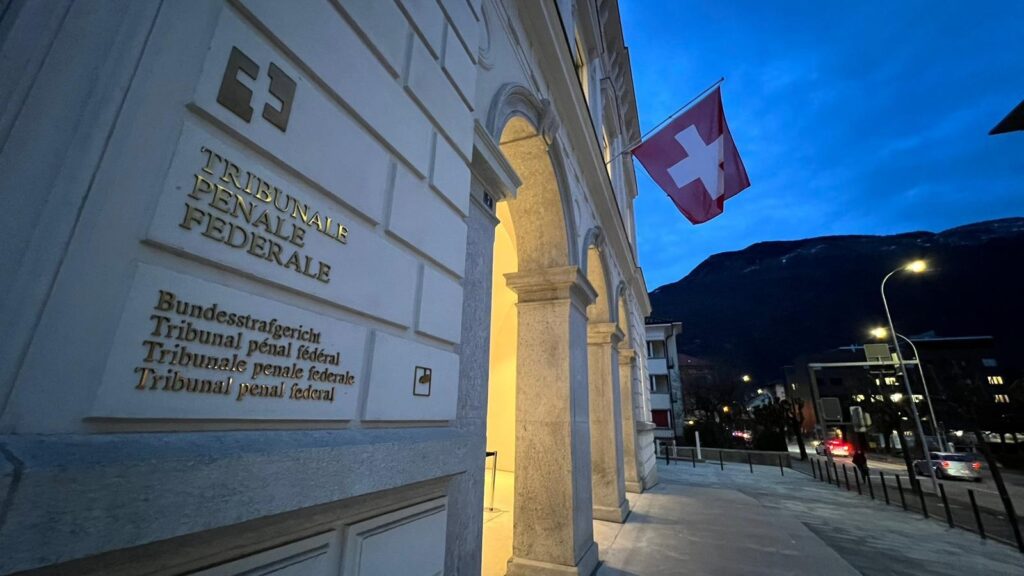
The trial of Ousman Sonko opened today, 8 January 2024, at 9:00 AM before the Swiss Federal Criminal Court, where three judges will be examining the former Gambian Minister of Interior’s responsibility over the numerous crimes against humanity that he is accused of having committed between 2000 and 2016. Read our recap for day one.
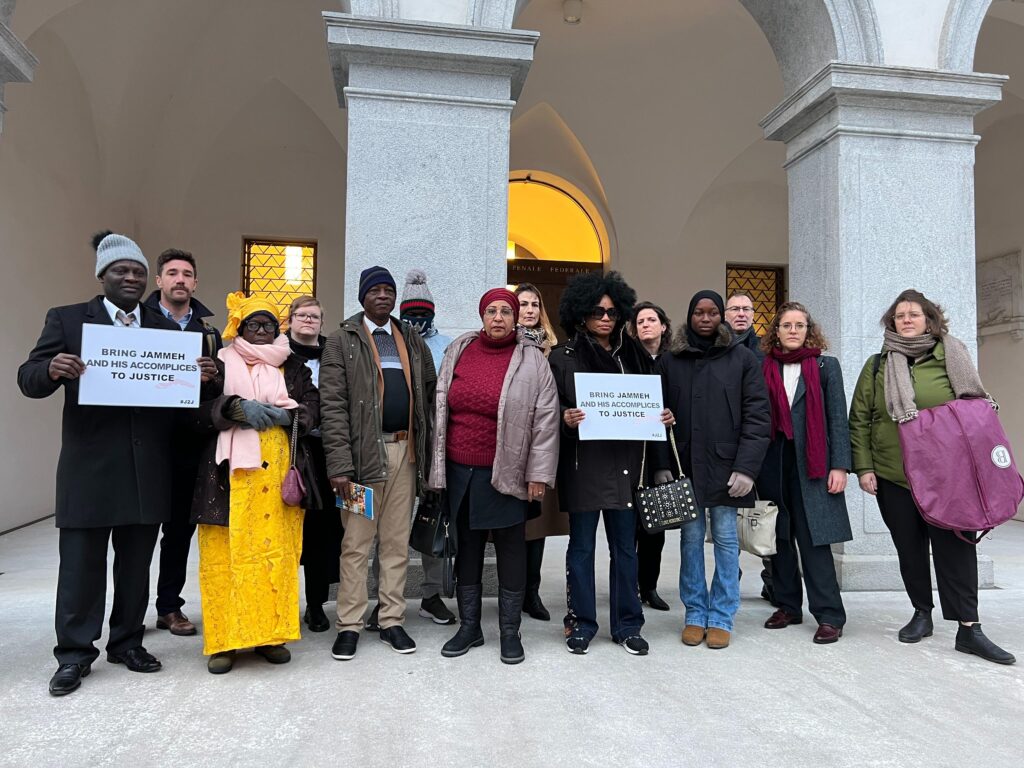

The opening of a Swiss trial on January 8, 2024, for serious crimes committed in The Gambia represents a significant advance for justice for the victims of grave abuses, Gambian and international groups that are part of the Jammeh2Justice campaign said today.

The trial of Ousman Sonko, former Gambian Minister of Interior, will open before the Swiss Federal Criminal Court on 8 January 2024 and last until 30 January. Ousman Sonko is accused of multiple counts of crimes against humanity, allegedly committed under the regime of former Gambian President Yahya Jammeh. TRIAL International filed the criminal complaint against Ousman Sonko in January 2017.
The trial of Ousman Sonko, former Gambian Minister of Interior, will open on 8 January 2024 before the Swiss Federal Criminal Court (FCC).
Ousman Sonko is accused of multiple counts of crimes against humanity, allegedly committed between 2000 and 2016, during the rule of former Gambian dictator Yahya Jammeh.
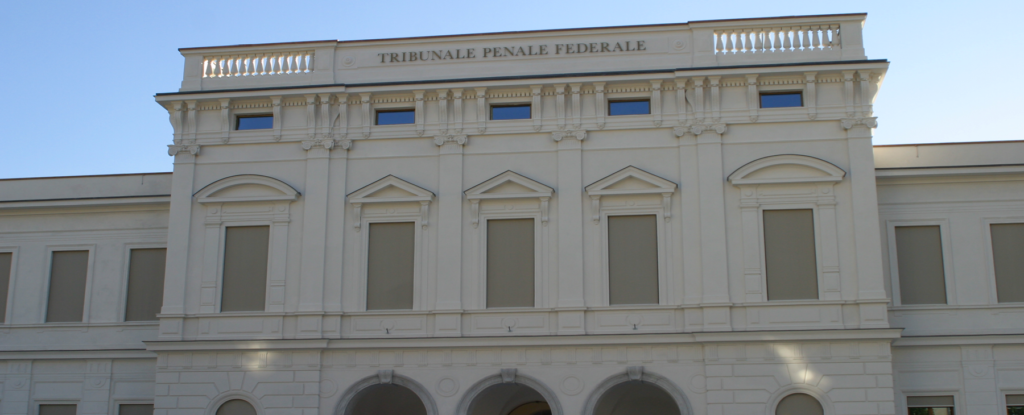
The trial of Ousman Sonko – the former Gambian Interior Minister accused of having committed multiple crimes against humanity – will open on 8 January 2024 before the Federal Criminal Court in Bellinzona, Switzerland.
This will be the second trial for crimes against humanity in the Swiss judicial history. Moreover, Ousman Sonko will be the highest-ranking state official ever to be tried for international crimes in application of the principle of universal jurisdiction in Europe.
With the dates of the opening of the trial, the victims’ hope of finally seeing their abuser brought to justice becomes a reality. “Some of the victims have fought this battle for more than twenty years, and Swiss justice must live up to their expectations” stresses Vony Rambolamanana, Senior Legal Advisor at TRIAL International.

The Office of the Attorney General (OAG) of Switzerland yesterday indicted Ousman Sonko, former Gambian Minister of Interior, for crimes against humanity allegedly committed during the rule of former Gambian dictator Yahya Jammeh. The upcoming trial is a crucial milestone for the transitional justice process in The Gambia, which has started to deal with the past atrocities committed in the two decades of Jammeh’s dictatorship. This is also a landmark case for Switzerland as it is only the second universal jurisdiction case to be tried by the Federal Criminal Court (FCC). The case is equally important since such a high-ranking individual has never been tried in Europe on the basis of universal jurisdiction.
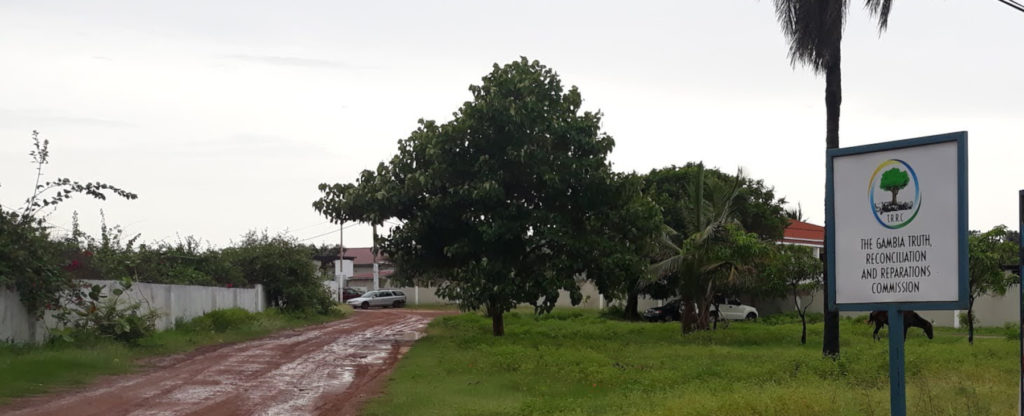
Ousman Sonko, suspected of having committed crimes against humanity and imprisoned in Switzerland for the past five years, now faces additional charges from the Gambian Truth, Reconciliation and Reparations Commission. These charges relate to his role as the right-hand man of former dictator Yahya Jammeh.
The TRRC was established in 2018 in an effort to shed light on the abuses committed by the Jammeh regime. A total of 393 people, including victims, former government officials and members of various security forces, testified during the 871 days of public hearings. The final report of the TRRC was published on 24 December 2021. It concluded that Jammeh and 69 of his associates, including Ousman Sonko, committed crimes against humanity and called for their prosecution.

The session of the Truth, Reconciliation and Reparations Commission on the massacre of 59 migrants from eight West African countries has come to an end on 11 March 2021 in The Gambia. The testimonies that succeeded in recent weeks have revealed new elements, but also confirmed existing information, further strengthening the ties between former President Yahya Jammeh and these murders. Human Rights Watch and TRIAL International support the process to ensure that the former president – in exile in Equatorial Guinea since his departure from The Gambia in January 2017 – is held accountable.

Two years ago, The Gambia created a key tool for transitional justice: the Truth, Reconciliation and Reparations Commission (TRRC). The eleven commissioners of the TRRC are tasked with shedding light on the many abuses that took place under Yahya Jammeh‘s regime between 1994 and 2017. The TRRC hearings, which began in 2019, are being attended by many Gambians. They have so far shed light on dark areas of the past through testimony of victims, witnesses and insiders of the former regime. The mandate of the Commission has recently been extended until the spring of 2021.
The families of more than 50 Ghanaian and other West African migrants killed in The Gambia and Senegal 15 years ago have yet to learn the full truth and obtain justice concerning the massacre, 11 human rights organizations said today. Amid growing evidence that the murders were carried out by Gambian security force members acting on the orders of then-president Yahya Jammeh, the groups called for an international investigation of the massacre.
The former Gambian dictator’s death squad, known as “Junglers”, has killed at least 45 individuals in the region of Casamance in 2005, shows a joint report by TRIAL International and Human Rights Watch (HRW). Their bodies were then thrown in dry wells there and left to rot for years. The same wells could have been used for similar purposes for other crimes. Senegal may have a role to play in their relatives’ quest for justice. TRIAL International and HRW held a press conference in Dakar to present their findings.
The Attorney General of Switzerland has heard two victims in the investigation against Ousman Sonko. The former Gambian Minister of Interior is suspected of crimes against humanity.
It took Destiny (real name withheld) more than ten years to file a complaint against Ousman Sonko. A victim of torture in Gambia, she was finally able to testify before the Attorney General of Switzerland last week in Bern.
Another victim has also travelled from Gambia to testify. He too was tortured when the suspect was at the head of security services.
The Court of Measures of Constraint in Bern has decided to prolong the detention of Ousman Sonko. The former Minister of Internal Affairs and right hand of Gambian dictator Yahya Jammeh is suspected of crimes against humanity.
Ousman Sonko was arrested in Switzerland on 26 January 2017, after TRIAL International filed a criminal complaint against him for torture. Given the suspicions against him, he had been held in pre-trial detention for the last three months.
At the end of this three month-period, the Attorney General of Switzerland was able to extend his detention by 3 months. “We welcome this decision which shows the authorities take the allegations against M. Sonko seriously”, said Philip Grant, Director of TRIAL International. “We hope that the investigation can shed the light on some of the abuses perpetuated by Jammeh’s regime”.
Dictator Yahya Jammeh has reigned for 20 years over Gambia – a reign that saw the widespread use of torture and extrajudiciary executions. The Swiss prosecuting authorities will now have to determine whether one of his closest collaborators, former Minister of Interior, Ousman Sonko, has participated in these crimes.
Since the early 2000s, the international community has repeatedly denounced the brutality of the Gambian regime. The United Nations, NGOs and regional courts have all outlined the numerous exactions committed by the State.
One of the regime’s strongmen, Ousman Sonko, is currently in Switzerland. This former Minister of Interior (2006-2016) was head of the police and of detention centers. Could he really have been unaware of the ongoing human rights violations?
Yuri Harauski is a former member of an elite unit of the troops of the Belarusian Ministry of Internal Affairs (SOBR), created by President Lukashenka in 1998. He is accused of participation in the enforced disappearances of 3 political opponents in 1999. A complaint was filed against him in 2021 and his trial took place in September 2023 in Switzerland. Despite Harauski’s public confession, he was acquitted. His appeal trial will take place on 22 September 2026 in St. Gallen.
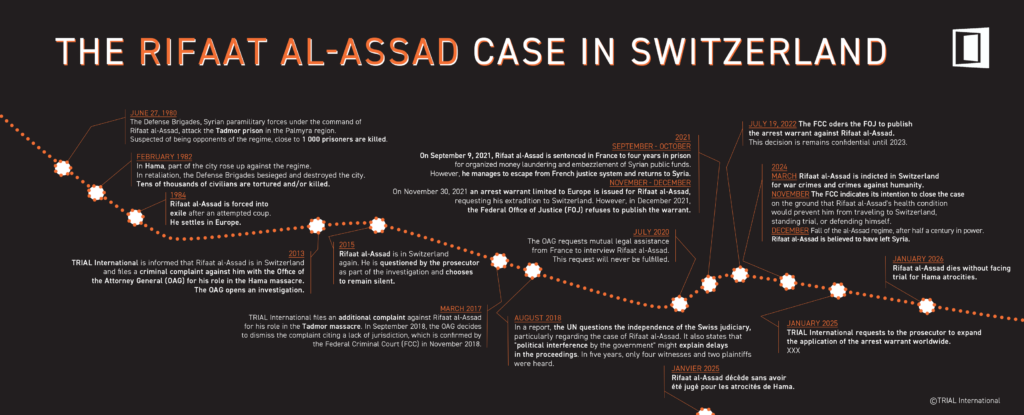
Rifaat al-Assad, uncle of ousted president Bashar al-Assad, has been under investigation in Switzerland since 2013 for his alleged role in the massacre of the Syrian city of Hama in February 1982 by the “Defense brigades”, he was commanding at the time. The OAG indicted him in March 2024 for war crimes and crimes against humanity. Following Rifaat al-Assad’s death on 20 January 2026, at the age of 88, the FCC closed the case.
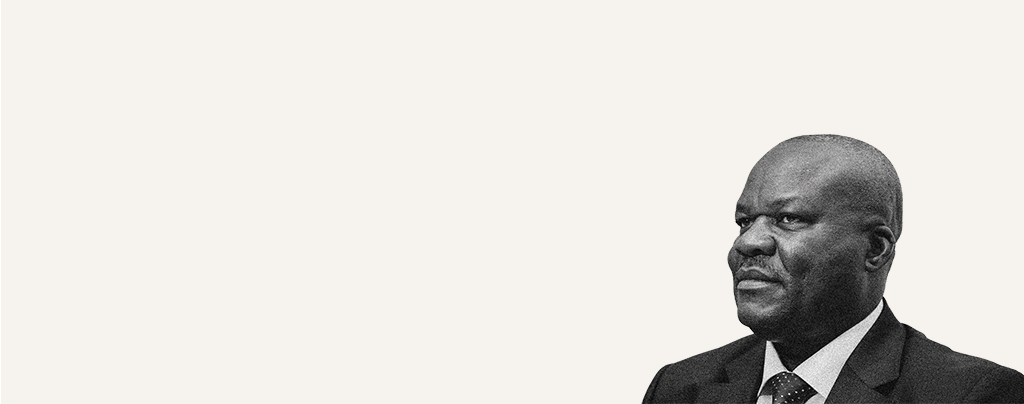
Roger Lumbala Tshitenga is the former leader of the non-state armed group “Congolese Rally for National Democracy” (RCD-N). He was arrested in 2020 in Paris and indicted in 2023 for his alleged complicity in and conspiracy to commit crimes against humanity, namely murder, torture, rape, pillage and enslavement, including sexual slavery, in the provinces of North Kivu and Ituri in the Democratic Republic of the Congo (DRC) between 2002 and 2003. His trial took place at the end of 2025 in Paris.
Bai Lowe, former member of the “Junglers” death squad of former Gambian President Yahya Jammeh, was sentenced to life in prison on 30 November 2023 in Germany for crimes against humanity. His conviction was confirmed by the Federal Court of Justice on 29 November 2024. It was the first trial held under universal jurisdiction for crimes committed in The Gambia during the Jammeh era.

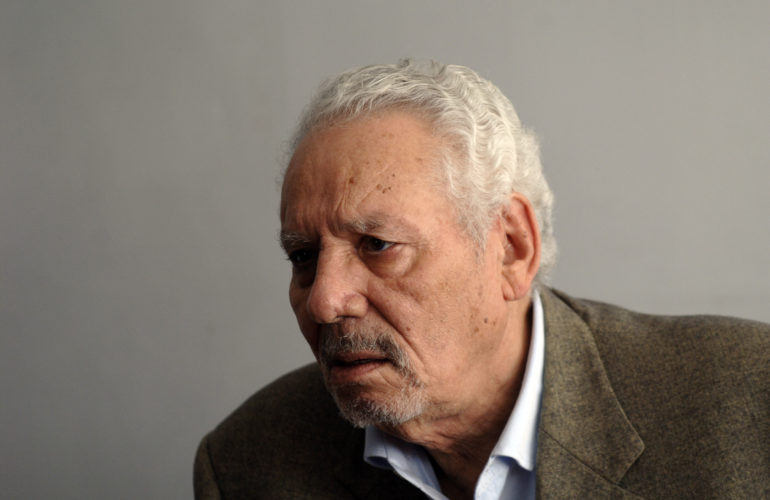
Khaled Nezzar, former Algerian Minister of Defence, was arrested in Geneva in 2011, following a denunciation by TRIAL International. He was indicted for war crimes in August 2023, but died in December 2023. His trial had been scheduled to take place in June-July 2024. In March 2025, the Complaints Court of the FCC rejected the request of two plaintiffs for the recognition of a denial of justice. As a consequence, they lodged a complaint with the European Court of Human Rights, which declared it inadmissible on 16 October 2025.
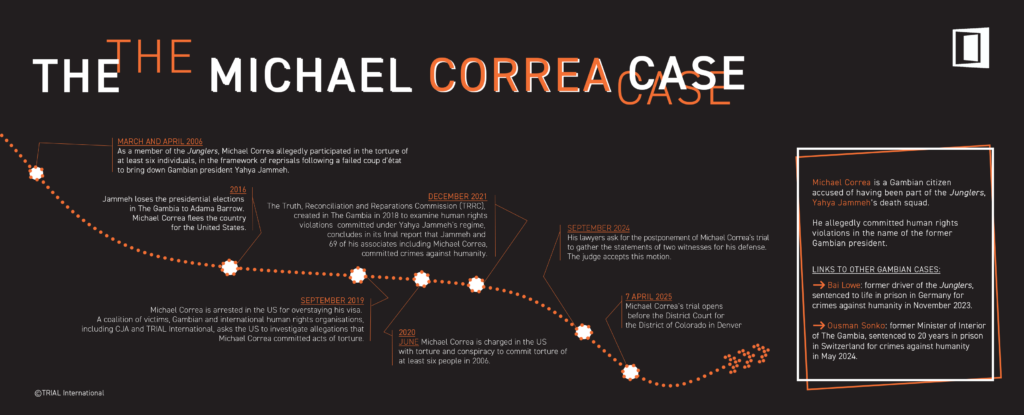
Michael Correa was a member of the “Junglers” death squad of former Gambian President Jammeh. In 2020 he was charged with torture and conspiracy to commit torture of at least six people in 2006. His trial took place in April 2025 in Denver. For the first time, a US jury found a non-US citizen guilty for torture committed abroad. He is the third person tried under universal jurisdiction for crimes committed under Jammeh’s regime. The jury found him guilty of all counts and on 22 August 2025 the judge sentenced him to 810 months, or 67.5 years, in prison.
Kwenga Omari, alias Donat, is a Congolese national and former leader of a Raia Mutomboki militia accused of crimes against humanity, allegedly committed in the territories of Shabunda and Kalehe in the East of the Democratic Republic of the Congo (DRC) between 2017 and 2021.

On May 20, the trial of a dozen militiamen, local politicians and representatives of the Congolese security forces for war crimes and crimes against humanity committed in the Kamonia territory between 2017 and 2018 opened in Tshikapa (Kasai province, Democratic Republic of Congo).

