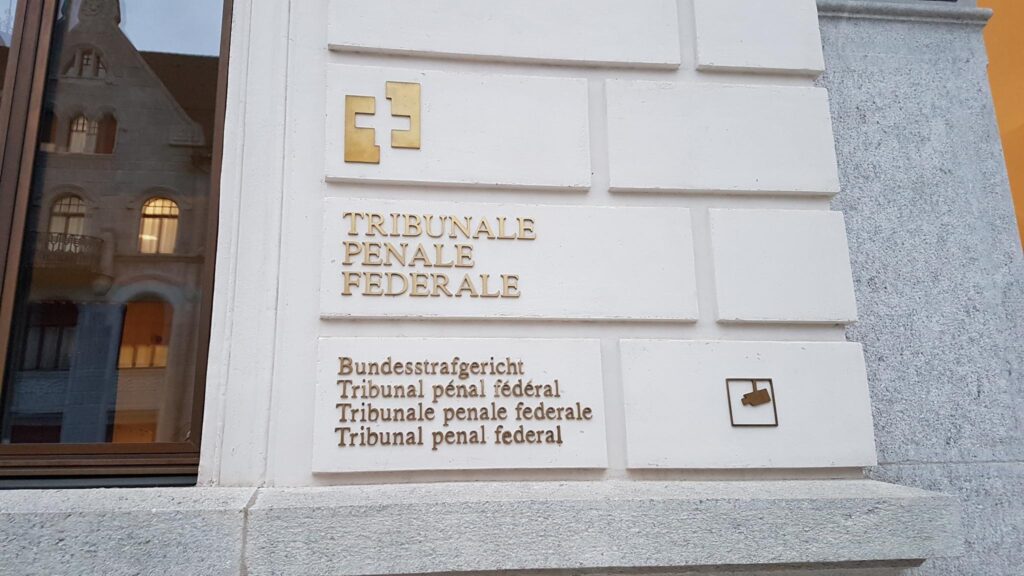
©TRIAL International / Swiss Federal Criminal Court in Bellinzona.


The proceedings resumed at 1 PM sharp with the Court’s reading of its decision on the preliminary questions discussed during the first day. Read our recap for day two.

The Court announced that the ruling will not be translated into English.

On the arguments made by the defense against the indictment, it was ruled that the amendment made after the filing of the indictment before the Court was undertaken in compliance with the law and is hence valid. As a result, the trial will be based on the extended and amended indictment.

More importantly, the Court ruled that the legal criteria leading to its jurisdiction are, a priori, met but that this question can only be fully answered with the examination of the substance of the cause: were crimes against humanity committed in The Gambia during the considered period of time? Once the broader context regarding crimes against humanity is set by examining all the evidence and evidence material, the Court will then consider the parties’ arguments and case law to decide on its jurisdiction, as well as on the statute of limitations.

The Court then examined the numerous claims made by the defense regarding the alleged violation of procedural rules during the course of the investigation led by the federal Prosecutor. It was ruled that the evidence gathered had been collected in compliance with the law and was well documented. As a result, the casefile remains as it is.

Regarding the translation of the proceedings, the Court recalls German has been the procedural language since the beginning and that the law does not provide for proceedings to take place in English as this is not an official national language. Thus, it will stick to its previous decision and not provide interpretation for parts of the trial that it considers not essential for the parties to understand.

Consequently, the trial will proceed, and the Court will examine Ousman Sonko’s criminal responsibility over all the charges brought against him, including facts that took place from 2000 onwards (murder of Almamo Manneh) and repeated sexual violence acts committed on his widow, as well as acts of torture committed in 2006 on persons who had been suspected of a coup in March 2006. The Court will also examine Ousman Sonko’s criminal responsibility over the detention conditions imposed on the plaintiffs arrested in April 2016 as inhumane treatment within the frame of crimes against humanity.

Coming next: hearing of the parties. 


Going forward on the substance of the case


©Wikimedia / Ousman Sonko signing the Convention on Cluster Munitions in Oslo, Norway, in 2008


As prescribed by law, the Court recalled Ousman Sonko of the charges pending against him, based on the indictment. He was then asked to answer questions on his personal situation. He refused to answer in detail about his health situation. However, when asked by his lawyer, he explained that he had been spitting blood because of the bad air quality in the Swiss prison. The accused then affirmed that his seven years of pre-trial detention had been the worst time of his life.

Regarding his financial situation, Ousman Sonko said that he had no more savings and that his family was in financial difficulty. He was still owning the house he occupied in The Gambia but had no other bank accounts than the ones listed in the casefile.

His plans for the future were to return to The Gambia and study law.

Ousman Sonko was then allowed to make a statement. He reaffirmed that he was not guilty of the crimes he was being charged with. Throughout his career, he had always been loyal to his country and served it as best as he could. He would have been happy to address the TRRC if he had had the opportunity and would have reminded the Gambian people of the complexity of the Gambian context.

According to him, during his time as Minister of Interior, he tried to improve the detention conditions as much as he could in, notably, tripling the food budget for prisoners. He also worked to improve the conduct of security forces on the use of force. As Inspector General of Police (IGP), he made efforts to professionalize the police. He stated that he was proud of his achievements.

Ousman Sonko then formulated critics against the Government of Switzerland, arguing that during the years of investigation, the authorities prevented him to obtain the diplomatic protection from his country and that the country was not in position to lecture anyone on human rights.

The accused was then questioned on the general context of attack against the Gambian population.

Ousman Sonko contested the entire charges brought against him with regards to such a context. Amongst other declarations, the accused claimed that he was not aware – and had never heard – Yahya Jammeh’s speeches where he publicly threatened the population – respectively human rights defenders or political opponents – in 2000, 2006, 2009 and 2016.

During his term as Minister of Interior, it is possible that people had been tortured but as far as his Ministry was concerned, he had no knowledge of such crimes. The National Intelligence Agency (NIA) had never been under his control or authority, and he had never worked for the Agency. The Junglers belonged to the State guard battalions which was within the Republican National Guard, under the Ministry of Defense, headed by Yahya Jammeh. The accused claimed he had no knowledge of any harsh treatment that took place in the security wings of Gambian prisons.

Upon his counsel’s questions, Ousman Sonko stated that he had never participated in any meeting with the President Jammeh to develop a strategy to attack the civilian population, neither had he taken part of any Cabinet meetings where torture at the NIA was discussed. In fact, he argued that security services matters were never the subject during those meetings. Neither as IGP nor as MoI was he ever informed about the actions of the Junglers and the NIA never informed him of any acts of torture taking place.

Coming next: the Court will examine the facts related to Almamo Manneh’s murder in 2000. Read day three. 
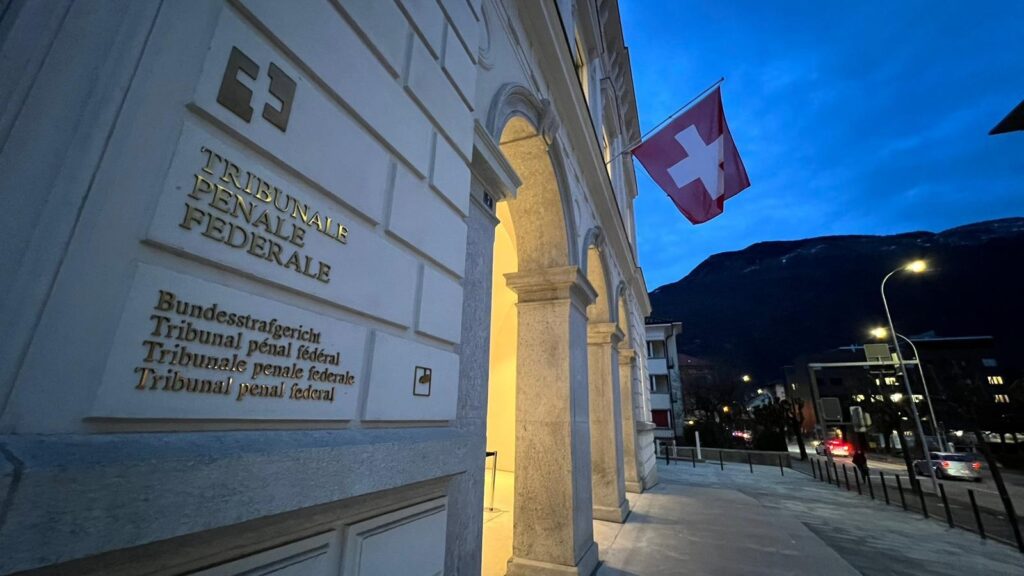


©TRIAL International / The Swiss Federal Criminal Court in Bellinzona

The trial of Ousman Sonko opened today, 8 January 2024, at 9:00 AM before the Swiss Federal Criminal Court, where three judges will be examining the former Gambian Minister of Interior’s responsibility over the numerous crimes against humanity that he is accused of having committed between 2000 and 2016. Read our recap for day one.

Ousman Sonko is present in the Courtroom, seconded by his lawyer and the defense team. Five plaintiffs are also present, while others will join at a later stage of the proceedings. They will be heard over the next two weeks.

In the framework of procedural and organizational questions at the opening of the trial, the plaintiffs’ lawyers notably requested that the electrical chocs imposed on genitals of a victim in March 2006 should not only be considered as torture, but also as independent acts of sexual violence committed within the frame of crimes against humanity. The Court was also requested to examine the charges pressed against Ousman Sonko as aggravated (art. 264a par. 2 of the criminal code), notably given the high number of persons affected and the cruel nature of the acts. The attention of the Court was then raised on the fact that, should the provision repressing crimes against humanity (art. 264a of the criminal code – in force since 1 January 2011) not be applicable retroactively to pre-2011 facts, the International Convention against torture would in any case find application given its ratification in the 1990s by Switzerland.

The defense first criticized the indictment’s extension – where the detention conditions of the plaintiffs in 2016 were added to the charges against Ousman Sonko – and requested that such amendments should not be taken into account by the Tribunal, as a result of procedural violations of the law that allegedly took place during the amendment process.

It was then contested that the Swiss Court has jurisdiction to prosecute Ousman Sonko for the facts that took place before 1 January 2011 and it was claimed that the provisions that entered into force at that time to repress crimes against humanity should not be applied retroactively. Thus, the defense requested the pre-2011 facts to be left out. It was added that most of these charges were time-barred and should be dropped.

In a fourth critique, the defense pleaded for evidence material to be removed from the casefile. In particular, according to the defense, numerous witness hearings as well as filed material had been collected in violation of procedural requirements.

The defense also called for the trial’s full interpretation in English in the interest of Ousman Sonko.


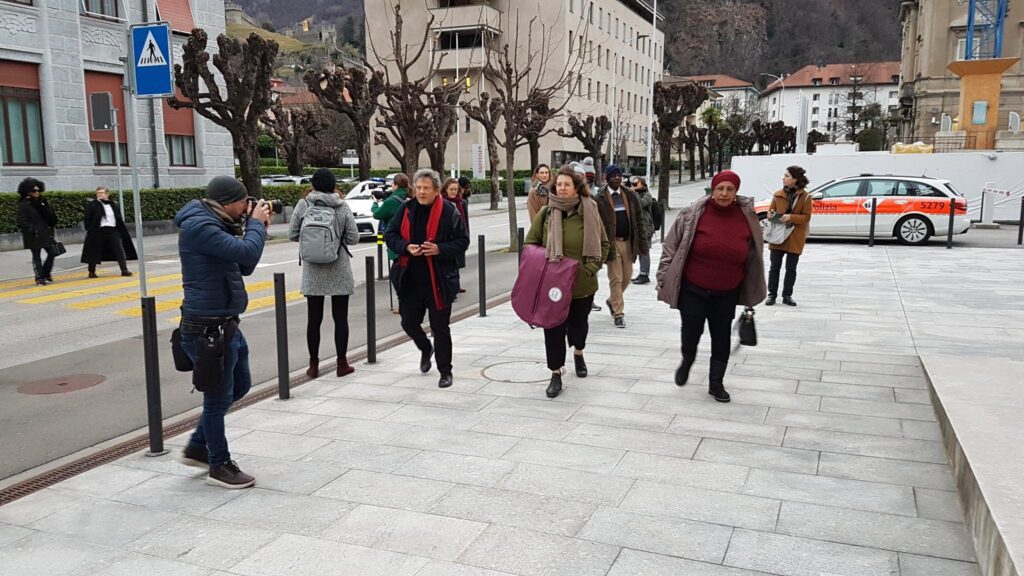
©TRIAL International / Arrival at the court of several of the plaintiffs with their lawyers.


Answers to the defense’s critics of the proceedings


After the defense’s oral arguments on preliminary questions, the Federal Prosecutor took the floor and reacted to the critics regarding the indictment’s amendment. He stated that the procedural code in fact allows such modifications and, hence, that there is no ground to attack the indictment. The Prosecutor then recalled that crimes against humanity are not subject to statute of limitations and that, as a result, none of the charges brought against Ousman Sonko should be considered as time-barred.

The Federal Prosecutor further argued that the Court had the jurisdiction over Ousman Sonko’s alleged crimes and that there had been no violation of the procedural law during the investigation.

The plaintiffs’ lawyers consecutively took the stand. They highlighted that the defense had been deploying many efforts to point out procedural errors made by the Federal Prosecutor during the investigative phase, with the sole purpose of having useful evidence removed from the casefile.

Regarding the Court’s jurisdiction to prosecute and the statute of limitations, it was argued that Swiss jurisdiction over the offenses in question derives not only from the new law adopted in January 2011 – claimed to be applicable to facts committed before that date – but also from the ratification of the Convention against Torture. It was notably referred to the Swiss precedent that unequivocally confirmed the Court’s jurisdiction over crimes against humanity committed in the 1990s in Liberia (Alieu Kosiah – Decision of the Appeal Court of the Federal Criminal Court CA.2022.8 of 30 May 2023) and insisted on the fact that the offenses were not time-barred in application of recent case law (case BB.2021.141 of 23 September 2021).

Finally, the rightful amendment of the indictment by the Prosecutor was supported by the lawyers of the victims of torture in 2016, who were imprisoned in the worst detention conditions, to the extent that they should be considered as inhumane treatment. They argued that Ousman Sonko’s only hope in challenging the legality of the indictment’s modification is to avoid his criminal responsibility, as Minister of Interior, for having imposed or agreed to such harsh detention conditions.

The Court adjourned the hearing to deliberate on these issues.

The decision from the Court is eagerly awaited, for as it will draw the contours of Ousman Sonko’s trial and, his possible criminal responsibility. It is also expected to stand as an important legal precedent with regards to the prosecution – in Switzerland – of international crimes committed before 01 January 2011.

Coming next: Reading of the Court’s decision at 1PM (CET) 9 January 2024.

Gambian Ex-Minister Sonko Faces Crimes Against Humanity Charges

(Geneva, January 5, 2024) – The opening of a Swiss trial on January 8, 2024, for serious crimes committed in The Gambia represents a significant advance for justice for the victims of grave abuses, Gambian and international groups that are part of the Jammeh2Justice campaign said today.

Bai Lowe trial_Germany_Celle_2022
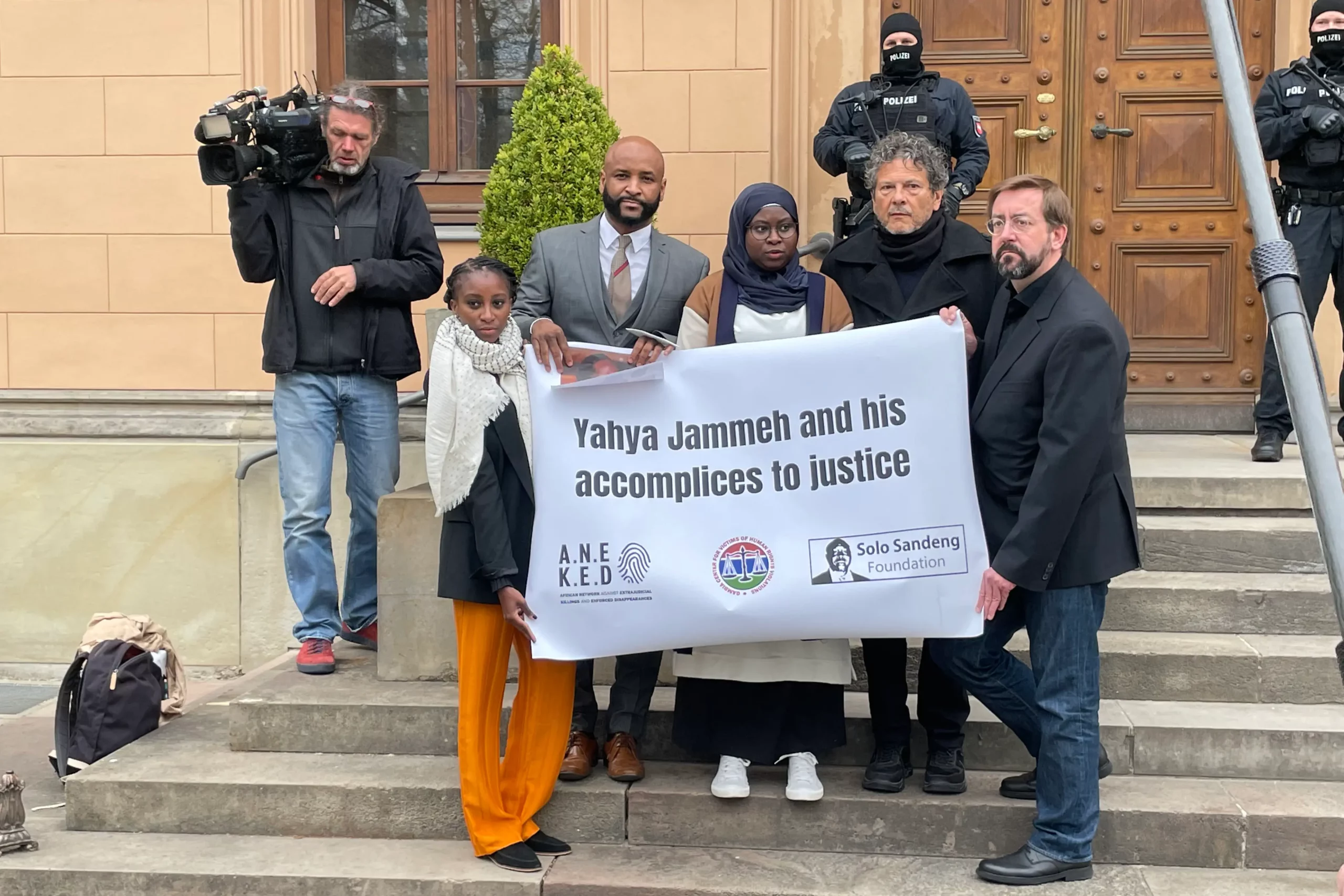
Victims and representatives from non-governmental organizations stand in front of the Higher Regional Court in Celle, Germany. © 2022 Whitney-Martina Nosakhare/HRW

The former Gambian Interior Minister Ousman Sonko is charged with crimes against humanity relating to torture, kidnapping, sexual violence, and unlawful killings between 2000 and 2016 under then-President Yahya Jammeh. Jammeh’s 22-year rule was marked by systematic and widespread human rights violations, such as arbitrary arrests, torture including sexual violence, extrajudicial killings, and enforced disappearances of actual and perceived opponents to his rule.

The trial of Ousman Sonko is another major step in the search for justice for victims of brutal crimes and their families committed under Jammeh’s rule,” said Sirra Ndow, coordinator of the Jammeh2Justice campaign. “The Sonko case should reinforce efforts back in The Gambia to try crimes under Jammeh’s rule so that perpetrators are held to account for the atrocities committed.”

Sonko was arrested in Bern, Switzerland on January 26, 2017, the day after TRIAL International filed a criminal complaint against him. The Office of the Attorney General of Switzerland filed an indictment against Sonko before the Federal Criminal Court on April 17, 2023. The trial, taking place in the city of Bellinzona, is expected to last about three weeks.

The trial is possible because Swiss law recognizes universal jurisdiction over certain serious international crimes, allowing for the prosecution of these crimes no matter where they were committed and regardless of the nationality of the suspects or victims. Swiss nongovernmental organizations, former federal prosecutors, members of parliament, and others have previously criticized judicial officials in Switzerland for lagging behind other European countries on universal jurisdiction cases despite having solid legislation to address serious crimes.

With Sonko’s trial, Switzerland appears at last to be gaining momentum on prosecuting atrocity crimes committed abroad,” said Philip Grant, executive director at TRIAL International, which supports plaintiffs in the case. “Sonko is the highest-level former official to be tried under the principle of universal jurisdiction in Europe.”

Sonko is the second person to be tried in Switzerland before a non-military court for serious crimes committed abroad, the second person to be tried in Europe for crimes committed in The Gambia, and the highest ranked official to be prosecuted in Europe on the basis of universal jurisdiction. Gambian activists and survivors, and international advocates will attend the trial’s opening in Bellinzona and are available for comment. The first case addressing crimes committed in The Gambia was in Germany against Bai Lowe, a former member of the paramilitary unit known as the “Junglers,” which Jammeh created. Lowe was convicted and sentenced to life in prison by a German court on November 30, 2023, for two murders and an attempted murder, constituting crimes against humanity.

A major challenge will be to ensure that Gambians, whether in the audience or outside the courtroom, can access, follow, and understand the proceedings, which will be conducted in German. Survivors, victims’ groups, and civil society groups have tried to ensure that information on developments is disseminated within The Gambia to increase their impact.

Developments in the proceedings of such a significant case should be made accessible to Gambians, victims and non-victims alike, in the English language, which they understand, thereby boosting their interest in the trial,” said Fatoumata Sandeng, a plaintiff in the Sonko case who heads the Solo Sandeng Foundation. “Greater action on accountability by the government back home in Gambia is also needed.”

Since Jammeh’s fall, The Gambia has moved forward with only two prosecutions for Jammeh-era crimes. In December 24, 2021, the final report of Gambia’s Truth Reconciliation and Reparations Commission(TRRC) found that Jammeh and 69 of his associates committed crimes against humanity, and called for their prosecution. On May 25, 2022, the Gambian government accepted the TRRC’s recommendation for accountability, but without an action plan.

On May 12, 2023, the government presented a long-awaited detailed implementation plan calling for the creation of a Special Prosecutor’s Office to complete the investigations initiated by the TRRC and to prepare case-ready dossiers. A hybrid tribunal of Gambia and the Economic Community of West African States (ECOWAS) would be created to carry out prosecutions of the most serious offenses. The Gambia and ECOWAS have created a joint technical committee to develop the hybrid court.

The Gambian government and ECOWAS should move without delay to create the hybrid court,” said Elise Keppler, associate international justice director at Human Rights Watch. “Victims and the Gambian public have waited a very long time to have the chance to see justice done.”

Groups involved with the campaign include: Africa Center for International Law and Accountability (ACILA), African Network Against Extrajudicial Killings and Enforced Disappearances (ANEKED), Amnesty International–Ghana, Center for Justice and Accountability (CJA), Commonwealth Human Rights Initiative (CHRI), Gambia Center for Victims of Human Rights Violations, Ghana Center for Democratic Development (CDD-GHANA), Human Rights Advocacy Center, Human Rights Watch, International Commission of Jurists, Institute for Human Rights and Development in Africa (IHRDA), Media Foundation for West Africa (MFWA), POS Foundation, Right 2 Know–Gambia, Solo Sandeng Foundation, The Toufah Foundation, TRIAL International, and Women’s Association for Victims’ Empowerment (WAVE).

For more information on the trial, please visit:
https://trialinternational.org/latest-post/ousman-sonko-case-the-second-trial-for-crimes-against-humanity-in-switzerland-to-take-place-in-january-2024/ or read our Frequently Asked Questions about the case.

For more Human Rights Watch reporting on The Gambia, please visit:
https://www.hrw.org/africa/gambia

For more information, please contact:

  • For Human Rights Watch, in New York, Elise Keppler (English, French): +1-917-687-8576 (mobile); or kepplee@hrw.org. Twitter: @EliseKeppler
  • For TRIAL International, in Geneva, Vony Rambolamanana (English, French, German): +33-66 -48-80-305 (mobile); or media@trialinternational.org. Twitter: @trial
  • For ANEKED, in New York, Nana-Jo Ndow (English, French, Spanish, Portuguese): +1-929-684-5734 (mobile); or nanajo.ndow@aneked.org. @theANEKED
  • For International Commission of Jurists, in Barcelona, Reed Brody (English, Spanish, French, Portuguese): +1-917-388-6745 (mobile); or reedbrody@gmail.com. Twitter: @reedbrody
  • For Solo Sandeng Foundation, in Germany, Fatoumatta Sandeng (English, German, Mandinka, Wollof) +49-16-31-74-75-19 (mobile); or solosandengfoundation@gmail.com. Twitter: @solosandengfound

(Geneva, 4 January 2024) – The trial of Ousman Sonko, former Gambian Minister of Interior, will open before the Swiss Federal Criminal Court on 8 January 2024 and last until 30 January. Ousman Sonko is accused of multiple counts of crimes against humanity, allegedly committed under the regime of former Gambian President Yahya Jammeh. TRIAL International filed the criminal complaint against Ousman Sonko in January 2017.

Banner_CP ouverture procès Ousman Sonko Gambia

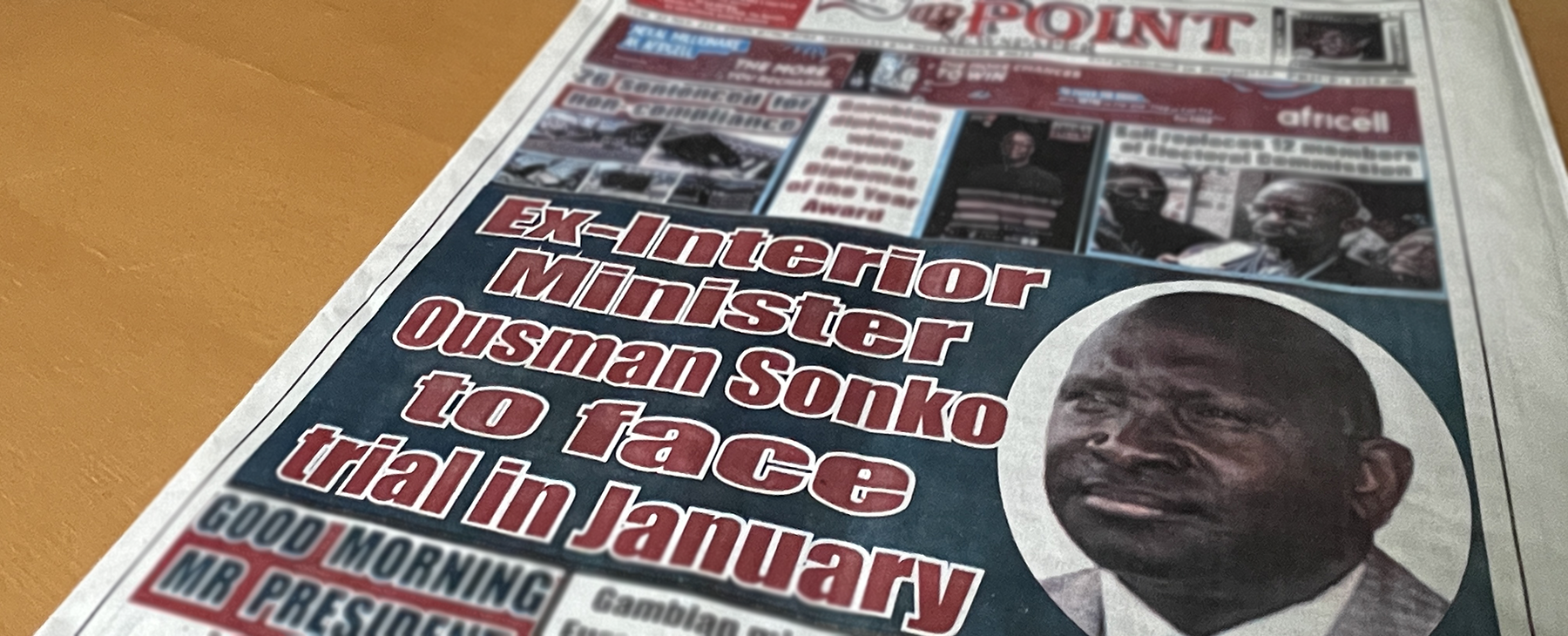
Frontpage of Gambian national media reporting about Ousman Sonko’s trial in Switzerland.

The Swiss prosecuting authorities have charged Mr. Sonko with a range of heinous acts: the killing of a political opponent in 2000; acts of sexual violence between 2000 and 2002, as well as in 2005; involvement in torture and illegal detention related to a coup plot in March 2006; and the murder of a politician in 2011. The Office of the Attorney General also accuses Ousman Sonko of having co-perpetrated deprivation of liberty and acts of torture of peaceful demonstrators in 2016, when he was Minister of the Interior. These acts have been qualified by the Swiss prosecutor as crimes against humanity.

This trial is a significant moment in Swiss judicial history, being only the second trial for crimes against humanity in the country. Ousman Sonko will also be the highest-ranking state official ever to be tried for international crimes under the principle of universal jurisdiction in Europe”, said Leslie Haskell, President of TRIAL International. Under this principle, States have the possibility to prosecute the perpetrators of international crimes on their territory, regardless of where the crimes were committed or the nationality of the perpetrators and victims.

TRIAL International is supporting nine plaintiffs who will travel all the way to Bellinzona to be heard by the court. Unfortunately, a tenth passed away in October 2023, due to lasting consequences of her mistreatment at the time. This trial shines a beacon of hope for victims of the atrocities committed during Jammeh’s 1994-2016 reign of terror. On 30 November 2023 already, a former member of a paramilitary unit known as “Junglers”, created by the former President, was sentenced by a German court to life imprisonment for crimes against humanity, in relation to two murders and an attempted murder. Another alleged member of the same death squad, Michael Correa, is scheduled to stand trial in Denver, USA, in September 2024. He faces charges of torture and conspiracy to commit torture.

While the transitional justice process in The Gambia remains too slow, these trials in Germany and Switzerland are finally providing the closure that the victims have been waiting for too long now”, said one of the plaintiffs, whose identity remains hidden at this stage. Indeed, a possible recognition of Ousman Sonko’s role in the abuses committed during Jammeh’s dictatorship will not only contribute to reducing impunity for the violations that took place in The Gambia during Mr. Jammeh’s regime, but may also spur domestic prosecutions, propelling the transitional justice process initiated in 2017.

The proceedings will be in German and open to the public and the media. However, there will be no interpretation provided other than when the defendant, the victims and English-speaking witnesses will take the stand. TRIAL International expresses regret over this decision, which will limit the ability of plaintiffs, journalists and the Gambian community to fully comprehend and report on the proceedings. Upholding the principle that “justice must not only be done but be seen to be done,” TRIAL International advocates for meaningful access to such a historic trial for victims and the affected Gambian communities.

The trial of Ousman Sonko – the former Gambian Interior Minister accused of having committed multiple crimes against humanity – will open on 8 January 2024 before the Federal Criminal Court in Bellinzona, Switzerland.

Tribunale Penale Federale_Bellinzona_Wikimedia
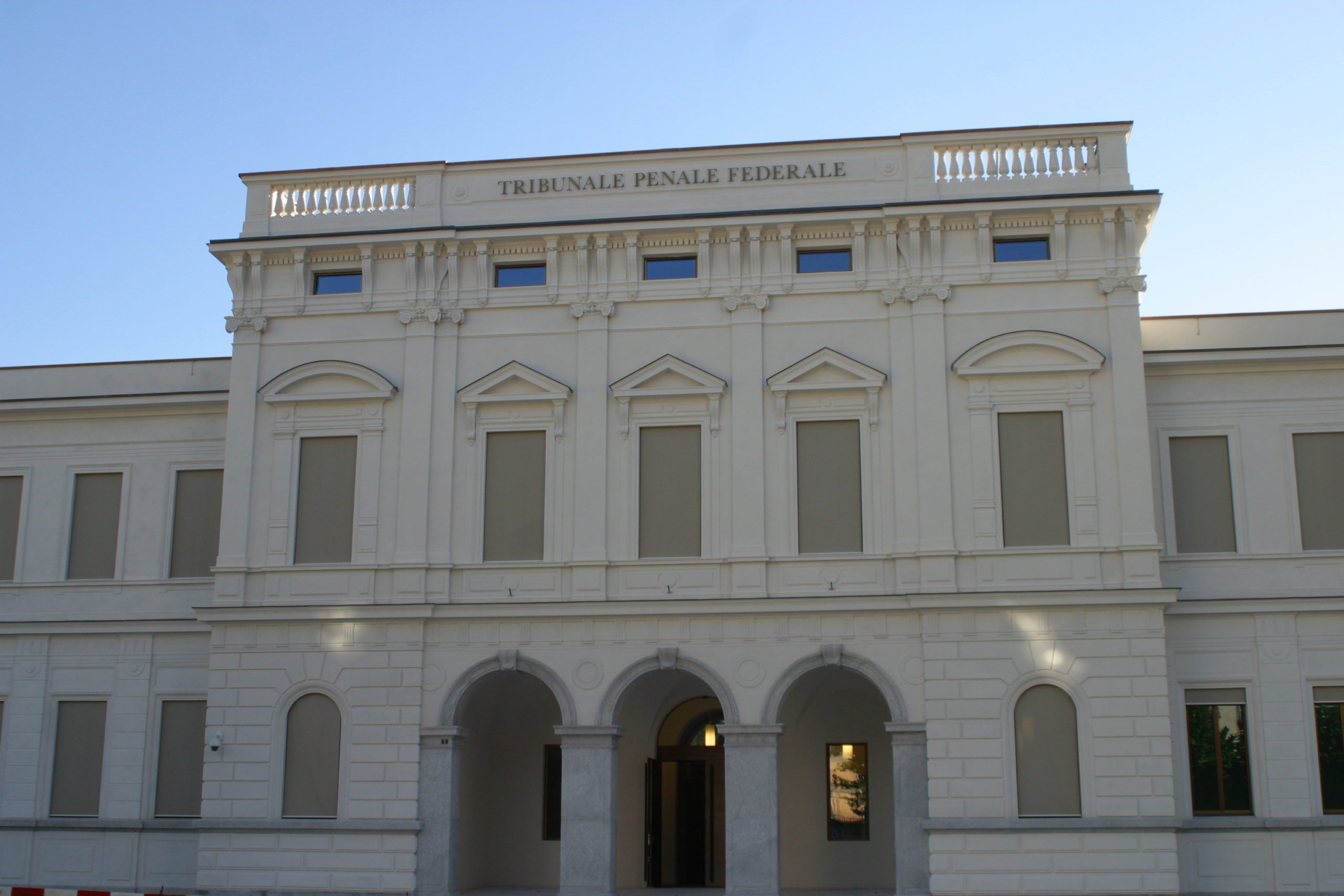
The building of the Federal Criminal Court in Bellinzona, Switzerland. © Wikimedia Commons

This will be the second trial for crimes against humanity in the Swiss judicial history. Moreover, Ousman Sonko will be the highest-ranking state official ever to be tried for international crimes in application of the principle of universal jurisdiction in Europe.

With the dates of the opening of the trial, the victims’ hope of finally seeing their abuser brought to justice becomes a reality. “Some of the victims have fought this battle for more than twenty years, and Swiss justice must live up to their expectations” stresses Vony Rambolamanana, Senior Legal Advisor at TRIAL International.

A possible recognition of Ousman Sonko’s role in the abuses committed during Yahya Jammeh’s regime would be an important sign for the transitional justice process undertaken by the Gambia in 2017. The recent news of the arrest of a human rights defender, a journalist and other activists raises fears of an upsurge in repressive measures against those who oppose the government. The trial of one of the senior officials of the Jammeh regime could send a strong signal, and give new impetus, to the search for truth and justice for which many Gambians have worked to date.

As a reminder, the accused was arrested in Bern on 26 January 2017. The day before, TRIAL International had filed a criminal complaint against him. On 17 April 2023, after more than six years of investigation, the Office of the Attorney General of Switzerland (OAG) filed an indictment before the Federal Criminal Court. The OAG accuses Ousman Sonko for having taken part in numerous acts of torture, kidnapping, sexual violence and killings perpetrated between 2000 and 2016 in The Gambia.

The fact that the case is finally going to trial is very important for our clients” says lawyer Fanny de Weck. “This trial should notably show whether hierarchical superiors – and not just those who executed the crimes – can be held to account on the basis of universal jurisdiction” adds lawyer Nina Burri. Both lawyers are representing private plaintiffs in the trial against Ousman Sonko.

The proceedings will be in German and open to the public and journalists within the limits of the available courtroom space.

Interest journalists can request accreditation with the General Secretariat of the FCC.

Further information provided by the FCC.

For more details: read our press release of 18 April 2023 and our Q&A. (available in English, French and German)