
The Global Initiative Against Impunity (GIAI)*, including FIDH, the CICC, REDRESS, TRIAL and WIGJ, condemns the announced withdrawals of Burkina Faso, Mali and Niger from the Rome Statute of the International Criminal Court (ICC). This move marks a serious retreat from accountability and undermines decades of African leadership in the global fight against impunity. It weakens not only the ICC but also the global project of international justice at a time when unity is urgently needed.
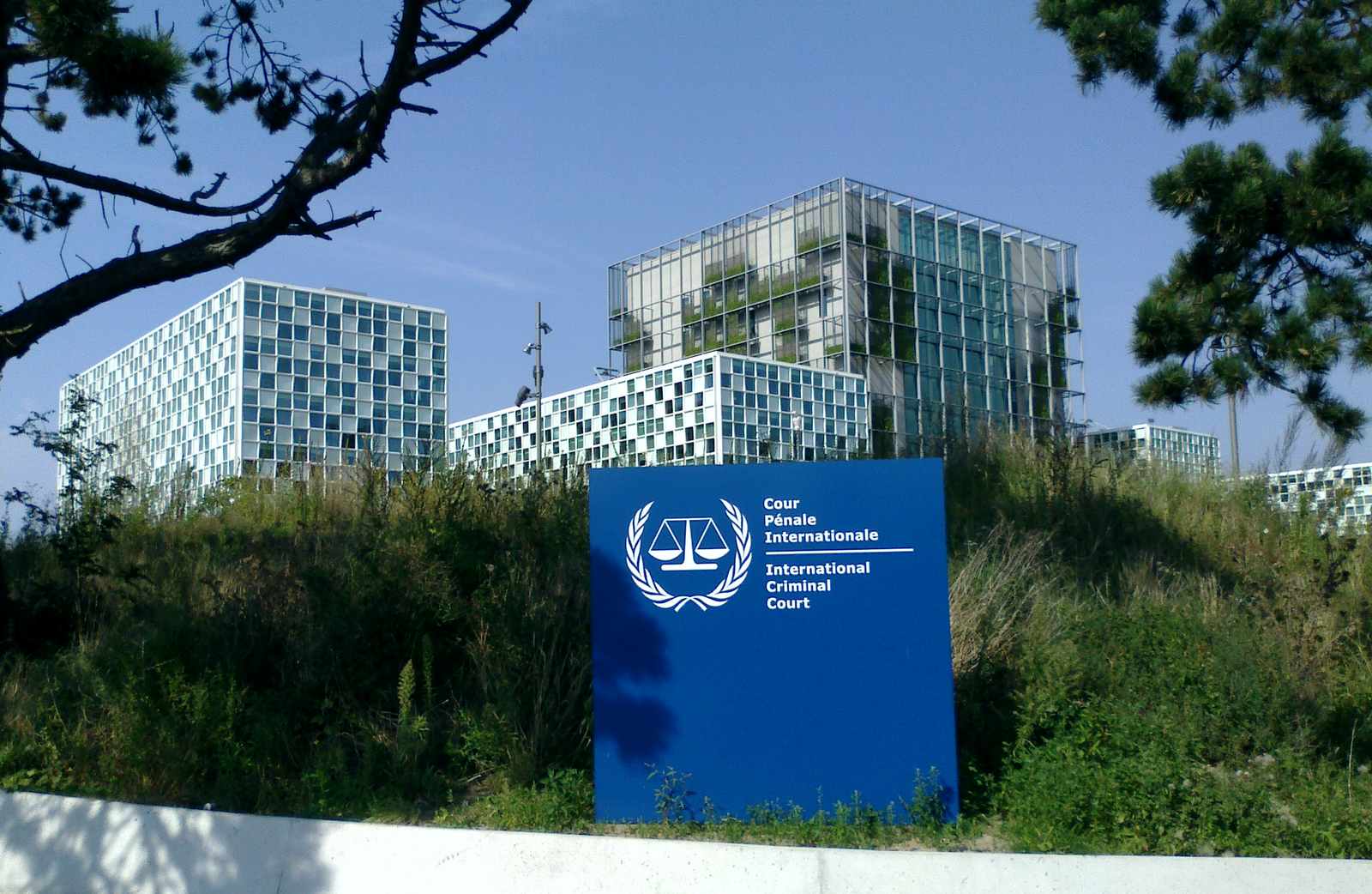
©View of the International Criminal Court in The Hague (Netherlands) – OSeveno / Creative Commons BY-SA 4.0


Withdrawals cannot take effect immediately
On 22 September, the three member states of the Alliance of Sahel States (AES) – Burkina Faso, Mali and Niger – declared they were leaving the ICC “with immediate effect.” Yet, under Article 127 of the Rome Statute, a state must provide written notification to the Secretary-General of the United Nations to withdraw from the Rome Statute, and the withdrawal only takes effect one year after such notice is given. Until then, the AES states remain fully bound by their obligations under the Rome Statute, including the duty to cooperate with the Court. Withdrawal does not affect proceedings already underway provided they relate to crimes committed before the withdrawal takes effect.The ICC still has active cases arising from the Mali situation, which was referred to the ICC by the government of Mali in July 2012. The reparations process in the Al Mahdi case is in its final phase. Al Mahdi was convicted on 27 September 2016 of intentionally directing attacks against religious and historic buildings in Timbuktu. In addition, the Court is expected to deliver its decision on reparations in the Al Hassan case in the coming months, in relation to his convictions on 26 June 2024 for war crimes and crimes against humanity in Timbuktu. An arrest warrant also remains outstanding for Iyad Ag Ghaly, alleged leader of Ansar Dine (an active jihadist movement in Mali).
 

From leadership to retreat: victims left behind

African states played a leading role in the creation of the Court in 1998, overwhelmingly ratifying the Rome Statute, even referring their own situations to the Court. Their engagement gave victims of grave crimes a vital international ally when justice was not possible at home. The announced withdrawals reverse this history of leadership, leaving victims with fewer avenues to seek justice.

The decision follows the three states’ departure in January 2025 from the Economic Community of West African States (ECOWAS) – another institution they helped shape and which had built a strong human rights record through its Court of Justice. Such withdrawals signal a retreat from accountability, leaving victims without recourse, eroding human rights protections, and deepening isolation at a moment when regional and international cooperation is most needed, particularly in those countries grappling with atrocities linked to terrorism.

“The decision to withdraw from the ICC weakens the position of victims, for whom the Court often represents the last hope to obtain justice. After their withdrawal from ECOWAS, the loss of ICC protection leaves victims in Burkina Faso, Mali, and Niger with no recourse for the serious human rights violations they continue to endure.” said Drissa Traoré, Secretary General of FIDH. “In these countries affected by a multi-dimensional crisis, national courts are still unable to provide justice and reparation to the victims, mainly due to a lack of political will and incapacity to investigate war crimes and crimes against humanity.”


A blow to international justice at a fragile moment

The announced withdrawals by Burkina Faso, Mali and Niger come at a time when international justice is under increasing strain. Earlier this year, Hungary also announced its intention to leave the Rome Statute, in a move widely criticised as undermining global accountability.

While the ICC has previously received criticisms regarding the selectivity of cases brought before it and for its perceived overfocus on Africa, the Court has gradually worked to strengthen universality in the implementation of its mandate, broadening its reach far beyond Africa, with active investigations and cases in Afghanistan, Bangladesh/Myanmar, Palestine, Ukraine, Venezuela, Libya, and the Philippines. Recent arrests of Libyan suspects and the surrender of former President Rodrigo Duterte show that no region or power is immune from scrutiny. This universality strengthens the Court’s legitimacy – but also makes it more vulnerable to political attacks.

“States Parties must show resilience and reaffirm their commitment to the Court, to accountability, and to the rights of victims worldwide,” said Alix Vuillemain, Executive Director of Women’s Initiatives for Gender Justice (WIGJ). “At a time when the Court is under mounting attack, states must move towards universality, not retreat. Turning away now only fuels impunity.”


States’ role in safeguarding international norms

The role of the ICC in the broader international justice framework is significant. It complements, rather than replaces, existing mechanisms such as truth-seeking processes and transitional justice initiatives, which remain essential for lasting peace. The Rome Statute enshrines key principles that underpin international justice: no immunity for heads of state, complementarity with national jurisdictions, and the rights of victims to participate and seek reparations. Withdrawal from the Statute risks weakening these protections at the national level and eroding decades of progress in building global norms against impunity.

The GIAI urges all ICC States Parties to reaffirm their commitment to the Rome Statute. At a moment when victims in Africa and around the world are facing escalating violence, it is vital to preserve the ICC as a court of last resort.


*The Global Initiative Against Impunity for international crimes: Making Justice Work (GIAI) is a consortium of eight international NGOs and the Coalition for the ICC, co-funded by the European Union, which aims to contribute to the fight against impunity by supporting a comprehensive, integrated, and inclusive approach to justice and accountability for serious human rights violations and international crimes. This statement does not necessarily reflect the position of each of its member organisations.
Reliable sources indicate that the United States (US) plans to sanction the International Criminal Court (ICC) as an institution in the coming weeks. This follows a series of designations, first against the ICC Prosecutor, Deputy Prosecutors, judges, Palestinian NGOs, and also the UN Special Rapporteur on the situation of human rights in the occupied Palestinian territories. Now is the time for states, civil society, academics, journalists, and all those committed to international justice and the rule of law to stand up and do everything possible to defend the Court and organisations supporting its work.


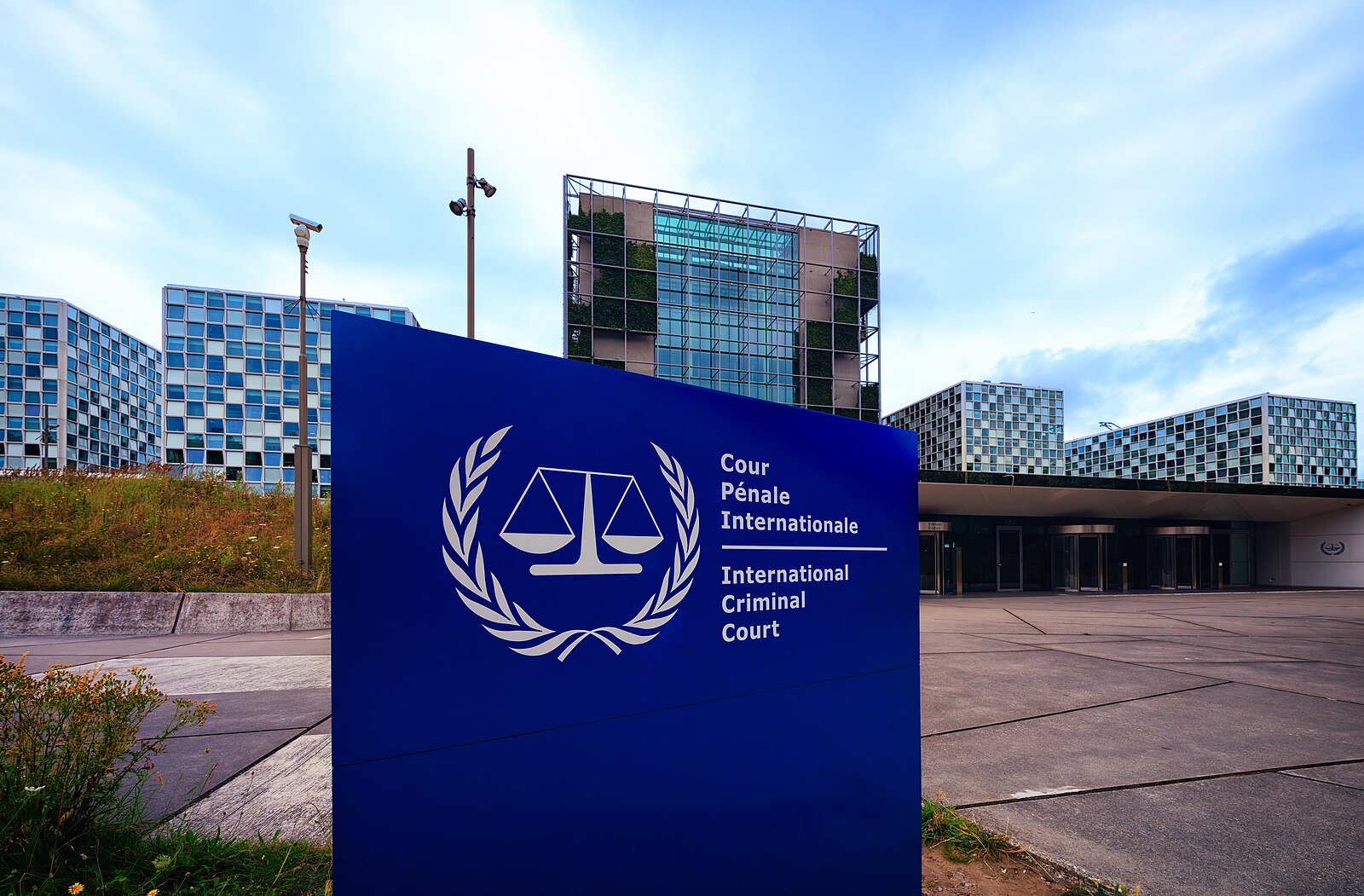
© The International Criminal Court (ICC) at The Hague, Netherlands, 23 juillet 2024, Tony Webster, licence CC BY-2.0, via Wikimedia Commons.

Civil society from around the world urgently calls on States Parties to the Rome Statute to do everything in their power to stop the proposed US sanctions against the ICC, an independent judicial institution with a mandate to confront impunity for the gravest crimes known to humanity. Sanctions against the ICC, taken unilaterally by a non-State Party, amount to an all-out assault on a global court backed by 125 States Parties and relied on by the international community to ensure accountability for atrocity crimes. Such sanctions would leave countless victims abandoned by obstructing a last resort to justice, weaponising the global financial system to choke the Court’s work, and entrenching double standards where power and politics dictate which survivors deserve justice.

Sanctioning the ICC would mark a dangerous turning point in the history of international justice, transforming a system designed to hold the most powerful accountable for atrocity crimes into one that instead shields the powerful. It involves retreating from hard-fought progress toward a rules-based order to a world where might triumphs over right. An international justice system built over decades could crumble in the face of external pressure exerted to unduly influence the course of justice. It is a total affront to the rule of law with devastating repercussions for justice everywhere: if the ICC can be manipulated through financial coercion, no court or accountability mechanism is safe in any country or region.

Sanctioning the ICC as an institution could sever the Court’s ability to function, including its access to financing from banks and states, and block essential services needed to keep it operating. US control over the global financial system ensures the impact of mere threats of sanctions reaches far beyond Washington, as non-American banks, insurers, and service providers often over-comply in fear of themselves being sanctioned, blocking even basic transactions. Without funds, the Court risks not being able to keep the lights on, pay staff, protect data, protect witnesses supporting its work, pay legal aid to victims and defendants, let alone deliver reparations to victims. It threatens core functions of the Court, including the detention of suspects. Hard-won gains, such as the recent arrest and surrender of former Philippines President Rodrigo Duterte and the German arrest of Libyan suspect, Khaled Mohamed Ali El Hishri, could be lost. Ongoing investigations of alleged international crimes in other situations might be stalled or abandoned indefinitely, leaving victims unable to access justice worldwide.

If sanctions render the Court inoperative, there will be no way back. We will have lost forever one of the most relevant institutions of the past century. The global community cannot let this happen.

We call on ICC States Parties to urgently protect the ICC and the Rule of Law by:

  • Publicly and firmly rejecting sanctions against the ICC as an institution, its staff and officials, and organisations and individuals supporting its work.
  • Bilaterally engaging with the US Administration to prevent designations against the ICC as an institution, its staff and officials, and organisations and individuals supporting its work.
  • Adopting domestic and regional blocking measures including enforcing the European Union’s Blocking Statute (Council Regulation (EC) No 2271/96), to demonstrate solidarity and protect individuals and entities from the impact of sanctions and shield businesses within their respective territories so that they can continue to work with the ICC, its staff and officials, and civil society supporting the Court.
  • Protecting service providers by guaranteeing that providing services to the ICC and organisations supporting its work is lawful and shielded.
  • Developing practical alternatives to the US-dollar banking network of transactions that are cleared through the US financial system, so the Court and its supporters can keep funding their essential work.
  • Providing guidance and creating legal safeguards to prevent non-US banks and service providers from over-complying with threats of US sanctions.
  • Fulfilling their legal obligations under the Rome Statute, including financial contributions to the Court’s annual budget, strong political backing to the Court’s independence and continued functioning, cooperation with the Court notably on the arrests and surrender of suspects, and resisting any pressure to disengage in response to sanctions.

Below is a full list of organizations that have endorsed the statement, presented in chronological order:

  1. International Federation for Human Rights (FIDH)
  2. REDRESS
  3. TRIAL International
  4. European Center for Constitutional and Human Rights (ECCHR)
  5. Women’s Initiatives for Gender Justice
  6. Open Society Justice Initiative (OSJI)

Civil society organisations wishing to sign on to this statement are invited to do so here. 

In a media release on 15 September 2018, the Congolese government stated it “did not exclude” withdrawing from the jurisdiction of the International Criminal Court (ICC). This is an alarming scenario in which the victims could pay the highest price. 

TRIAL International is highly preoccupied by the threat emanating from Congolese authorities to withdraw from the Rome Statute of the ICC. Alleging that “certain governments exerted pressure on the judges”, the government could leave the world’s first permanent jurisdiction to prosecute the gravest crimes.


A collaboration reinforcing the ICC’s image

In April 2004, Democratic Republic of the Congo (DRC) was the first country to refer its own situation to the ICC. Since then, several cases regarding crimes committed in DRC have been investigated and prosecuted by the Court.

This collaboration between DRC and the ICC until now reinforced the Court’s credibility and demonstrated the Congolese authorities’ commitment to fight impunity among its leaders. This recent declaration seems to fly in the face of these positions and sends an alarming message.


Some crimes could go unpunished

If Kinshasa’s threats were indeed followed by DRC’s withdrawal from the Rome Statute of the ICC, the Congolese people – and indirectly the international community as a whole – would be the biggest losers”, says Daniele Perissi, Head of the DRC program at TRIAL International. “It would mean that certain crimes, whose authors DRC is unwilling or unable to prosecute, could simply go unpunished.”

Burundi’s example shows that withdrawing from the ICC is a step towards international isolation and a dismissal of fundamental principles of the fight against impunity. It would be very unfortunate if DRC chose to follow the same path at such a crucial moment for the affirmation of good governance. The country is currently preparing for presidential elections – a high-tension campaign closely monitored by the international community.

On 9 November, Pre-trial ICC judges have announced that they have authorized the ICC prosecutor to open an investigation into alleged crimes committed in Burundi or by nationals of Burundi outside Burundi. The ICC retains jurisdiction over the situation even though Burundi withdrew from the ICC on 27 October 2016

The decision was made under seal on 25 October 2017, but not issued for public release in order to protect victims and potential witnesses.

We are delighted with this decision”, says Pamela Capizzi, Head of the Burundi program at TRIAL International. “Civil society’s courage and determination has been rewarded, and most importantly the victims and their family will finally get their voice heard.”

The Pre-Trial Chamber considered that there is a reasonable basis to proceed with an investigation in relation to crimes against humanity. Most of the crimes under consideration were allegedly committed by state security forces. While the investigations will focus on the period from 26 April 2015 until 26 October 2017, the Prosecutor may extend it to crimes committed before and after that period if certain legal requirements are met.

Learn more about crimes committed in Burundi


Burundi’s withdrawal has no influence on the ICC’s jurisdiction

The Pre-Trial Chamber found that the Court has jurisdiction over crimes allegedly committed while Burundi was a State party to the ICC Statute. Burundi was a State Party from the moment the Rome Statute entered into effect for the country in 2004, up until last month when its withdrawal became effective.

Learn more about Burundi’s withdrawal from the Rome Statute

The Pre-Trial Chamber found that the Court may exercise its jurisdiction even after the withdrawal became effective for Burundi as long as the investigation or prosecution relate to alleged crimes committed during the time Burundi was a State Party. Moreover, Burundi has a duty to cooperate with the Court since the investigation was authorized on 25 October 2017, prior to the date on which the withdrawal became effective for Burundi.

The judges also noted the Burundian authorities’ insufficient action so far, despite repeated international pressure. Accordingly, there is no conflict of jurisdiction between the Court and Burundi.

Learn more about the principle of complementarity

By opening an investigation into Burundi, the ICC has proved that oblivion and impunity are no longer options for mass crimes”, concludes Pamela Capizzi. “It constitutes one more step towards a solid and courageous international justice system, truly at the service of the victims worldwide.”


The United Nations Commission of Inquiry reckoned that crimes against humanity had been committed in Burundi since 2015. As tension between Bujumbura and the international community reaches its height, two legal experts analyze possible scenarios.


How did the presentation of the Commission of Inquiry on Burundi unfold? How have states and NGOs reacted?

Lambert Nigarura, President of the Burundian Coalition for the ICC: With the exception of four states, all countries and organizations of civil society welcomed the Commission’s work, as well as the courage and determination of its members.

Pamela Capizzi, Head of TRIAL International’s Burundi program: I was pleased that some states condemned Burundi’s withdrawal from the Rome Statute, calling on it to reverse its decision. Most also agreed with the recommendation of the Commission of Inquiry concerning an ICC inquiry.


Indeed, what do you think of the recommendation to the ICC to open an inquiry*?

LN: This recommendation is very relevant. It is proof that the members of the Commission of Inquiry are convinced that crimes within the jurisdiction of the ICC have been committed, that is, the most serious crimes committed on a large scale. It is now up to the ICC, which has the jurisdiction to qualify said crimes, to take action.

PC: I too am also delighted with this recommendation, notably because it is the result of meticulous documentation, as well as a rigorous legal analysis from the Commission of Inquiry.


What are the different possible scenarios at present?

PC: If the ICC opens an investigation before Burundi’s withdrawal on 27 October 2017, the government will be legally obliged to cooperate. But given Bujumbura’s defiance in recent months, the likelihood is that this will do nothing. The other scenario is that the ICC opens an investigation after 27 October. Unfortunately, Burundi would no longer be obliged to cooperate, but at least an investigation would take place, sending out a strong message and establishing the truth.

LN: If the ICC failed to open an inquiry at all, it would be a huge disappointment for the victims and a dangerous precedent for international justice. The Burundian government would have succeeded in defying the international community, the United Nations and all legal mechanisms without any consequence. The Burundian people themselves would feel betrayed and abandoned, fueling the vicious cycle of violence and frustration contributing to the political instability.

PC: That is absolutely true: victims could seek justice through other mechanisms, but the main message would be that the Burundian authorities can act with complete impunity, without having to answer for their crimes. Other countries could then take a leaf out of its book and do the same.


What is the probability that the ICC opens an investigation at present?

PC: The Commission of Inquiry’s report is public, rigorous and well-argued. Its allegations that crimes against humanity have been committed certainly cannot leave the ICC indifferent. However, I would like to point out that the opening of an investigation by the ICC will only be a step towards fighting impunity in Burundi. This action alone will not be able to eradicate the problem, so I hope that an ICC investigation will be just one step in the process of finding lasting solutions to impunity.


The Burundian government recently called on African states to “stand together against the ICC”. Mr. Nigarura, what do you think is the dominant feeling in Africa?

LN: It must be understood that this call has not been echoed. It is true that the African countries do not trust the ICC, but few really plan to avoid its jurisdiction. Civil society, of which I am a member, is aware that Africans are the first victims of these crimes, and that they don’t often have access to independent justice. The ICC remains the only jurisdiction in the world capable of guaranteeing this right.


*The International Criminal Court opened a preliminary examination in 2016 which could lead to an investigation. Learn more

The ICTY may not have brought the desired reconciliation in BiH, but its influence and legacy provides a crucial basis for future endeavors. An op-ed by Selma Korjenic.


The last-resort tribunal

In 1993, the International Criminal Tribunal for the Former Yugoslavia (ICTY) was established in The Hague (Netherlands). Tasked with the prosecution of the highest-ranked suspects from across the region, it represented hope for thousands of victims and their families.

But since its opening – and arguably even before – it has been criticized for being, among others things, politicized, biased and unfair. The acquittals of high-profile defendants a few years ago only exacerbated that claim. Figures on all sides of the conflict felt they were judged too harshly and their opponents too clemently.

After 25 years of existence, the Tribunal will close its doors permanently in the coming months. And although it has not been perfect, its influence on the establishment of responsibility, fact-finding and victims’ empowerment has been significant.


Groundbreaking jurisprudence

The ICTY established many milestone decisions on genocide, war crimes and crimes against humanity. As the first international tribunal since Nuremberg, its jurisprudence paved the way for the International Criminal Tribunal for Rwanda, mixed courts in Sierra Leone, Cambodia and Timor Leste, and more recently the International Criminal Court.

The ICTY trial of Duško Tadić, a member of Republika Srpska’s Army from Kozarac, was the first case to ever prosecute and punish sexual violence against man.

In Dragoljub Kunarac and others, the Tribunal was the first to prosecute sexual violence as the crime against humanity of enslavement. Similar charges were brought against Chadian dictator Hissène Habré last year.

But among all the ICTY’s achievements, none is more important than the voice it gave to survivors.


A stage for voiceless victims

The Balkans has experienced many wars in the past – the 1990s war the most recent and brutal example. After each conflict, countless crimes remained untold, or only shared through family narratives. The innocent suffered in silence.

The ICTY changed this dynamic. It gave survivors the possibility to speak and be heard, encouraging others to do the same. Many guilty verdicts relied heavily on their testimonies.

The Tribunal initiated a broader movement, giving many victims their purpose and agency back. It also led many to join victims’ associations, with a one shared goal: to seek for truth and justice.


The fights ahead

The ripple effect of the ICTY was particularly visible after 2005, when cases started being transferred to domestic courts. Already-empowered victims continued speaking up, demanding that BiH continue down the ICTY’s path. They also advocated for the realization of their other rights, such as reparations.

The ICTY has overturned the victims’ previous passive role and given them the possibility to tell what happened them during the war. By giving them a voice, the Tribunal has directly influenced their empowerment to fight for their rights and never be silenced again.

Selma Korjenic, Head of BiH Program
@SelmaKorjenic1


The International Criminal Court (ICC) celebrates its 15 years of existence. But without a strong network of non-governmental organizations, it may never have existed.

In 1995, 25 human rights organizations founded the Coalition for the International Criminal Court (the Coalition). They were lobbying for the establishment of a permanent court to the top-rank suspects of genocide, war crimes and other international crimes.

Against the odds, this small group grew in size and influence. By the time States started negotiating the founding treaty of the Court, the Coalition counted 800 member NGOs. Today they are over 2’500.


Civil society’s megaphone

The Coalition is a unique network stretched across 150 countries and federating very diverse organizations. By uniting under the same umbrella, they pool resources and multiply their impact.

We utilize the power of global civil society to maximum effect, ensuring that the voices of both small and large organizations have an impact on the larger landscape” explains Niall Matthews, Head of Communications at the Coalition.


Building momentum for the ICC

Even before the ICC came into being, the Coalition contributed to putting international justice on the global agenda. It drummed up interest among governments and pushed for an international conference to establish the Court.

In July 1998, as States gathered to negotiate the Court’s Statute, civil society represented the biggest delegation, with almost 500 attendants. Legal advisors, media experts, activists all offered their support to participating States to produce the best possible treaty.

The Coalition helped adopt crucial features of the Rome Statute of the International Criminal Court, such as gender sensitivity and victims’ and witnesses’ protection.


A network to inform and denounce

Today, the Coalition pushes for the universal ratification of the Statute. It lobbies States to join the Court – Russia, the US, India and China still haven’t. But equally important is ensuring member States fully integrate the Statute’s dispositions in their national legislation. By offering their legal expertise, NGOs guide and advise States to make their domestic systems compliant with the Court.

NGOs also help the Court gather information and evidence, especially grassroots groups in countries where it has cases. Conversely, it also ensures beneficiaries of the Court (such as victims and witnesses) are kept informed about procedures and their rights.


Finally, the Coalition is aware the Court is facing substantial criticism.

We acknowledge the imperfections of current international justice efforts and seek solutions to make the system more effective, independent, and accessible” concludes Niall Matthews.


TRIAL International has been a member of the Coalition for the ICC since its creation in 2002. It headed the Swiss Coalition for the ICC from 2004 to 2015.

Read more about the Coalition for the ICC
Read more about international justice

An op-ed by Pamela Capizzi

The country showed no sign of improvement in 2016, perpetuating a detrimental situation for human rights.

By definition, a crisis is a transitional state. In Burundi, however, the “crisis” has lasted for almost two years and seems anything but transitional. Widespread repression is here to stay.

In 2016, the political situation in Burundi did not improve a bit. On the contrary, the Burundian authorities dug their heels in and gradually cut ties with the international community. Among the most notable examples are the retraction from the Committee against Torture’ examination and the withdrawal from the International Criminal Court.

These political gestures have been accompanied by a significant shrinking of the already reduced democratic space. Following the suspension of numerous civil society organizations at the end of 2015, Burundi suspended several others in 2016. Deprived of their assistance, abuse victims find themselves even more powerless than before.

At the same time, independent media have been reduced to silence by threats and attacks. The exodus of journalists and human rights defenders has only grown: dozens are now living in exile.

Human rights violations occur on a daily basis. According to the UN’s latest estimations, “More than a thousand people have been killed. Thousands have been tortured, (…) hundreds have disappeared, and thousands have been illegally detained”.

Even worse, these violations remain largely unpunished. Burundi is pursuing neither past nor present violations. The State is therefore incapable of preventing future abuse, a prerequisite to peace and transitional justice.

TRIAL will pursue its action nonetheless

In 2016, TRIAL International continued to chip at the “culture of impunity” that reigns in Burundi. 33 direct victims or families of victims have received free help in their pursuit of justice. 54 lawyers have taken part in TRIAL’s human rights trainings to tackle this crisis.

Despite the many challenges that stem from this situation, particularly with regard to security, TRIAL will continue its action in Burundi. My own expulsion from the country will certainly not halt our involvement: TRIAL will stand firmly by the victims.

Pamela Capizzi, Legal Advisor
@PamelaCap1


For the second year in a row, 8 Congolese lawyers underwent personalised legal training for a year. From theoretical classes to practical exercises, two participants look back on their experience.


TRIAL: Can you please introduce yourselves and explain how you heard about the training?

Ms Ghilaine Bisimwa Naweza: I am a lawyer at the Bar of Bukavu since 2010, specialising in human rights. I am also a member of the Association of Congolese Women Lawyers of South Kivu, which defends and promotes human rights in the region. I had already received training from TRIAL International through this association relating to the documentation of sexual violence. I found it very concrete, so I applied for the year-long training as soon as I heard about it.

Mr Jerry Ntondo Zahinda: I have been a lawyer in Bukavu for almost ten years. I am also a specialist in human rights, so I have done a lot of work related to access to justice and reinforcing the national judiciary system. I heard about this training through a friend working for the ICRC in Bukavu. I was immediately interested by the contents of the training and its methodology, based on the study of specific cases.


What challenges do you face in your work as a lawyer?

Ms Ghilaine: There is not only one but many difficulties, and they are mutually reinforcing. At the end of the training, I began to appreciate the degree to which judges are insufficiently trained with regard to international legal instruments. Even when a lawyer invokes them on behalf of a client, judges limit themselves to examining internal norms without any reference to provisions of international law, no matter how applicable these may be.

Mr Jerry: Indeed, national legal texts have serious shortcomings. The Congolese legal arsenal is fragmented and not adapted to the country’s legal realities and practices. You can even find legal texts that contradict one another! We also face difficulties when trying to meet with victims due to poor transport infrastructure and because some routes are unsafe.

Ms Ghilaine: Lawyers are also discouraged by the reigning double standards. Powerful individuals continue to escape justice. Clientelism and influence peddling remain strong, and regular escapes from prison counteract our efforts.


As part of the training you had to work on real cases. Can you tell us more about these?

 Mr Jerry: I defended victims in the Mutarule trial. Three military leaders were accused of attacking the village of Mutarule, pillaging houses and committing a dozen murders. Thanks to TRIAL’s guidance, I was able to improve my legal analysis and enrich it with international jurisprudence. From a psychological point of view, the support of an NGO is reassuring, because the trial was marked by very high tension. TRIAL’s support gave me the courage to be significantly more proactive. The judges have yet to pass their judgment, but the fact alone that a trial of this kind was able see the light of day is a victory for us.

Ms Ghilaine: I was given the case of the young Stella (real name withheld), raped at 13 by a judge. Her case had been at a stalemate for over a year because the investigating magistrate was reluctant to pursue his colleague. TRIAL’s training helped me create a precise questionnaire for the victim and thereby obtain more incriminating evidence. We also explored new possibilities for gathering evidence. Thanks to our efforts, a trial began before the Court of Appeal in Bukavu.


How did the training change your way of working?

Ms Ghilaine:  Before the training, I had worked on a rape case, but I did not know what questions to ask the victim. Another time, women who had been victims of sexual slavery called on me, but I had no answers to give them. I am now better armed to approach victims in a respectful manner, all the while obtaining incriminating evidence.

 Mr Jerry: Before, I did not have the knowledge to refer to the African Commission on Human and People’s Rights or UN bodies. Several of my cases met the eligibility criteria, but I did not know where to begin. I now also know how to invoke the provisions of the ICC Statute, which I will be able to apply during war crime trials.


An op-ed by Valérie Paulet

The relevance of universal jurisdiction for torture or genocide has been widely acknowledged in the last few years. Time has now come for it to also tackle sexual crimes.

Upon taking her position in 2014, ICC Prosecutor Fatou Bensouda stated that fighting sexual violence would be on top of her agenda. This year, two high-profile cases have been heavily focused on the topic.

Firstly, Congolese warlord Jean-Pierre Bemba was condemned to 18 years imprisonment for rape as a war crime and a crime against humanity.

Secondly, this very month, the trial Dominic Ongwen opened with a strong message from the Prosecution: not only is the former Lord’s Resistance Army commander accused of ordering forced marriage, rape, torture and sexual slavery. But he will also have to answer for his direct participation to sexual crimes against his forced wives.

These landmark cases are essential, but they are only the tip of the iceberg. The ICC’s mandate is limited to certain situations and to prosecuting high-ranked individuals, leaving tens of thousands of sexual offenders beyond its scope.

States must face their own past

The ICC is based on the principle of complementarity, meaning that States bear the prime responsibility for prosecuting international crimes. This year, Guatemala has upheld this obligation with the trial of Reyes Girón.

The victims’ fierce determination to bring the Colonel to justice has finally paid off. He was condemned to 120 years of prison and $65,000 compensation to each victim for sexual violence, sexual slavery and domestic slavery during the Guatemalan war. It is the first time – worldwide – that a national court retains charges of sexual slavery during armed conflict.

Guatemala’s drive to address its dark past must be saluted and should set an example for other countries in post-conflict transition. The question is: will Syria, Irak, Yemen or Nigeria follow this path and prosecute sexual violence committed on their territories? The chances are thin.

Another way to justice

 Truth is, prosecuting sexual crimes in armed conflict remains exceptional. The reluctance of States, the silence of victims and the lack of ICC jurisdiction on the situation are key limitative factors.

Yet we have had this year a spectacular example that justice can prevail against these odds: the conviction of Hissène Habré in Senegal. After a seventeen years fight, the former Chadian dictator was finally brought to justice under the principle of universal jurisdiction. He was the first former head of State to be convicted for rape.

Countless invisible victims from Central African Republic or Burundi have seen in this trial a beacon of hope. Safe havens for sexual offenders are shrinking, but not fast enough: it is high time States embrace universal jurisdiction for the ground-breaking tool it is to fight sexual violence worldwide.

Valérie Paulet, Trial Watch Coordinator
@valeriepaulet


An op-ed by Giorgio Malinverni

We celebrate the International Day for Human Rights at the close of a rough year for international justice. In spite of these setbacks, we should keep believing that human rights – and the right to justice in particular – are within reach.

For over half a century, the 10th December is an important day of the calendar for all human rights defenders. Throughout the world, countless activists, legal specialists, politicians and members of civil society reaffirm their commitment to guaranteeing fundamental liberties to all.

Access to justice is among the rights listed in the 1948 Universal Declaration of Human Rights, the adoption of which we celebrate today. And indeed, how can we uphold all our other rights without justice? How can we listen to and acknowledge victims? And how to punish the perpetrators to avoid further violations?

We are currently witnessing a weakening of the fight against impunity: some States are leaving the ICC or publicly disavowing it; the ECtHR is facing similar resistance. Other countries have taken refuge in political programs preaching autarky and the return of an almighty State.

Temporary backlashes do not jeopardize a stronger undercurrent

In this morose climate, it is tempting to see the adoption of the Universal Declaration of Human Rights like a bygone state of grace. But we should remember that this period of unprecedented progress came in the aftermath of World War Two. Other historical steps forward in human rights protection succeeded episodes of unspeakable cruelty.

This shows two things: firstly, that the past is not as rosy as we sometimes think it was; and second, that spectacular progress may arise after the most disheartening periods.

In spite of occasional setbacks, the fact remains that fight against impunity has never stopped gaining momentum. NGOs have never been so numerous to denounce abuse; every day, courageous men and women defend their rights and those of others.

As human rights activists, we must not give way to pessimism. Even if the road is winding, let us reaffirm in this day that we are confident in the future of human rights and the fight against impunity.

A former judge at the European Court of Human Rights, Giorgio Malinverni is the President of TRIAL International since 2012.


Widely condemned by the international community – and rightly so – Burundi’s withdrawal from the International Criminal Court (ICC) could turn out to be a blessing in disguise.

On 25 April 2016, the ICC announced the opening of a preliminary examination on Burundi. Six months later, the country walked out of the Court altogether.

Could this diplomatic drawback prove an opportunity for international justice? By trying to step away from it, Burundi could actually be facing it sooner than expected.

Pamela Capizzi, Legal Advisor and Head of TRIAL International’s Burundi program, explains this point of view in the Revue des Droits de l’Homme.

Read the article (in French)

An op-ed by Philip Grant

South Africa’s withdrawal from the International Criminal Court (ICC), followed closely by Gambia and Burundi, has made the headlines in the recent days. To avoid any more withdrawals, State members must reaffirm their support to international justice.

On 27 October 2016, Burundi has officially withdrawn its membership to the ICC. A few days before, South Africa – far less isolated than Burundi on the international stage – had set the ball running, followed by Gambia.

Yet all three States had ratified the Rome Treaty promptly not so long ago, standing against impunity with a courage that many Western countries lacked. African governments have supported the project of an International Criminal Court before it even saw the day and have actively participated to its foundation.

How to explain the sudden U-turn of Burundi, Gambia and South Africa?

The answer is that a strong-willed international justice is disruptive. These States perhaps thought that their own creation would not turn against them, that it would be confined to trying their opponents. By opening a preliminary examination on Burundi last April, the ICC showed that it would not be the case.

The Court had already acted in a similar fashion when it indicted six high-ranking Kenyan officials, some of whom are still in power today. Kenya has counted ever since among the ICC’s most vocal critics. The same happened in Ivory Coast, when the Prosecutor looked into the crimes committed by the current President’s party. How many countries have renewed their unbending support to the Court after it incriminated its rulers – and not just its political opponents? None.


Strong and credible justice

And yet an international justice that also targets the powerful is a strong and credible one. It is the sign that the ICC – a comparatively young institution – is spreading its wings and gaining confidence.

We need to go beyond the false and sterile debate of whether the Court is biased against African countries. The ICC is more diverse than that: Colombia, Georgia and Palestine are also under its eye. A European power is the object of preliminary examination: Great Britain, for the crimes committed by its troops in Iraq. And growing rumors have it that Afghanistan could also be concerned, notably for the acts committed by US troops.

Other developments are also highly promising. The Prosecutor has recently indicated that she would like to target economic crimes – and especially environmental crimes – more actively. The Court should also soon be enabled to prosecute the crime of aggression, which means the likes of George W. Bush and Tony Blair would stand within its reach in the future.

These examples show that justice is moving forward. But the ICC’s clout will only ever depend on the cooperation of its State parties and on the support of civil society. We must fight – and so must our governments – to perpetuate over 20 years of progress on international justice.


Philip Grant, TRIAL International’s Director

@PhilipGrant40


On 17 July, the world will celebrate International Justice Day. But justice on an international level is not the only aspect of the fight against impunity, nor does it hold all the answers.

The Rome Statute, adopted on 17 July 1998 and laying the foundation of the International Criminal Court (ICC), was heralded as a breakthrough against impunity – and rightfully so. However, the ICC was founded on the principle of complementarity, meaning that it would only intervene when States prove unwilling or unable to prosecute mass atrocities themselves. It is neither in the Court’s mandate not in its capacities to prosecute all international crimes: the biggest part of the task lies in the hands of the States.

The past year has witnessed remarkable successes at the domestic level: Hissène Habré was condemned in Senegal for the mass crimes committed in Chad when he was President; Argentina convicted 15 former military men for their involvement in Plan Condor, including a former head of State; Guatemalan and Bosnian courts ruled in favour of victims in landmark sexual violence cases; France and the UK are currently holding universal jurisdiction trials. These examples show that domestic prosecution is achievable and can set the standards by which high-level offenders, including from powerful countries, will be held accountable in the future.

In the past few years, TRIAL International massively increased it focus on justice efforts at the national level, be it by training local human rights defenders, litigating cases domestically or lobbying for changes in domestic law – with growing success.