Eleven years after his arrest in Geneva, the procedure against Khaled Nezzar is still ongoing in Switzerland. TRIAL International still hopes for an indictment in the near future.
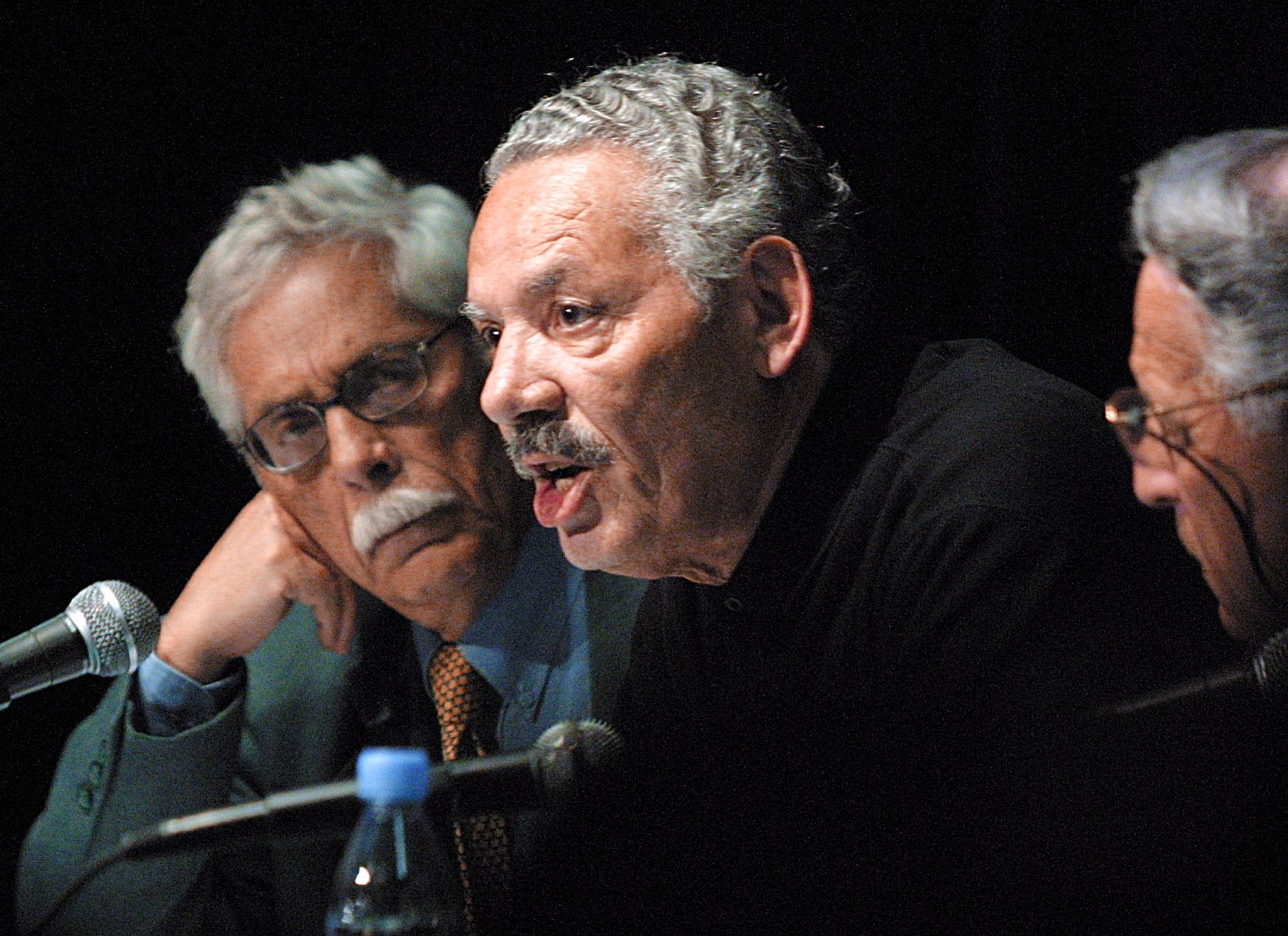
On 20 October 2011, the Algerian general Khaled Nezzar was arrested in Geneva following a denunciation filed by TRIAL International and two criminal complaints from victims who had been tortured during the so-called black decade. Following a 48-hours questioning by the Office of the Attorney General of Switzerland (OAG), he was released on the condition that he attends the subsequent hearings. His final hearing in February 2022 allowed the victims as well as TRIAL International, which accompanied them for eleven years, to foresee the possibility of an indictment in a near future. However, his age and his deteriorating health, as rumors suggest, may jeopardize the holding of a trial.

The long-running procedure initiated in 2011 in Switzerland represents the only chance for the Algerian victims’ voice to be heard and for them to obtain justice. Switzerland’s role in this case is therefore highly important. The OAG suspects Khaled Nezzar of having participated, as an accomplice, in multiple war crimes (murder, torture, inhuman treatment, arbitrary detention) as well as in manslaughters committed in the context of a systematic and widespread attack against the civilian population between January 1992 and January 1994 in Algeria, when he was the leader of the military junta in power and serving as Minister of Defense.

After many judicial twists and turns, the opening of a trial in Switzerland against the former Minister of Defense would mark a historical precedent. Indeed, that would be the first time ever in the world that such a high-level individual would have to answer for war crimes and crimes against humanity before a national court in application of the principle of universal jurisdiction. In Switzerland, while other cases based on the same principle are currently under investigation, the trial of Khaled Nezzar would only be the second to be held before the Federal Criminal Court in Bellinzona in application of this principle.

The procedure, which in itself lasted longer than the actual Algerian civil war, has been made possible thanks to the courage of the victims and the presence of TRIAL International as well as committed lawyers at their side. However, worrying rumors on the health of the soon-to-be 85-year-old Khaled Nezzar raise the concern that he may never be held accountable before Swiss courts.

According to Benoit Meystre, legal advisor at TRIAL International, “in the event of Khaled Nezzar’s death, the closure of the proceedings would be devastating news for all the victims of the Algerian black decade and would be perceived as a failure of the Swiss prosecution authorities.

If the road to justice can often be long, this is all the more true in this case. The victims of the so-called dirty war have now been waiting for more than 30 years for justice. TRIAL International and the victims continue to believe that an indictment will be issued soon and do not lose hope of seeing Khaled Nezzar sitting in the dock of the Federal Criminal Court.

At the beginning of the “black decade” in Algeria, which allegedly left 200,000 people dead or missing between 1992 and 2000, Khaled Nezzar was leading the army as Minister of Defense and de facto leader of the military junta, hence leading the troops that committed so many atrocities. Grave human rights violations were widespread, and the use of torture was systematic. Total impunity unfortunately prevails up to this date for these crimes.
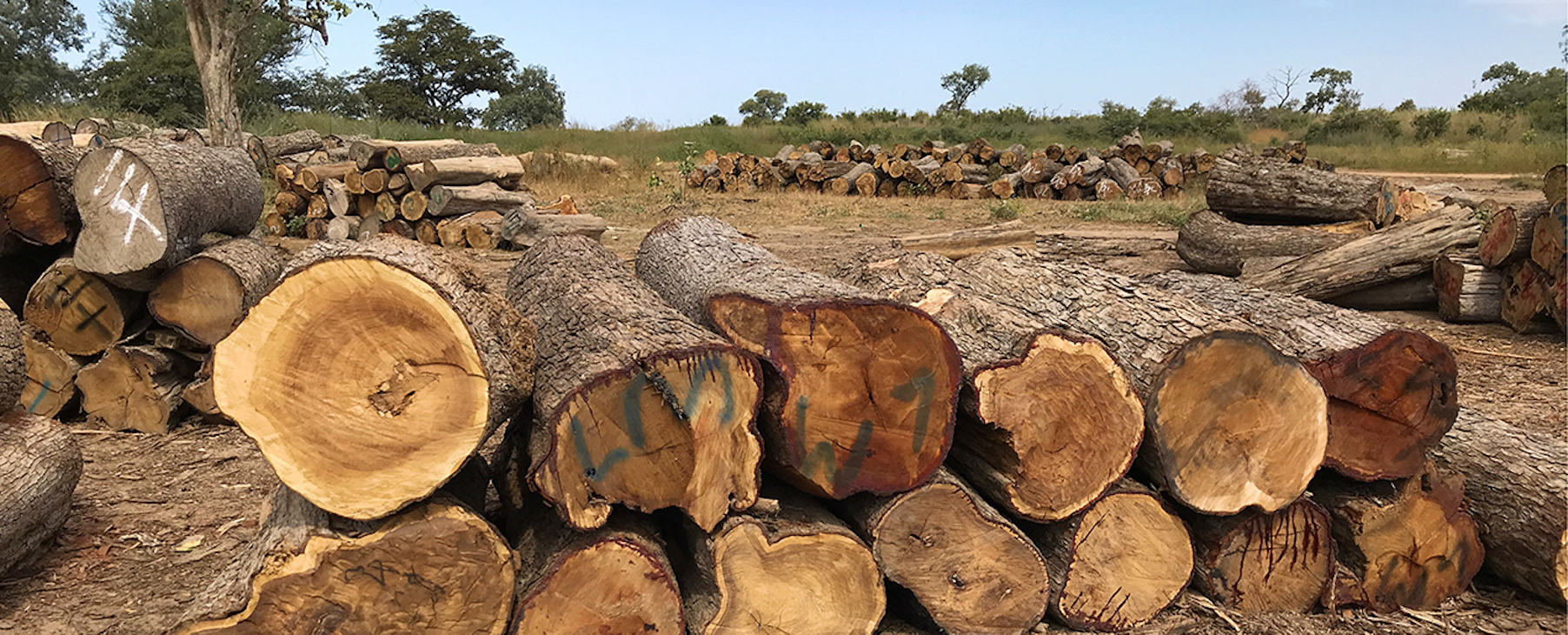
Pillaged timber between Senegal and The Gambia: The criminal denunciation filed by TRIAL International leads to the opening of a criminal investigation in Switzerland

In June 2019, TRIAL International filed a criminal denunciation with the Office of the Attorney General of Switzerland (OAG), against Nicolae Bogdan Buzaianu, a Swiss businessman close to former Gambian president Yahya Jammeh. The organisation suspected him of pillage, a war crime under Swiss law.

Bois de rose

According to the detailed file submitted to the OAG by TRIAL International, the Westwood company presumably owned by this Swiss businessman along with former president Yahya Jammeh was involved in the illegal exploitation and the export of the precious and protected rosewood in Casamance from 2014 to 2017. For several decades, large areas of the region were in conflict and under the control of armed separatist groups, including the Mouvement des Forces démocratiques de Casamance (MFDC). Yet, the illegal exploitation of natural resources in conflict areas can be considered as an act of pillage, which is a war crime under international and Swiss law.

According to information gathered by TRIAL International, the OAG has formally opened a criminal investigation regarding the alleged illegal exploitation and export of rosewood between Senegal and The Gambia. The opening of the proceeding follows the above-mentioned criminal report filed with the OAG by TRIAL International in June 2019.  It should be specified that as of today, TRIAL International has no official information on the offense(s) and the person(s) – natural or legal – targeted by the criminal investigation.

This criminal investigation is the third one opened by the OAG following investigations and cases filed by TRIAL International against economic actors suspected of pillage. The two other criminal cases concern the illegal trade of minerals from Eastern Congo in the DRC and the plundering of Libyan fuel. For TRIAL International, these cases not only have the potential to lead to jurisprudence that would clarify the obligations under international humanitarian law of economic actors operating in conflict zones or occupied territories. They can also put an end to the widespread impunity of economic actors who destroy the environment and illegally exploit natural resources, thereby fueling the causes of conflicts.

To watch the report “Trafic de bois, les criminels de l’environnement”, broadcasted on Temps Présent, 16 June 2022 on the swiss television RTS:

Respect for international humanitarian law must prevail over the quest for profits!

According to information gathered by TRIAL International, the Office of the Attorney General of Switzerland (OAG) has formally opened criminal proceedings for the war crime of pillage in a case concerning the alleged plundering of Libyan fuel. The opening of these proceedings follows a criminal report filed with the OAG by TRIAL International in May 2020. Currently, TRIAL International has however no knowledge of the persons – natural or legal – targeted by the investigations nor of the criminal offence(s) being investigated.

After a year-long investigation, TRIAL International and Public Eye published a joint report in March 2020 concerning a case of alleged pillage of smuggled gasoil belonging to the National Oil Corporation, a Libyan state-owned company. The investigation alleged that the Swiss-based trading company had purchased the smuggled gasoil from Libya in 2014 and 2015, a time period which coincided with the Second Libyan Civil War. TRIAL International analysed the evidence gathered during the investigation and concluded that the Swiss trader may have been complicit in the war crime of pillage. The NGO therefore filed a criminal denunciation in May 2020.

The OAG will therefore have to determine whether the facts brought to its knowledge complied – or not – with the law. The initiation of proceedings in such a case is an important step forward in the pursuit of accountability for economic actors who are active in conflict zones. According to Philip Grant, Executive Director of TRIAL International, “the OAG sends a strong signal to all actors operating in conflict zones that their activities must respect international humanitarian law.” TRIAL International points out that the courts rarely deal with such cases. The NGO has also filed two other criminal denunciations against Swiss businessmen for acts of pillage possibly committed in two other contexts, the Democratic Republic of the Congo and The Gambia/Senegal, which are currently being processed by the OAG. For the organization, these cases have the potential to lead to jurisprudence that will clarify for all actors operating in conflict zones or in occupied territories their obligations under international humanitarian law and thus contribute to putting an end to practices that, all too often, directly fuel conflicts.

It is a giant step forward in the fight against impunity. The Swiss Office of the Attorney General (OAG) has conducted the final hearing of Khaled Nezzar. The OAG holds that numerous war crimes and crimes against humanity were committed while Mr. Nezzar was leading the military junta and serving as Minister of Defense at the beginning of the Algerian civil war. After more than 10 years of investigation and numerous judicial twists, the end of the proceedings paves the way for Mr. Nezzar to be sent to trial before the Federal Criminal Court (FCC) for serious offences constituting complicity in war crimes and crimes against humanity, including extrajudicial executions, torture and enforced disappearances.

© AFP / Thomas Coex


A historical universal jurisdiction case

After conducting a three-day final hearing of Mr. Nezzar in Bern between 2 and 4 February, the OAG is about to finish its investigation. This decisive step now allows for Mr. Nezzar to be tried before Swiss courts. The OAG accuses Khaled Nezzar of having participated as an accomplice in the commission of multiple war crimes (murder, torture, inhuman treatment, arbitrary detention) as well as killings in the context of a systematic and widespread attack against the civilian population between January 1992 and January 1994, when he was the strongman of the High State Council and served as Minister of Defense. A formal decision by the OAG to refer him to the FCC for trial could be issued very soon.


A complaint filed by TRIAL International in 2011

TRIAL International is at the origin of the case, having filed a criminal denunciation against Mr. Nezzar in October 2011, while he was staying in Geneva. “We welcome the fact that this long investigation has come to an end, paving the way for justice for the countless victims of the Algerian civil war,” said Giulia Soldan, head of the organization’s International Investigations and Litigation program. Sending Mr. Nezzar to trial would set a historic precedent: it would be the first time in the world that such a high-ranking person would be held accountable for war crimes and crimes against humanity before an ordinary national court.

However, at the end of his final hearing, Mr. Nezzar was not detained. This is a cause of concern for the organisation, as the risk of flight, collusion and pressure on witnesses and victims remains important.


A strong signal from Switzerland in the fight against impunity for international crimes

In Switzerland, the trial of Khaled Nezzar would only be the second to be held before the FCC in application of the principle of universal jurisdiction. In June 2021, a Liberian warlord was sentenced by the FCC to 20 years in prison for war crimes.

Philip Grant, Executive Director of TRIAL International, said: “It is high time that Khaled Nezzar’s case be brought to trial. The OAG has a unique opportunity to send a powerful message to dictators around the world. Regardless of the country, regardless of how long ago the crimes were committed, those responsible for atrocities, including former heads of state, should start to worry that universal justice can catch up with them.”

The organisation, which has been fighting for 20 years alongside victims against impunity for the most serious crimes, welcomes the fact that a growing number of states are now taking their obligations under international law seriously, and are beginning to bring justice for atrocities committed in Syria, Rwanda, the Balkans, Liberia, now Algeria, and elsewhere.


A much-needed recognition of the suffering of the victims of the Algerian civil war

At the beginning of the ‘black decade’ in Algeria, which is said to have left 200,000 people dead or missing between 1992 and 2002, Khaled Nezzar was the head of the army as Minister of Defense and de facto leader of the military junta, at the head of troops that committed an incalculable number of abuses. Violations of human rights and international conventions were widespread and the use of torture systematic. Impunity for these acts is total to this day. “No one has ever been investigated in Algeria, let alone tried for these crimes. This is the last opportunity to be able to expose before a tribunal the crimes committed during the Algerian civil war”, added Giulia Soldan.

The long procedure against Mr. Nezzar, which lasted longer than the Algerian civil war itself, was made possible by the courage of the victims and the presence of TRIAL International and committed lawyers at their side. For TRIAL International, as for the victims, it was not possible to let these mass crimes committed by the Algerian regime of the time go unpunished.

Orlane Varesano, one of the victims’ lawyers, said: “My clients, who suffered unimaginable torture, have been fighting for 30 years to obtain justice. This news is a long-awaited recognition of their suffering.”

Highlighting the responsibilities and trying the main perpetrator of the atrocities committed during the first years of the Algerian conflict, would allow the victims of torture, enforced disappearances, sexual violence and all other forms of violence perpetrated to be recognized and to take a step forward towards resilience and reconstruction.


Chronology of the case

19 October 2011: Khaled Nezzar is reported to be on Swiss territory. TRIAL International files a criminal complaint with the Swiss Office of the Attorney General, which opens a war crimes investigation.

20 October 2011: Khaled Nezzar is arrested and questioned by the OAG until 21 October, before being released on the promise to appear for the remainder of the proceedings.

January 2012: Khaled Nezzar appeals against the opening of a criminal investigation against him, arguing that his position as Minister of Defense at the time of the events protected him from possible criminal proceedings in Switzerland.

31 July 2012: The Federal Criminal Court renders a landmark decision rejecting Mr. Nezzar’s appeal, considering that it is not possible to invoke immunity for international crimes (war crimes, crimes against humanity or genocide).

2011 to 2016: Six victims file complaints and more than a dozen are heard as part of the proceedings.

4 January 2017: The OAG closes the case on the grounds that an armed conflict did not take place in Algeria in the early 1990s.

16 January 2017: The complainants file an appeal against the closure order before the FCC.

6 June 2018: The FCC makes public its decision to annul the closure of the complaint by the OAG, which must then resume the investigation. The FCC recognizes, inter alia, the existence of an armed conflict during the relevant period in Algeria, and the involvement of Mr. Nezzar in numerous crimes.

4 February 2022: The OAG undertakes the last audition of Mr. Nezzar.


Download the press release in English or in Arabic.

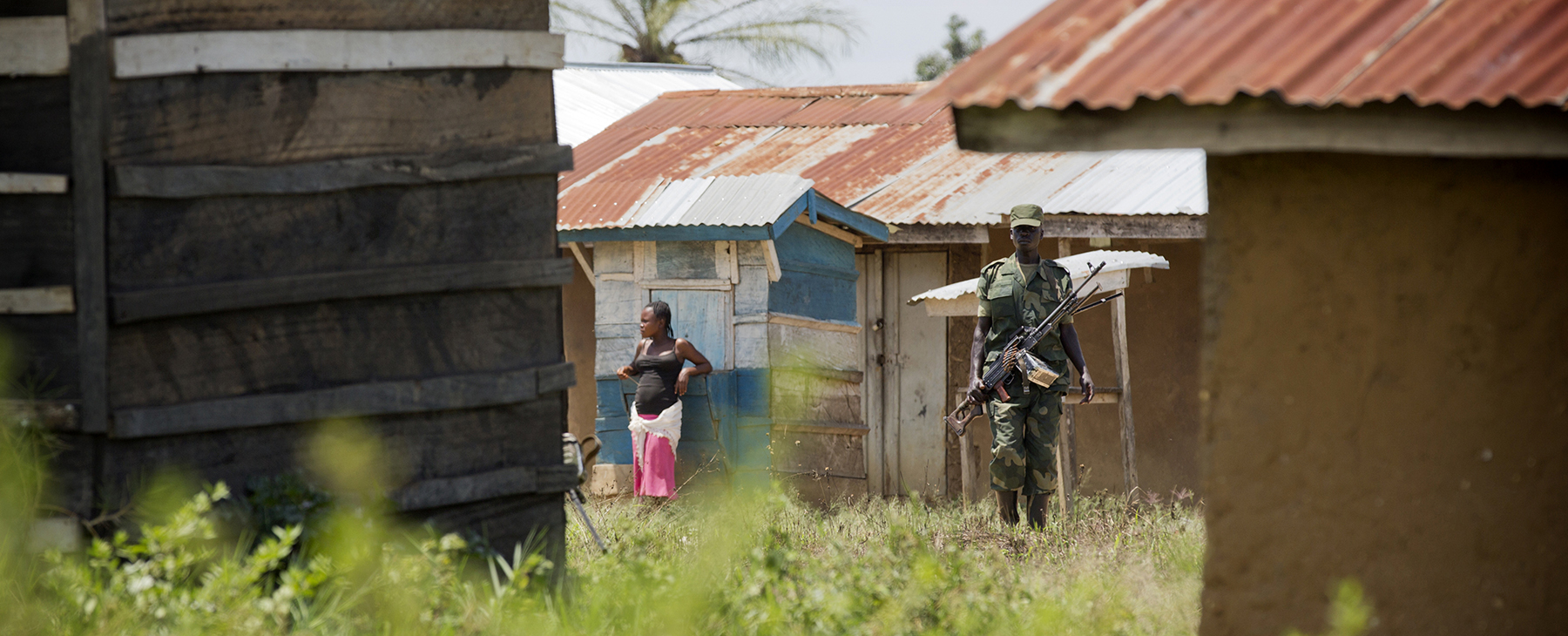
Could a Swiss businessman be liable for pillage – a war crime under international law – by purchasing minerals from a region of the Democratic Republic of Congo controlled by an armed group? The investigation, opened in March 2018 by the Office of the Attorney General, might be able to answer this question.

© Sylvain Liechti / MONUSCO

In November 2016, TRIAL International and the NGO Open Society Justice Initiative (OSJI) filed a criminal denunciation against Christoph Huber, a Swiss businessman operating in the trade of minerals. During the second Congo war between 1998 and 2003, Huber was allegedly directly linked to the RCD-Goma (Goma faction of the Rassemblement congolais pour la Démocratie), an armed group accused of war crimes that occupied – and de facto administered – large territories in the east of the Democratic Republic of Congo (DRC).

The events denounced occurred in 2001. At that time, Christoph Huber appears to have signed on behalf of a Rwandan company a contract granting several mining concessions from an official body of the RCD-Goma, along with guarantees of protection by troops of the armed group. Huber had also been involved in the mineral trade in the region at least since 1997 on behalf of other companies, some of them Swiss-based.

Commercial documents obtained during the investigation conducted by both organizations between 2013 and 2016 highlight the existence of links between RCD-Goma and the Swiss businessman. “We had no choice but to file a criminal complaint against Christoph Huber as an individual, because the possibility of doing the same against a company is particularly limited under Swiss law”, explains Bénédict de Moerloose, head of the International Investigations and Litigation program at TRIAL International. In this case, however, the problem is even more complex because Mr. Huber’s business ties with the Swiss companies in question have meanwhile been terminated. Through this strategy, the organization therefore hopes to obtain a decision that would set a new precedent. Whether or not the Federal Public Prosecutor’s Office will follow up remains to be seen.

As in many other countries, the legal framework in Switzerland is not very restrictive for companies and relies primarily on their goodwill. There are very few legal avenues to prosecute economic actors potentially involved in the commission of international crimes.

The introduction of a duty of due diligence, coupled with legal liability, should make it possible to hold offending companies accountable, and not only those who work on their behalf.

Visit the website of the Responsible Business Initiative

TRIAL International and the Open Society Justice Initiative (OSJI) welcome the opening of a formal criminal investigation by the Office of the Attorney General of Switzerland, following the filing of their denunciation against Christoph Huber, a Swiss national active in the mining sector. Backed by numerous pieces of first-hand evidence collected during their investigation of the case since 2013, the criminal  denunciation filed in November 2016 by both organizations suspects Huber of having been involved in pillage in the Democratic Republic of the Congo (DRC), a war crime under Swiss law.

© GuyOliver/IRIN

In March 2018, the Office of the Attorney General (OAG) decided to investigate the alleged illegal trade of minerals in the DRC during the armed conflicts of the Second Congo War (1998-2003), following TRIAL International and OSJI’s criminal denunciation.

“At a time when the public increasingly demands from corporate actors that they respect and protect human rights, the opening of an investigation presumably in connection with the conduct of illegal trade in a conflict zone potentially involving a Western businessman sends a strong signal to the whole mining sector”, said Bénédict De Moerloose, Head of the International Investigations and Litigation Program at TRIAL International.

APPARENT BUSINESS WITH AN ARMED GROUP

During their investigation, the organizations uncovered, among other evidence, elements highlighting the existence of a business relationship between M. Huber and the RCD-Goma (Goma faction of the Rassemblement congolais pour la Démocratie), an armed group accused of war crimes and controlling large portions of Eastern Congo during the Second Congo War. In 2001, the company represented by Huber would have been granted four mining concessions by an official body of RCD-Goma, whose armed forces were militarily occupying the area where the relevant mines were located. According to the agreement granting these mining concessions, their award involved protection guarantees by troops of the armed group.

According to Ken Hurwitz, head of OSJI’s Anticorruption program, “Too many conflicts around the world are fueled by the illegal sale of pillaged resources into global markets. Yet the international businesses and business people involved are rarely, if ever, prosecuted. The Swiss are to be applauded for taking on the hard work of pursuing this complex and important case.”

If the ongoing investigation was to establish the involvement of Mr. Huber in the illegal exploitation and appropriation of natural resources from a conflict area, he could be held liable for the war crime of pillage, a crime prohibited by international humanitarian law, and punishable under Swiss law by a prison sentence of no less than three years. Both organizations call upon the OAG to promptly complete its investigation.

Should this investigation lead to a trial, it would constitute a historical precedent. Indeed, it might be the first time in Switzerland that an economic actor would be on trial for accusations of the war crime of pillage, although this practice, in particular the looting of raw materials in conflict zones, has in the past decades reached alarming proportions.

Press kit on criminal investigation for war crimes committed in the DRC

Geneva, Bern, 4 August 2011

The Society for Threatened Peoples (STP) and TRIAL – Swiss Association against Impunity – filed today a criminal complaint with the Federal Attorney General against the former Major General Jagath Dias for war crimes. Although the STP and TRIAL have invited the Federal Department of Foreign Affairs (FDFA) on several occasions to take action against Dias, the Deputy Ambassador of Sri Lanka in Germany, who is also accredited in Switzerland, continues to benefit from his diplomatic status. It is time for Switzerland to give a clear signal against impunity.

The Society for Threatened Peoples (STP) and TRIAL – Swiss Association against impunity – filed today a criminal complaint with the Attorney General against Jagath Dias who is suspected of having committed war crimes during the final stage of the civil war in Sri Lanka. Dias was appointed as the Deputy Ambassador of Sri Lanka to Germany in September 2009 and is also accredited to this function in Switzerland and the Vatican. There are numerous indications that war crimes were committed by the 57th division of the Sri Lankan Army, under the command of Dias. Dias was the Major General of the Sri Lankan Army during the final offensive against the rebel group Tamil Tigers (LTTE) end of 2008 and beginning of 2009, which cost the life of approximately 40,000 civilians, according to a recent report by the United Nations. In particular, during this time, the troops of Jagath Dias carried out massive bombings of civilians and hospitals.

On 24 January, STP and TRIAL urged the Federal Council to take action against Jagath Dias for the first time. On 3 May, they asked the FDFA publicly to declare Dias “persona non grata” and to withdraw his diplomatic visa. Last week, the organisations learned that the FDFA had “taken measures”, but that those measures could not be made public. To date,  Dias is still in office as the Deputy Ambassador of Sri Lanka.

The organizations hope that the criminal complaint will result in the arrest of Jagath Dias the next time he travels to Switzerland and a judicial inquiry into the allegations against him will be undertaken. Further, the STP and TRIAL insist that the Swiss government use its discretional power to withdraw the diplomatic status of Dias now. This would be a clear sign by Switzerland that it is serious in the fight against impunity.


A UN report recently made public points the finger at Switzerland. In two criminal cases for war crimes, the Office of the Attorney General is alleged to have succumbed to political pressure. This has resulted in huge delays in proceedings, to the detriment of victims supported by TRIAL International.


Is the Office of the Attorney General (OAG) vulnerable to political pressure? In any case, the criticism directed at Switzerland by the United Nations special rapporteur on torture and their counterpart on the independence of judges and lawyers is serious. Regarding cases opened against two foreign dignitaries, the UN experts affirm: ‘the persistent allegations of political interference undermine the independence of the judiciary in the name of interests which appear to be neither those of the rule of law nor justice.’

In particular, the delays in the Khaled Nezzar case are being questioned. The former Algerian defense minister is the subject of war crime proceedings opened in 2011 for acts committed between 1992 and 1994. But in 2017, the OAG dismissed the case, on the grounds that there was no armed conflict in Algeria during the civil war. The press had learned that for the sake of good bilateral relations between Switzerland and Algeria, notably in economic matters, the Federal Department of Foreign Affairs (FDFA) had informed prosecutors that the investigation would be a ‘time bomb’ and that pursuing the case was greatly annoying Algiers. Since then, the Swiss Federal Criminal Court (FCC) has rejected the dismissal and ordered that the OAG resume the investigation.

The second pending case to attract the attention of the two special rapporteurs is the Rifaat Al-Assad case. A preliminary criminal investigation for war crimes was opened by the OAG in 2013 against the uncle of the current Syrian president, following complaints filed by victims of the Hama city massacre in 1982. Since then, no progress has been made with proceedings. Again, the UN experts believe that the FDFA has put pressure on the prosecutors to dismiss the case.

For its part, the FDFA denies any interference in the OAG’s cases and stresses its independence. According to the FDFA, the ‘persistent allegations of political interference in the OAG cases do not have […] any basis in fact.’ It concludes that Switzerland respects all its international obligations.

Since filing reports which allowed the opening of preliminary criminal investigations against Khaled Nezzar and Rifaat Al-Assad, respectively in 2011 and 2013, TRIAL International has been constantly concerned about the progress of these two cases. The organization reiterates that only an effective, independent and prompt investigation into the serious crimes, for which these two people are allegedly responsible, will make a start to getting justice for the victims of atrocities committed in Algeria and Syria.

Rifaat Al-Assad is a career military man and a Syrian politician. He is the younger brother of the former president of Syria Hafez Al-Assad, to which he has largely facilitated the ascension to power in 1970. He is the uncle of the current president Bashar Al-Assad.

A member of the highest political circles in the 1980s, he was part of the regional commandment of the Baath party and has led the “Defense Brigades” (Saraya al-difaa an al thawara), Syria’s elite commando troops, from 1971 to 1984.

Thought by many to succeed to his elder brother as president, he was then suspected of preparing a coup against the latter. He was subsequently forced into exile in 1984. Since then, he has lived in various European countries where he has invested his substantial personal fortune.

In June 2016, he was indicted in France for embezzlement of public funds and undeclared labour. Some of his assets, worth several million euros, were seized in France, in Spain and in the United Kingdom.


The facts

Under Rifaat Al-Assad’s command, the Defense Brigades could have participated in two infamous slaughters.

Firstly, the massacre in the prison of Tadmor (or Palmyra), probably perpetrated by the Defense Brigades in retaliation to the attempted murder of President Hafez Al-Assad.

On 27 June 1980, the Defense Brigades led by Rifaat Al-Assad attacked the prison of Tadmor, around 200km North-East of the capital. As soon as they arrived, the soldiers barged into the cell and killed almost every prisoner. About 1’000 people suspected of being members of the opposition could have been slaughtered.

Secondly, the martyrdom of the city of Hama in February 1982. Following the takeover by the Fighting Vanguard of the city of Hama, the government sent in thousands of men, including the Defense Brigades.

Government forces surrounded and shelled the city with heavy artillery and tanks. The Vanguard and many individuals who had spontaneously taken arms tried to resist, in vain. Very quickly, the civilian population was trapped in its own city, cut off from supply, food and electricity for almost 4 weeks.

Depending on the sources, 10’000 to 40’000 people – mainly civilians – have died. Whole areas of the city were destroyed, including the shelling to the ground of a part of the old town.

Both at Tadmor and in Hama, testimonies and historical sources concur on the implication of the Defense Brigades in the crimes committed. Several sources point directly at Rifaat Al-Assad in the planning and carrying out of these massacres.


Procedure

In November 2013, TRIAL International was made aware of the presence in Switzerland of Rifaat al-Assad. After conducting research, the NGO filed a complaint before the Office of the Attorney General of Switzerland (OAG), asking it to determine the responsibility of Rifaat Al-Assad in the massacre of Hama. The OAG opened a criminal investigation for war crimes in December 2013. In August 2014, a victim joined in the proceedings.

In September 2015, Rifaat Al-Assad came back to Geneva. TRIAL International and the victim’s lawyer asked the authorities to arrest him. They refused, and the victim’s lawyer filed for provisional measures before the Federal Criminal Tribunal. Two days later, the OAG was ordered to audition Rifaat Al-Assad.

In 2016 and 2017, TRIAL International filed several more complaints, including for the crimes committed in Tadmor. It also brought to the case ample evidence and a list of witnesses ready to testify.

As the proceedings continued, six more victims joined the case. Some of them have directly witnessed the atrocities. Given the total impunity reigning in Syria, the investigation in Switzerland could be their only chance to obtain justice.

In June 2020, Rifaat al-Assad was convicted in France and sentenced to four years in jail, notably for money laundering and embezzlement of Syrian public funds. French authorities also confiscated several properties worth millions. Al-Assad appealed the decision.

On 9 September 2021, the Paris Court of Appeals upheld the conviction of Rifaat al-Assad to four years in prison for fraudulently building up assets in France valued at 90 million euros.

In October 2021, Rifaat al-Assad fled Europe to return to Syria despite the ongoing proceedings against him and the judicial surveillance he was under in France. The investigation before the OAG continues regardless.


Context

From 1979 to 1982, the Al-Assad regime fought the Fighting Vanguard of the Muslim Brotherhood. Founded at the end of World War II and emanating from the Egyptian party, the Syrian branch of the Muslim Brotherhood became the first opposition force after Hafez Al-Assad’s accession to power.

The regime, including under the influence of Rifaat Al-Assad, set up a policy of repression that evolved into open conflict with the Muslim Brotherhood. At the end of the 1970s, their clashes led to an armed conflict which culminated in the destruction of Hama in 1982.

The crimes committed in Hama and Tadmor are directly linked to that non-international armed conflict in Syria. The following acts must therefore be qualified as war crimes:

  • murder
  • collective punishments
  • bombardment of civilians
  • collective executions
  • acts of torture
  • rape
  • looting
  • destructions of religious buildings and hospitals


Revelations about TRIAL International’s investigation

Geneva 25 September 2017 – A collective of lawyers has revealed today the existence of criminal proceedings in Switzerland against Rifaat Al-Assad for war crimes committed in Syria in the 1980s. TRIAL International confirms it has, after a thorough investigation, denounced the former vice-president to the Swiss judicial authorities. A solid case is now in the hands of the Office of the Attorney General (OAG), who must now bring to its close this exemplary and historical case.

Since 2013 and following a criminal complaint by TRIAL International, Rifaat Al-Assad is the subject of a criminal investigation in Switzerland for war crimes. But four years later, the NGO is worried the case is at a stalemate, despite the significant amount of evidence at hand. This morning, the complainants’ lawyers have publicly challenged the OAG and denounced a denial of justice for their clients – who are all victims of the Syrian regime’s barbarity.


TADMOR AND HAMA, TWO SLAUGHTERS THAT HAVE GONE DOWN IN HISTORY

Who is Rifaat Al-Assad? An eminent member of the Syrian political cast and the uncle of the current president Bashar Al-Assad, he was in command of the Defense Brigades – the country’s elite commando troops – in the 1980s. Under his lead, the Brigades are suspected of participating in the massacre of several thousand people at Tadmor prison and in Hama.

On 27 June 1980, as an armed conflict rages on, the Defense Brigades storm the prison of Tadmor, near Palmyra. Bursting into the cells, Rifaat Al-Assad’s men methodically kill almost 1’000 prisoners, according to various estimates.

Two years later, opponents to the regime take up arms in the city of Hama. Government forces, including the Defense Brigades, attack the city in retaliation. The population is trapped in its own city, without supply or electricity, for almost a month. Civil casualties range from 10’000 to 40’000, depending on the sources.

Executions, shelling, torture, rape, looting: in spite of the gravity of the crimes, nobody has ever been prosecuted. Rifaat Al-Assad, in exile since 1984, has travelled freely for years and invested a vast personal fortune in Europe.


FOUR YEARS OF INVESTIGATION

In 2013, the opening of an inquiry by the Swiss OAG revived the victims’ hope to see Rifaat Al-Assad tried and punished. In the following four years, TRIAL International conducted investigative work in eight countries and provided the OAG with dozens of testimonies and pieces of evidence. By skimming through countless archives, the NGO was able to find documents from secret services and embassies of various countries. The organization has also tracked down former Syrian combatants willing to testify.

We have accumulated damning evidence showing Rifaat Al-Assad’s responsibility in the massacres of Tadmor and Hama. The evidence also points at the unbounded brutality of his troops and his wish to purely and simply root out the opposition” says Benedict de Moerloose, the lawyer in charge of investigations at TRIAL International.


SWITZERLAND MUST SHOW COURAGE

The victims who have filed their complaint in Switzerland are bitterly disappointed today. Their lawyers denounce “grave shortcomings in the procedure, such as the cancellation of hearings, the refusal to arrest or hear the suspect (…) and even attempts to bury the case altogether”.

Yet according to the principle of universal jurisdiction, Switzerland has an obligation to prosecute the authors of war crimes present on its territory – regardless of where the crimes were committed and the nationality of the perpetrators.

The sluggishness of the OAG goes against Switzerland’s international commitments – an irony given it is the depositary of the Geneva Convention”, deplores Philip Grant, Director of TRIAL International. “Besides, it sends a dangerous message to today’s belligerents in Syria. It must be absolutely clear to them that they are not beyond the reach of justice.

Suspected of embezzlement of public funds, the assets of Rifaat Al-Assad – worth hundreds of millions of euros – have recently been seized in France, in Spain and in the United Kingdom. Switzerland now has a historic occasion to prosecute him for his criminal actions. For the thousands of victims in Syria, the OAG must have the courage to see this procedure through and to prepare the trial of Rifaat Al-Assad.

TRIAL International will hold a press briefing on Tuesday 26 September at 9am (UTC +2) at the Maison des Associations in Geneva, room Rachel Carson
See on the map

The Attorney General of Switzerland has heard two victims in the investigation against Ousman Sonko. The former Gambian Minister of Interior is suspected of crimes against humanity.

It took Destiny (real name withheld) more than ten years to file a complaint against Ousman Sonko. A victim of torture in Gambia, she was finally able to testify before the Attorney General of Switzerland last week in Bern.

I was so relieved when I learned about Ousman Sonko’s arrest”, says Destiny. “I really hoped I could take part in the proceedings. This case is my first occasion to tell my story. I need justice for closure.”

Another victim has also travelled from Gambia to testify. He too was tortured when the suspect was at the head of security services.

These people have suffered in silence for years”, says Philip Grant, Director of TRIAL International. “The Gambian judiciary is still fragile. For these victims, the opening of a trial in Switzerland would be a unique occasion to get justice.”

Other victims may be heard in the future by the Attorney General of Switzerland, who has been conducting a meaningful investigation since Sonko’s arrest in January 2017 (see “The case at a glance” below).

Why is Switzerland competent?

Ousman Sonko is prosecuted in Switzerland on the basis of universal jurisdiction, which requires Swiss authorities to investigate suspects of torture and crimes against humanity on its territory.

At the moment, no extradition request has emanated from Gambian authorities. They have expressed their willingness to collaborate to the Swiss investigations.

As for the International Criminal Court, it has opened no investigations on Gambia. It therefore has no jurisdiction to prosecute Ousman Sonko. Besides, the Court only has a subsidiary role in international crimes prosecution, meaning that it only intervenes should States be unwilling or unable to do so themselves.


The case at a glance

26 January 2017: Ousman Sonko is arrested in Switzerland following a criminal complaint by TRIAL International for torture. Given the suspicions against him, he is placed in pre-trial detention. Read more

6 February 2017: The Attorney General of Switzerland takes up the investigation against Ousman Sonko. The crimes he is suspected of are re-qualified as crimes against humanity.

April 2017: Two Gambian victims file a complaint for torture.

3 May 2017: The Court of Measures of Constraint in Bern extend the detention by three months. It could be further extended in July. Read more

June-July 2017: The two victims are heard by the Attorney General of Switzerland.

Read the full case

Geneva, 3 May 2017 – The Court of Measures of Constraint in Bern has decided to prolong the detention of Ousman Sonko. The former Minister of Internal Affairs and right hand of Gambian dictator Yahya Jammeh is suspected of crimes against humanity.  

Ousman Sonko was arrested in Switzerland on 26 January 2017, after TRIAL International filed a criminal complaint against him for torture. Given the suspicions against him, he had been held in pre-trial detention for the last three months.

At the end of this three month-period, the Attorney General of Switzerland was able to extend his detention by 3 months. “We welcome this decision which shows the authorities take the allegations against M. Sonko seriously”, said Philip Grant, Director of TRIAL International. “We hope that the investigation can shed the light on some of the abuses perpetuated by Jammeh’s regime”. 


Two victims have already filed a complaint

Since his arrest, two victims – supported by TRIAL International – have filed criminal complaints against Ousman Sonko. Both of them were tortured by the Gambian authorities while the suspect was at the head of security services, first as the Inspector General of Police and later as the Minister of Internal Affairs. Ousman Sonko is accused of having personally taken part in these acts of torture. Further complaints could still be lodged against him.

“The victims who filed complaints against Ousman Sonko have waited long enough for justice to prevail”, concludes Philip Grant. “We hope that this process will finally enable their voices to be heard”.

Geneva, 18 January 2017 – The case against Khaled Nezzar was opened by the Office of the Attorney General (MPC) of Switzerland in 2011 for alleged war crimes. Five years later, however, the MPC concluded against all expectations that the alleged acts by the former Minister of Defense could not be considered as war crimes on the grounds that there was no war in Algeria when the facts occurred. TRIAL International, the NGO that filed a criminal complaint with Swiss authorities against Khaled Nezzar, believes this ruling is incomprehensible and supports the civil parties in their appeal before the Swiss Federal Criminal Court.

It took the arrest of the accused, several years of proceedings and numerous hearings of witnesses and victims for the MPC to consider that the classification of the crime did not, in the end, justify holding a judgment. A decision by the Federal Criminal Court (TPF) could, however, reset the case in motion.

We have filed an appeal before the Federal Criminal Court in Bellinzone. It is indeed incomprehensible that the MPC has investigated for five years, questioned some fifteen witnesses and even went so far as to send an International Letter Rogatory to Algeria without ever questioning the existence of an armed conflict, before abruptly concluding that that was not the case”, says Pierre Bayenet, one of the civil parties’ attorney-at-law contacted by TRIAL International.

According to the NGO, ample evidence indicates that the numerous acts of torture reported by the victims were indeed committed by the army as part of a particularly deadly armed conflict. “The “Black Decade” has resulted in 200,000 casualties and many sources illustrate the intensity of the combats between armed groups and the Algerian army after the coup d’état. In spite of that, there is a quasi-total impunity for these facts. It is high time this changes”, says Philip Grant, Director of TRIAL International.

Civil parties agree with this view: “The reason why the case was dismissed is an insult to victims who were tortured during the dirty war. They have experienced that war in their flesh and denying its existence is a new form of violence towards them”, says Damien Chervaz, another attorney-at-law for the civil parties.

TRIAL International supports their appeal and hopes that the TPF confirms the existence of an armed conflict in Algeria at the time of the events. It will then be incumbent upon the MPC to rule on the charges against Khaled Nezzar for numerous acts of torture.

____

THE NEZZAR CASE AT A GLANCE

Khaled Nezzar was Minister of Defense and President of the High Council of State in Algeria from 1992 to 1994. In October 2011, following a criminal complaint filed by TRIAL International, he was taken into custody in Switzerland for having authorized or incited his subordinates to commit acts of torture, murder, extrajudicial executions, enforced disappearances and other acts constituting war crimes. He was released in exchange for promising to participate in subsequent proceedings.

BACKGROUND INFORMATION

The “Black Decade” in Algeria (1992-2002) caused between 60,000 and 200,000 deaths or disappearances. Human rights violations were widespread in the country and the use of torture was systematic. As head of the army and Number 1 in the regime, Khaled Nezzar could not have been unaware of his troops’ actions. The impunity for these events is total. Nobody has ever been prosecuted, let alone sentenced, for these crimes in Algeria.

FACTS AND EVIDENCE

The evidence against the accused includes testimonies of victims and witnesses, among whom former members of the security forces calling him directly into question; reports from NGOs, the United Nations and the United States Department of State, stating the systematic practice of torture and other crimes committed by the regime.

CHRONOLOGY OF THE CASE

19 October 2011: Khaled Nezzar is reported to be present in Switzerland. In accordance with its mandate, TRIAL International files a criminal complaint with the Swiss Office of the Attorney General (MPC), which opens an investigation.

20 October 2011: Khaled Nezzar is taken into custody and questioned by the MPC until 21 October, before being released in exchange for promising to participate in subsequent proceedings.

 January 2012: Khaled Nezzar files an appeal against the prosecution of his case, arguing that his position as Minister of Defense at the time protected him from criminal prosecution in Switzerland.

July 2012: The Swiss Federal Criminal Court makes a historical decision following the appeal and rejects Khaled Nezzar’s claim, considering that immunity could not be invoked for international crimes (war crimes, crimes against humanity or genocide).

13 August 2014: The MPC sends a draft of an International Letter Rogatory to the Federal Office of Justice, but it was not forwarded to the Algerian authorities until 7 April 2015.

 2011 to 2016: Five victims file a complaint and sixteen persons are heard in the proceedings.

 November 2016: The MPC hears Khaled Nezzar once again.

January 2017: The MPC dismisses the case.

18 January 2017: The civil parties announce they will appeal the decision before the Federal Criminal Court.

In March 2011, TRIAL International and the Palestinian NGO Al-Haq supported six Palestinian families with their filing of a complaint of war crimes against the Swiss subsidiary of Caterpillar, the manufacturer of construction site machinery. The reason for doing so was that the Israeli army had used D9 bulldozers made by the same manufacturer to destroy their homes without any military need in August 2007, during a raid on a neighborhood in the town of Qalqilya (West Bank).

On February 24, 2014, the Office of the Attorney General of Switzerland refused to pursue the complaint on the grounds that the bulldozers in question were not weapons and that the company Caterpillar could not be held responsible for the use that their buyers made of their equipment.

TRIAL International deplored the closure of this case, but welcomed the fact that the prosecutor described the events that happened in Qalqilya in 2007 as “punitive demolitions”, that is to say, war crimes committed by the Israeli army.


In partnership with the NGOs Open Society Justice Initiative and Conflict Awareness Project, TRIAL International, filed a report against Argor-Heraeus SA before the Office of the Attorney General of Switzerland in November 2013. That company was accused of refining nearly three tonnes of gold pillaged by rebels in the north of the Democratic Republic of the Congo (DRC) between 2004 and 2005.

What followed on from this was the opening of an investigation of Argor for war crimes and aggravated money laundering, a search and seizure operation, and a civil society campaign against the pillage of precious metals in times of armed conflict. By rejecting the appeal lodged by the Swiss company against the investigation and the search, the Federal Criminal Court agreed with TRIAL International’s report, thus underscoring the importance of the evidence provided by the NGO.

After an investigation lasting for nearly 18 months, on March 10, 2015, the Office of the Attorney General of Switzerland ordered the case to be closed, finding that there was no evidence of the company knowing that it had been refining gold of illegal provenance. The Office of the Attorney General of Switzerland did find, however, that gold had been pillaged from DRC by rebels and that the company had breached its anti-money laundering obligations. This very controversial decision also highlighted the shortcomings of Swiss legislation, which did not allow such acts to be prevented or punished.

Regardless of the outcome, the Argor-Heraeus SA case represents a considerable step forward and highlights the problem of raw material pillage by western companies. It was also the first criminal investigation opened for pillage within a context of armed conflict since the cases resulting from the Second World War.

In parallel to this case, Argor’s commercial partner company, the British company Hussar Ltd, was reported for the same acts to the Metropolitan Police in London. The investigation is ongoing.


During the conflicts in the Balkans in the 1990s, Amir Coralic (otherwise known as “Pango”) was a soldier in the pro-independence Bosniak army of Bihac Province – the “National Defense”.

In December 1993, Amir Coralic and two other militiamen abducted Marina, a 14-year-old girl, and her cousin Adela, a 15-year-old girl (assumed names), from their home. The two girls were taken outside the locality; Marina was raped and Adela was sexually assaulted.

Ten years later, TRIAL International conducted an investigation and managed to trace Amir Coralic. The NGO reported him to the Swiss and Bosnian authorities while supporting Marina in her pursuit of justice.

In 2015, a successful appeal before the Federal Criminal Court against the Office of the Attorney General of Switzerland allowed new proceedings to be opened in Switzerland. The accused then decided to surrender to the Bosnian authorities, to which he proposed to admit his guilt and to restitute the victim in exchange for a reduced prison sentence.

On October 19, 2015, the Bihac Cantonal Court (in Bosnia-Herzegovina) convicted Amir Coralic of the war crime of rape perpetrated against a minor. The restitution ordered (approximately US$35,000) was, in 2015, the highest sum ever paid to a victim of sexual violence in Bosnia-Herzegovina.


According to human rights organizations, the Bahraini authorities systematically use torture, and the Bahraini Attorney General’s Office plays a significant role in this repressive system. Those arrested are often subjected to torture and forced to sign false confessions.

The annual conference of the International Association of Prosecutors (AIP) was held in Zurich in September 2015. Among the members of the AIP’s Executive Committee attending the conference was the Attorney General of Bahrain, Mr Ali Bin Fadhul Al-Buainain.

The NGOs TRIAL International, ECCHR, REDRESS and BIRD reported Mr Al-Buainain and supported the filing of a complaint by Mr Jaafar Al-Hasabi. This human rights defender states that he was a victim of torture and was forced to sign false confessions during an investigation by Mr Al-Buainain’s services. The latter had personally given the order to have the victim detained incommunicado.

Berne’s Public Prosecutor, which has jurisdiction to handle this case, opened a criminal investigation of the Attorney General on September 15, 2015, for the crime of torture. However, the Public Prosecutor did not wish to have the suspect arrested. The investigation is ongoing.

It is the first time that a criminal investigation of a senior Bahraini official has been opened for acts of torture, and it is the first universal jurisdiction case concerning Bahrain.


facts

 Ali Bin-Fadhul Al-Buainain began his career as public minister of the Kingdom of Bahrain in 1985. He became public prosecutor of Bahrain on 24 December 2005. He has a PhD in criminal law.


legal procedure

On 8 September 2015, Jaafar Al-Hasabi filed a criminal complaint in Bern against the Attorney General of Bahrain, Ali Bin Fadhul Al-Buainain, for facilitating torture. He was supported by the European Center for Constitutional and Human Rights (ECCHR), REDRESS, the Bahrain Institute for Rights and Democracy (BIRD) and TRIAL International. On 13 September 2015, an application was filed with the Bern prosecutor, calling for the Attorney General to be summoned for interviewing. The complaint was filed in anticipation of his attendance at the annual conference of the International Association of Prosecutors (IAP) being held that year in Switzerland from 13 to 17 September, at which he was elected vice president of the organization.

On 15 September 2015, the prosecutor issued a decision stating that an investigation would be opened but that the evidentiary threshold for a summons had not yet been met. Ali Bin Fadhul Al-Buainain was allowed to return to Bahrain without questioning.

In June 2016, torture survivor Jaafar Al-Hasabi gave testimony to prosecutors in Bern concerning the Bahraini Attorney General’s alleged complicity in acts of torture.

In November 2016, the Swiss prosecutors made an application to the Swiss Federal Office of Justice seeking to transfer the case to prosecution authorities in Bahrain.

Ali Bin Fadhul Al-Buainain was expected to visit Ireland to attend an IAP conference in Dublin in September 2016. Jaafar Al-Hasabi brought a private prosecution application before the District Court in Dublin on 13 September 2016 requesting that the Attorney General be summoned in connection with the allegations of torture. The application was rejected, with the judge arguing that a sufficient link between the acts of torture and the alleged involvement of the accused had not been established. Police in Ireland opened a parallel investigation into the matter that is still ongoing. Jaafar Al-Hasabi’s complaint was supported by GLAN (Global Legal Action Network), BIRD (Bahrain Institute for Rights and Democracy), ECCHR, and REDRESS.


The Office of the Attorney General of Switzerland (OAGS) decided not to further prosecute the Swiss precious metals company Argor-Heraeus SA, that handled dirty African gold. While Swiss authorities acknowledged that Argor did refine looted gold and violated its duty of diligence, the case was nonetheless closed, a decision met with disbelief by the three NGOs working on the case. Together with Conflict Awareness Project (CAP), the Open Society Justice Initiative (OSJI) supported a legal complaint filed in November, 2013 by TRIAL (Track Impunity Always), in which the Swiss NGO accused Argor of illegally processing over three tones of pillaged gold from the Democratic Republic of Congo. According to the NGOs, this decision undermines international efforts to eliminate the illegal resource trade that fuels conflicts around the world.

On 10 March 2015, the Office of the Attorney General of Switzerland (OAGS) closed the Argor case and concluded that there was no reason to believe that the company had been aware of the criminal origin of the three tons of gold pillaged from the DRC that it had refined. TRIAL, OSJI and CAP find this outcome hard to believe. According to the decision:

  • Despite these overwhelming findings, the OAGS decided to close the case 16 months after opening a criminal inquiry. It felt that the company should not be held responsible as “it is not clear (…) that the defendants had any doubts as to, or concealed any evidence of, the criminal origin of the gold.”

First and foremost, the OAGS’s stance raises questions over Switzerland’s role in the processing of and trade in precious metals. The NGOs still expect to know how several tons of dirty gold coming from one of the bloodiest and publicised conflicts of our time can reach Switzerland and be refined there without any consequences.

The NGOs also noted the grave message the closure of the case sends: “This decision gives free rein to companies who violate their duty of diligence and prefer to remain ignorant of the criminal origin of raw materials. It means that they can simply turn a blind eye to indications suggesting the criminal origin of raw materials in order to avoid prosecution.”

The NGOs finally recall that there can be no justice without accountability for the private sector: When companies fuel some of the most violent conflicts in the world, any failure on the part of the authorities to sanction them only ends up encouraging them to pursue their harmful activities.”


The Argor case in 8 questions

1. WHO IS ARGOR-HERAEUS? 

Argor-Heraeus SA is one of the five largest precious metal refining companies in the world. The company is particularly active in the refining and sale of gold. Its headquarters are in Mendrisio (Ticino, Switzerland).


2. WHAT IS IT BEING ACCUSED OF?

Argor-Heraeus is accused of having refined several tons of dirty gold between 2004 and 2005, taken from mines in eastern Democratic Republic of the Congo (DRC) and pillaged by armed groups controlling the region at that time. In the complaint filed in November 2013, the NGOs stated that they believed the company knew of the origin of the raw material (see www.stoppillage.org). They therefore considered that these acts could form complicity in pillaging, which is a war crime, along with aggravated laundering.

According to the complaint, Argor-Heraeus knew, or at the least should have suspected, that these raw materials, provided by Hussar Ltd and Hussar Services Ltd, interlinked companies based respectively in Jersey and London, were the proceeds of pillage, which is a war crime. Argor knew that Hussar had obtained the gold from a Ugandan trading company which itself had imported the gold “from the region.” At the time, virtually no gold was produced in Uganda and almost all gold exported from Uganda was smuggled from mines controlled by unlawful armed groups in neighboring DRC.


3. WHY HAS THE OFFICE OF THE ATTORNEY GENERAL OF SWITZERLAND (OAGS) CLOSED THE CASE AFTER A 16-MONTH INVESTIGATION?

The OAGS decided that the evidence in its possession was insufficient to conclude that Argor-Heraeus was aware of the illegal origin of the gold.


4. WHAT ARE THE MAIN ARGUMENTS IN THIS LEGAL DECISION AND WHAT DO THE NGOS THINK ABOUT THIS?

  • The OAGS confirmed that the gold refined by Argor-Heraeus had indeed come from a rebel armed group in the DRC and that the act of refining it had been crucial to the group’s war effort.
  • In the decision, the OAGS noted that the refining was an objective act of complicity in pillaging but that evidence of Argor’s knowledge of the illegal origin of the gold was lacking, thus shielding the company from any form of sanction.
  • Noting that, according to case law, a regulatory violation could lead to a criminal conviction for laundering by omission, the OAGS finally ruled that the company was in breach of its own regulation, adopted in accordance with the Law on Laundering (LBA) and the Law on the Control of Precious Metals (LCMP). The OAGS that stated that, in the presence of “concrete indications (…) that should have raised Argor’s suspicions, (…) [it] failed to clarify the origin of the gold although its internal regulations required it to do so.” However, the OAGS decided that this violation should not result in the company’s conviction because “it was not clear (…) that the defendants had any doubts as to, or had concealed any indication of, the criminal origin of the gold.”


5. WHY HAS AN APPEAL NOT BEEN MADE AGAINST THIS DECISION?

Under Swiss law, NGOs do not have the right to act as plaintiff in proceedings. They are therefore only able report activities that they consider to be in violation of Swiss law. Even when a decision is passed on a case that has been reported by them, they cannot appeal against it. In this case, the victim of the pillaging was formally the DRC since the mineral resources that were pillaged belonged to this country. The DRC did not, however, appear as a plaintiff.


6. WHAT WERE THE MAIN STAGES IN THE CASE?

  • Between 2004 and 2012, in collaboration with the Open Society Justice Initiative, Kathi Lynn Austin investigated the dirty gold coming from the DRC and sent her findings and evidence to TRIAL.
  • TRIAL then undertook a further year’s investigative and legal analytical work before filing a criminal complaint with the Federal Prosecutor’s Office on 30 October 2013.
  • On 10 March 2015, the OAGS decided to archive the case, subsequently making this decision public.


7. WHICH NGOS HAVE BEEN ACTIVE IN THIS CASE AND WHAT HAS BEEN THEIR ROLE?

The complaint Argor was based upon nine years of investigative work carried out by Kathi Lynn Austin (Director of CAP), supported by the OSIJ. The Justice Initiative has also supported TRIAL’s lawyers in developing the international legal arguments around the case. The results of these investigations have been shared with Jersey Channel Islands and UK law enforcement authorities.

TRIAL (Track Impunity Always) is a Swiss NGO fighting the impunity enjoyed by those responsible for and complicit in the most serious international crimes.

trialinternational.org

Open Society Justice Initiative is a program of the Open Society Foundations that uses law to protect and empower people around the world. Its work includes combating natural resource–related corruption.

www.opensocietyfoundations.org

Conflict Awareness Project is an international not-for-profit organisation that investigates, documents and brings to justice those principally responsible for arms trafficking and the transnational criminal operations that are fuelling these conflicts.

conflictawareness.org


8. WHAT NEXT FOR THE NGOS THAT ARE FIGHTING PILLAGING AND LAUNDERING?

These three NGOs are currently working on a number of cases that could be brought to trial in different countries. These cases remain confidential for the moment.

A key ruling by the Swiss Federal Criminal Court has given momentum to a war crimes case against the Swiss gold refining giant, Argor-Heraeus SA, alleged to have laundered millions of dollars of looted gold from the Democratic Republic of the Congo.

The three NGOs behind the Stop Pillage Campaign, the Conflict Awareness Project, Open Society Justice Initiative, and TRIAL, call on the UK and Jersey Channel Island authorities to follow suit and swiftly investigate the two British firms which were the primary traders of the gold at issue in the case.

To date, the London-based Hussar Services Limited and the Jersey Channel Island-based Hussar Limited, as well as their corporate directors, have evaded accountability for their central role in the lucrative transnational “blood gold” enterprise alleged in the complaint in Switzerland.

The Swiss court ruling from 24 January 2014 upheld the right of the prosecutor to search the premises of Argor-Heraeus SA and seize documents and computers. Stating that the strength of the evidence warranted such an action, the court rejected Argor’s subsequent legal challenge to the prosecutor’s right to conduct the search.

This decision corroborates what we have always believed: that very serious suspicions weigh on Argor-Heraeus SA. This decision will now allow the authorities to continue the investigation, the results of which we will await with great interest,” said Bénédict De Moerloose, lawyer in charge of the case at TRIAL.

Until governments such as the UK and Jersey Channel Islands start to hold their own firms and businesspersons criminally liable for the pillage of Congo’s natural resources, war profiteers who aid and abet atrocities and human suffering will continue with impunity,” said Kathi Lynn Austin, Executive Director of the Conflict Awareness Project.

The same evidence that prompted the Swiss Prosecutor in charge of war crimes to open a criminal investigation against Argor-Heraeus SA has been made available to the UK and Jersey Channel Island authorities. Kathi Lynn Austin of the Conflict Awareness Project conducted the investigation over a nine-year period while the Open Society Justice Initiative provided the blueprint for reviving the prosecution of pillage.

We are heartened by the seriousness with which the Swiss authorities are pursuing the case as exemplified by this recent court ruling.  We urge UK and Jersey Channel Island law enforcement authorities also to pursue their investigation into the matter as rapidly as possible and, if warranted, prosecute those they conclude to be guilty of these war crimes,” said Ken Hurwitz of the Open Society Justice Initiative.

The Swiss court ruling from 24 January 2014 upheld the right of the prosecutor to search the premises of Argor-Heraeus SA and seize documents and computers -which the federal police did on 4 November 2013.

Stating that the strength of the evidence warranted such an action, the court rejected Argor’s subsequent legal challenge to the prosecutor’s right to conduct the search.

The decision of the Swiss Federal Criminal Court corroborates what we have always believed: that very serious suspicions weigh on Argor-Heraeus SA. This decision will now allow the authorities to continue the investigation, the results of which we will await with great interest,” said Bénédict De Moerloose, lawyer in charge of the case at TRIAL.

The Swiss case is a milestone for international justice: for the first time since the immediate aftermath of WWII a corporation could be judged for complicity in the war crime of pillage.

For more information:

  • Stop Pillage Campaign website
  • About the Swiss legal complaint filed by TRIAL
  • CAP’s report on the Pillage of Congo Gold: A Case for the Prosecution of Corporate Crimes
  • OSJI’s publication on Corporate War Crimes: Prosecuting the Pillage of Natural Resources