The origins of the case

Hope was born on 22 October 2011, the day former Algerian Defence Minister Khaled Nezzar was arrested in Switzerland. Five victims had brought civil proceedings against him, accusing him of participating in the war crimes of torture, inhuman treatment, arbitrary detention and murder, as crimes against humanity.

The events allegedly took place during the early years of the Algerian civil war (1992-2002), when Khaled Nezzar was a member of the High Council of State, the ruling military junta. This made him one of the main players in the conflict between the Algerian government and various armed Islamist groups, which left nearly 200,000 people dead or missing.


A procedure which lasted 13 years

On 28 August 2023, Khaled Nezzar was charged with war crimes and crimes against humanity. Three months later, the Swiss Public Prosecutor’s Office announced that his trial would take place between 17 June and 19 July 2024. However, the defendant died a few days later. The proceedings were closed in June 2024 – 13 years after they began and three decades after the events took place. Khaled Nezzar would have been one of the most senior officials ever tried on the basis of universal jurisdiction.

On 10 March 2025, the Appeals Chamber of the Federal Criminal Court (FCC) rejected the request of two plaintiffs to have the case recognized as a denial of justice. They therefore lodged a complaint with the European Court of Human Rights on 7 July 2025, arguing that the investigation into Khaled Nezzar, which had been ongoing in Switzerland since 2011, had exceeded the requirements of expeditiousness applicable to criminal proceedings. The applicants concluded that Switzerland had violated this principle and, in particular, that the duration of the proceedings as a whole was unreasonable.


The final decision…

In a summary decision handed down on 16 October 2025, a single judge of the European Court of Human Rights declared the application inadmissible on the grounds that “the facts alleged do not disclose any appearance of a violation of the rights and freedoms listed in the Convention or its Protocols”. This decision is not subject to appeal.

TRIAL International deeply regrets this outcome, which puts an end to more than a decade of legal proceedings brought by survivors of international crimes committed in Algeria in the 1990s, whose courage and perseverance the organization commends.

According to lawyers Sophie Bobillier and Sofia Vega, representing one of the applicants, “this decision is regrettable and disappointing. On the one hand, the recognition that the victims had been waiting for years has once again been denied to them. On the other hand, this decision is a form of validation of the behavior of the Swiss authorities that was denounced by the applicants, namely political interference during the investigation and the lack of speed in investigating such serious crimes. This creates a risk that this behavior happens again in the future.”


… and its legal implications

Despite the huge disappointments experienced during the proceedings, the victims’ quest for justice has nevertheless contributed significantly to advancing the law. Indeed, the case first clarified the issue of functional immunities in a landmark decision handed down in 2012 by the Federal Criminal Court. This decision refused to recognize the immunity claimed by Khaled Nezzar, as it had ended when he ceased to hold the office of Minister of Defense. It has had an impact well beyond national borders, as it is now quoted by other national courts called upon to rule on this issue[1].

Furthermore, the proceedings in Switzerland provided legal confirmation of the existence of a non-international armed conflict during Algeria’s ‘black decade’, with the FCC also finding in its decision of 30 May 2018 that Khaled Nezzar had been aware of the acts committed under his orders in this context.

Therefore, although the European Court of Human Rights’ decision of inadmissibility puts an end to the legal proceedings in this case, it cannot erase the progress made or the advances achieved. The survivors involved have thus contributed to advancing the central issue of immunity in these proceedings, but also to strengthening the foundations of the fight against impunity in Switzerland and other countries applying the principle of universal jurisdiction.
[1] Recently, the French Cour de Cassation referred to this decision while ruling on the immunity claimed by former Syrian President Bashar al-Assad (appeal n°24-84.071 of 25 July 2025).

(Geneva and Strasbourg, 8 July 2025) – Two plaintiffs in the Khaled Nezzar case lodged a complaint with the European Court of Human Rights on Monday. They are asking for recognition of the denial of justice they suffered as a result of the slowness of the investigation, which was finally closed after the death of the accused.

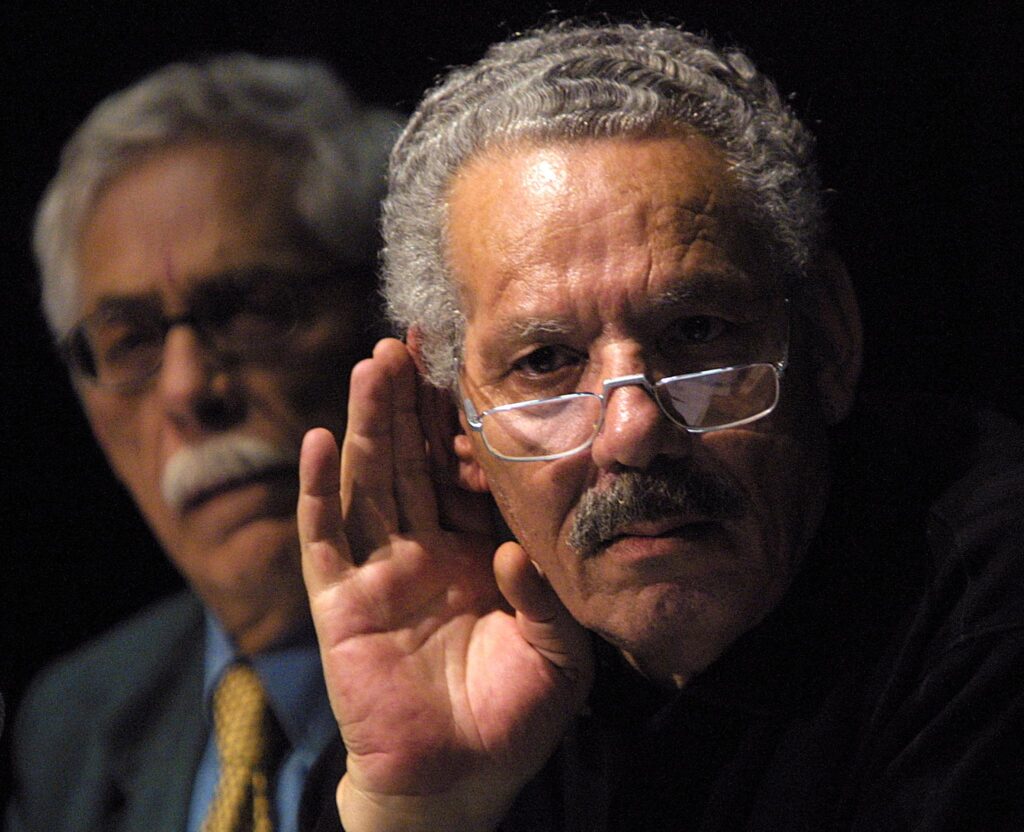
Former Algerian military strongman General Khaled Nezzar speaks at a press conference to present his memoirs at the Algerian Cultural Center in Paris on 25 April 2001. Some 70 people, most of them members of the Collectif des familles de disparus en Algérie, demonstrated against General Nezzar’s presence in Paris. (Photo by Thomas Coex / AFP)

The criminal proceedings against the former Algerian Defense Minister, for war crimes and crimes against humanity committed in the 1990s, were opened in 2011 following a denunciation by TRIAL International. Back then, it was the first investigation in Switzerland of a high-ranking foreign military official for international crimes. Since then, the organization has played a central role in the fight against impunity for the most serious crimes, notably by accompanying victims and documenting the facts. The alleged crimes were committed in the context of the “black decade”, during which the armed forces under the authority of Khaled Nezzar were involved in large-scale acts of torture, extrajudicial executions and enforced disappearances.

The opening of such proceedings against one of the most powerful men in Algeria at the time, on the basis of the principle of universal jurisdiction, had been a major step forward in the fight against impunity. But it was not until 28 August 2023 that an indictment was filed. The accused died four months later, six months before his trial could take place, which had been scheduled for June 2024. As a result, the case was dismissed.

Despite an investigation that lasted 13 years – an agonizing wait for the victims – the appeals lodged by two plaintiffs for a finding of a violation of the principle of expeditiousness, constituting in their view a denial of justice, were rejected on 10 March 2025. The Complaints Court of the Federal Criminal Court found that, taken as a whole, the total duration of the proceedings was “significant” but still acceptable. Neither the long periods of unjustified inactivity, nor even the succession of five prosecutors in charge of the case were considered violations of the obligation to expedite.

Not having been able to participate in the trial of Khaled Nezzar, and hoping to obtain redress for the serious crimes they suffered, two plaintiffs, represented by Orlane Varesano and Sophie Bobillier and Sofia Vegas respectively, are now taking their fight to Europe’s highest court. They claim that Switzerland has violated their right to a fair trial, enshrined in Article 6 of the European Convention on Human Rights (ECHR), due to the excessive length of the proceedings and long periods of unjustified inactivity, even though the defendant’s advanced age and the seriousness of the facts under investigation should have necessitated a more diligent investigation.

We denounce the organizational shortcomings and political interference in this case, which are documented in the file and demonstrate the lack of any real desire to prosecute Khaled Nezzar. After 13 years of proceedings, marked by 5 changes of prosecutor, the closure of the criminal proceedings has deprived our clients of access to a judge. The Swiss authorities’ failure to recognize the existence of a denial of justice was experienced by them as a new form of violence. Today, they have no choice but to take their case to the European Court of Human Rights, so that they can finally hope to be heard and have their suffering resulting from procedural inertia recognized.

Orlane Varesano, Sophie Bobillier and Sofia Vegas, lawyers for the two plaintiffs

The absence of an effective remedy under Swiss law for a violation of the right to be tried within a reasonable time constitutes, in their view, a double violation of Articles 6 and 13 of the ECHR.

TRIAL International shares this analysis, and calls on the Swiss authorities to draw the consequences of this failure forthwith. In the interests of victims and survivors of atrocities, the organization calls for sufficient resources to be allocated to the Federal Public Prosecutor’s Office, and for structural measures to be taken to ensure that proceedings relating to international crimes are conducted within timeframes compatible with the requirements of the ECHR.

On 10 March 2025, the Complaints Court of the Swiss Federal Criminal Court (FCC) rejected the request of two plaintiffs in the case of Khaled Nezzar, former Algerian Minister of Defense, who was indicted in August 2023. They had asked for a finding that the principle of expeditiousness on the part of the criminal prosecution authorities had been violated, constituting a denial of justice. The defendant’s death 6 months before his trial constituted a definitive impediment to his prosecution, resulting in the proceedings being closed in June 2024. Despite proceedings that had lasted over 12 years, the FCC refused to recognize the denial of justice and to compensate the plaintiffs, represented by lawyers Orlane Varesano and Sophie Bobillier, for the delays in the investigation. TRIAL International regrets this decision and is ready to continue supporting the victims in their fight for recognition of the shortcomings in the investigation.

In particular, the FCC found that the proceedings against Khaled Nezzar for war crimes and crimes against humanity had been “objectively long, especially as the late accused was already 74 years old when the investigation began”. However, according to the court, this length of time was notably due to “the seriousness of the facts investigated, the complexity of the case, involving offences committed more than 20 years previously (…) entirely in a foreign country which had not cooperated in any way in the elucidation of the facts”. According to its decision, the FCC considers that the investigation, opened in 2011, was conducted at an acceptable pace. It ended with the defendant’s death in December 2023.

TRIAL International deeply regrets that the FCC failed to recognize that the prosecuting authorities violated their legal obligations to conduct the investigation within a reasonable time and without undue delay. It is equally regrettable that the plaintiffs have been deprived of any compensation for these facts. TRIAL International had repeatedly expressed its concern about the length of the proceedings and the need for victims to obtain justice within a proportionate timeframe. The organization will continue to support the plaintiffs, including by considering to bring the case before the European Court of Human Rights, to have the denial of justice they have suffered recognized.

Sid Ahmed ABER, one of the plaintiffs, reacted: “This decision by the Complaints Court of the Federal Criminal Court seals a judicial scandal, given the way in which the investigation procedure was conducted over 12 long years, punctuated by phases of inaction and political pressure. I am extremely disappointed by this decision.”

As a reminder, Khaled Nezzar was arrested in Geneva on 22 October 2011, following a complaint from TRIAL International. The opening of criminal proceedings in Switzerland against one of Algeria’s most powerful men in the early 1990s, based on the principle of universal jurisdiction, already represented a major step forward in the fight against impunity. But it was not until 28 August 2023 that an indictment was issued, documenting numerous acts of torture perpetrated by the defendant, of which the plaintiffs were victims. This indictment came very late, given Khaled Nezzar’s advanced age and precarious state of health, of which the authorities were well aware. In December 2023, the announcement that a trial would be held six months later, on charges of complicity in war crimes and crimes against humanity, rekindled their hopes of justice after an interminable wait, marked by recurrent pressure and threats.

But Khaled Nezzar’s death, which occurred just a few days after the trial dates were announced, put an end to the proceedings.

Abdelwahab Boukezouha, one of the plaintiffs in the Khaled Nezzar case, reacted in an interview with TRIAL International: “We would never have agreed to lodge a complaint in Switzerland if we didn’t know that Switzerland was very strict with the principles of humanity and human rights. We are the victims of Nezzar, of the coup d’état. And they didn’t give us justice. They’ve achieved their goal. That is, for him to die before there is a trial.”

TRIAL International calls on the prosecuting authorities to learn from this failure, in the victims’ interest. Plaintiffs have a right to a trial within a reasonable timeframe, all the more so when the most serious crimes are at stake. These procedures are often marked by a slowness that deprives victims and affects their safety. TRIAL International calls on Switzerland to allocate sufficient resources and adopt measures to ensure that prosecutions for international crimes are heard within an acceptable timeframe.

(Geneva, 12 March 2024) – Former Syrian Vice-President Rifaat al-Assad will stand trial in Switzerland for war crimes and crimes against humanity. The Office of the Attorney General (OAG) has just charged him with ordering homicides, acts of torture, cruel treatments and illegal detentions perpetrated in the course of the February 1982 massacre in the city of Hama, Syria. With today’s indictment, the victims can finally look forward to justice being done. Rifaat al-Assad, the uncle of current Syrian President Bashar al-Assad, will be one of the highest-ranking government officials ever to be tried for international crimes based on the principle of universal jurisdiction.

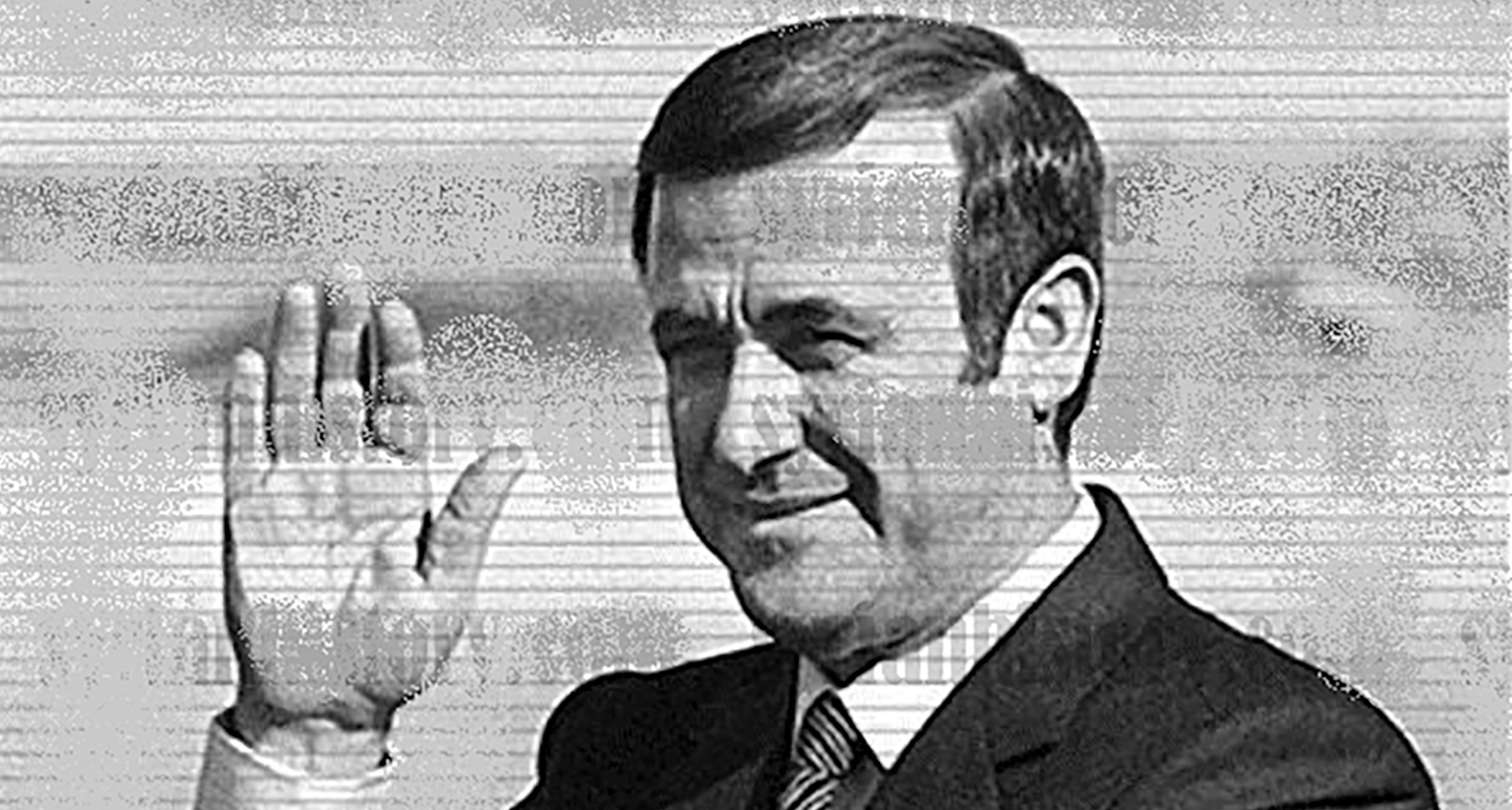
Rifaat al-Assad, commander of the Defense brigades in the 1980s

After issuing an international arrest warrant against Rifaat al-Assad in November 2021, the OAG indicted him on 11 March 2024 for war crimes and crimes against humanity. The proceedings concern the massive war crimes committed in the city of Hama, Syria, in February 1982 by the Defense brigades. The three weeks siege and assault of the city led to the death of between 10,000 and 40,000 people, many of whom civilians, as well as to numerous acts of torture, sexual violence and enforced disappearances. At the time, Rifaat al-Assad was the commander of the Defense brigades, the Vice-President of Syria, as well as the head of operations in Hama.

At the beginning, I could not even dream about having Rifaat al-Assad being brought to trial. The indictment shows that such powerful persons can be brought to justice and I want everyone to know what the al-Assad regime did to the Syrian people. My fight is for all the Syrians”, said one of the three plaintiffs in the case, expressing the feeling of all survivors of the assault, who have been waiting for this moment for over 40 years now.

In 2013, TRIAL International filed a criminal denunciation in Switzerland against Rifaat al-Assad, that quickly led to the opening of a formal investigation. Since then, the accused, who was residing in neighboring France, persistently refused to testify before the Swiss prosecuting authorities, under various pretexts. He fled back to Syria in October 2021, to escape a 4-year prison sentence handed down by French courts for various financial crimes, but also his forthcoming audition by the OAG, that was about to be organized, based on a mutual legal assistance request from Switzerland to France.

Philip Grant, Executive Director of TRIAL International welcomed the historical indictment of such a prominent figure: “It’s another step for justice for the Syrian people! This case, along with past and ongoing groundbreaking proceedings, notably in Germany and France, is looking at the responsibility of the highest Syrian officials and strongly contributes to shedding light on the crimes committed by the al-Assad’s clan against its own people during the past decades”.

The criminal investigation and forthcoming trial against the so-called “Butcher of Hama” are possible thanks to the application of the principle of universal jurisdiction, which allows States to investigate and prosecute persons suspected of having committed international crimes, irrespective of where the crimes were committed and the nationality of either suspects or victims.

TRIAL International recalls the Swiss authorities that time is of the essence and plays against justice, as Rifaat al-Assad is aging. More than 40 years after the massacre of Hama, Rifaat al-Assad’s trial must take place at the earliest possible moment, irrespective of the fact that Rifaat al-Assad will very likely decide not to attend his own trial.

(Geneva, 28 December 2023) – The trial of former Algerian Defence Minister Khaled Nezzar will take place in Bellinzona between 17 June and 19 July 2024, according to information recently received by TRIAL International. Twelve years after the criminal complaint filed by TRIAL International against him, and following tumultuous proceedings, Nezzar will have to face charges of war crimes and crimes against humanity brought against him by the Office of the Attorney General (OAG) of Switzerland.

The opening of the trial is a crucial moment in the proceedings that began on 20 October 2011 with the arrest of Khaled Nezzar in Geneva, following a criminal complaint filed by TRIAL International. The five victims who joined the case as plaintiffs had to wait until 28 August 2023 for an indictment to be issued by the OAG. The OAG accuses the former Algerian general of having committed war crimes, namely torture, inhuman treatment, arbitrary detentions and convictions, as well as killings as crimes against humanity, while he was the strongman of the High Council of State and served as Minister of Defence. These acts allegedly took place between January 1992 and January 1994, during the first years of the “Black Decade”, the Algerian civil war.

We welcome the fact that a trial will open soon,” declared Vony Rambolamanana, Senior Legal Advisor at TRIAL International’s International Proceedings and Investigations Program. “Unfortunately, the road to justice for the victims that our organisation supports is still full of obstacles. The age and health conditions of the accused, who returned to Algeria in 2020 after a long exile, could even jeopardise the holding of the trial“, she continued.

The proceedings against Khaled Nezzar in Switzerland have been marked by major judicial twists and turns. In 2012, the Federal Criminal Court (FCC) handed down a landmark decision, ruling that the defendant did not enjoy immunity for acts committed as part of his official functions, thereby making it possible for him to stand trial in Switzerland. In 2018, overturning the OAG’s decision to close the case, the FCC recognised the existence of a non-international armed conflict in Algeria during the Black Decade between 1992 and 2002.

An amnesty law in Algeria guarantees complete impunity for the atrocities committed by all parties to the conflict. The trial of Khaled Nezzar, who will be one of the most high-ranking officials ever tried anywhere on the basis of universal jurisdiction, represents the last hope of holding to account one of the key players in the conflict that opposed the Algerian government and various armed Islamist groups, leaving nearly 200,000 people dead or missing.

Ten years ago, to the day, the Office of the Attorney General (OAG) of Switzerland, opened a criminal investigation for war crimes against former Syrian Vice-President Rifaat al-Assad. A criminal complaint had been filed by TRIAL International just days prior, while Mr. al-Assad was present in Switzerland. Throughout these years, TRIAL International has continued to support the plaintiffs in their quest for justice.

Screenshot video_PG Hotel Rifaat holding picture
Philip Grant, Director of TRIAL International, sitting on the same sofa in a hotel in Geneva, where Rifaat al-Assad was spotted in December 2013, holding the picture that had been made of Mr. al-Assad ten years ago.

Since December 2013, Rifaat al-Assad has been under investigation for his alleged role in the massacres committed in the Syrian city of Hama in February 1982 by the “Defense brigades”, that he commanded at the time. Alongside the regular Syrian army, Rifaat al-Assad’s troops are suspected of having participated in the three-week siege and assault of the city that caused between 10’000 and 40’000 deaths, mainly civilians. Executions, enforced disappearances, rape and torture were committed on an unimaginable scale. Entire neighborhoods were destroyed during the attack.

The criminal investigation against the “Butcher of Hama” is based on the principle of universal jurisdiction, which allows States to investigate and prosecute suspects of international crimes, irrespective of where they were committed and the nationality of either suspects or victims.

The OAG has only once briefly interrogated Mr. al-Assad in September 2015, when he was again present in Switzerland. After more than 3 decades in exile, mostly in France, Rifaat al-Assad fled back to Syria in October 2021 and to the protection of his nephew, Bashar al-Assad. An international arrest warrant issued by the Swiss prosecuting authorities against Rifaat al-Assad was only made public on 16 August 2023.

After so many years and a winding procedure, the victims are still waiting for light to be shed on the crimes committed in Hama by the Syrian regime against its own people. The massacre that took place in 1982 is engraved in people’s mind as a landmark moment in the recent history of Syria. The lack of accountability for past crimes has fueled the brutality of the al-Assad regime, whose violence since the beginning of the revolution has already been qualified as crimes against humanity by a German court.

The three plaintiffs in the case eagerly await the filing of an indictment and the opening of a trial. TRIAL International urges the Swiss authorities to expedite the judicial process, as justice delayed is justice denied. With Mr. al-Assad now 85, any further delay risks depriving the victims of their right to justice.

The prospective trial of Mr. al-Assad in Switzerland would be groundbreaking. Rarely are such high-ranking officials tried for international crimes based on the principle of universal jurisdiction. It would send a powerful message that those in power in Syria, even when their name is al-Assad, are not beyond the reach of justice.

(Geneva, 29 August 2023) – Former Algerian Minister of Defense Khaled Nezzar will stand trial in Switzerland on charges of war crimes and crimes against humanity. After almost twelve years of tumultuous proceedings, the announcement that the case will finally go to trial renews hope that victims of the Algerian civil war (1992-2002) will get justice. Mr. Nezzar will be the highest-ranking military official ever tried for such crimes based on the principle of universal jurisdiction.
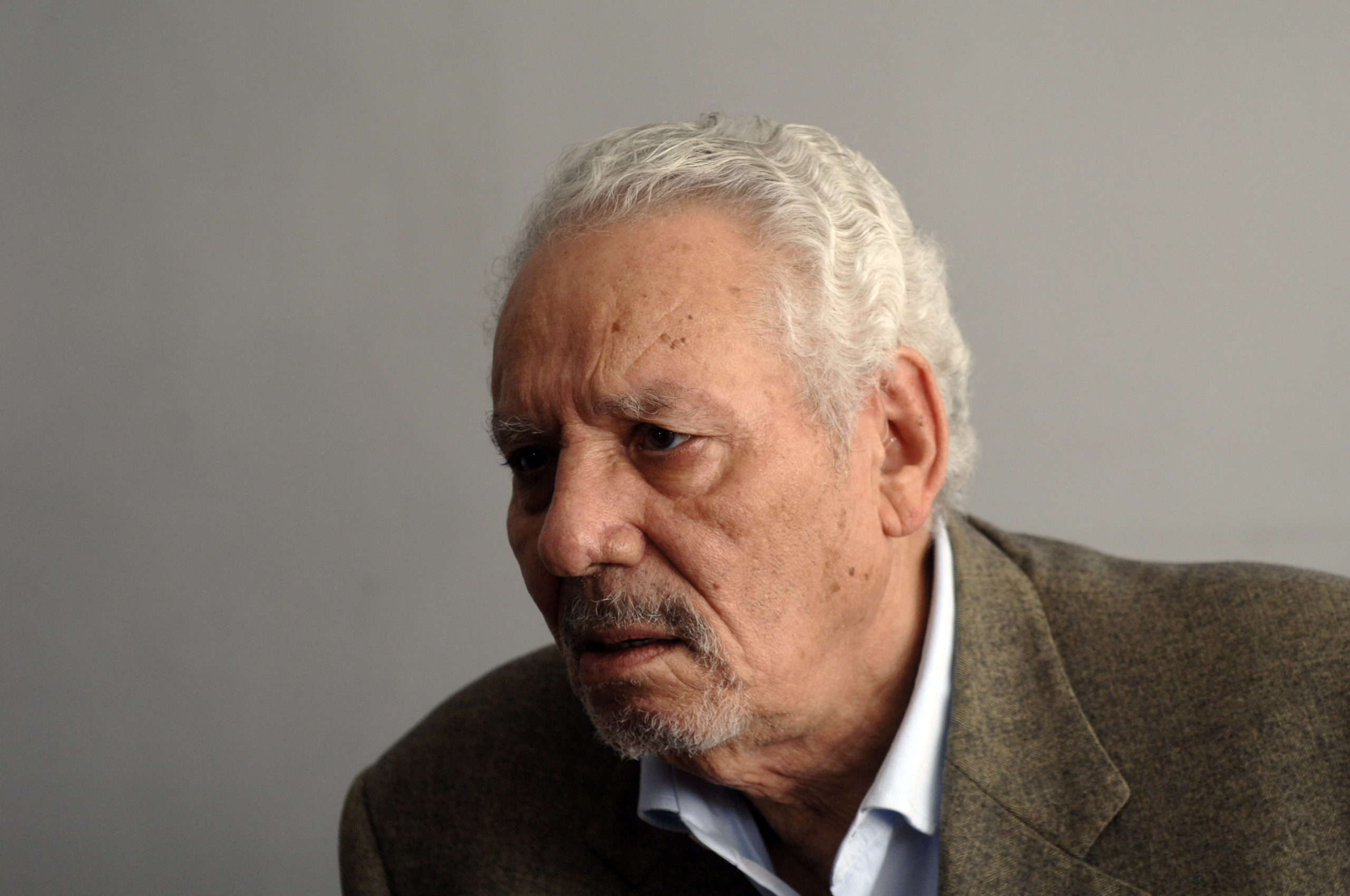
A picture taken on January 9, 2016, shows former Algerian defence minister Khaled Nezzar speaking during a press conference in Algiers. (© Ryad KRAMDI / AFP)

The Office of the Attorney General (OAG) filed an indictment against Khaled Nezzar with the Federal Criminal Court (FCC) on 28 August 2023. The charges against the former Algerian general are numerous, as he is accused of participating in the war crimes of torture, inhuman treatment, arbitrary detention and conviction, as well as murders as crimes against humanity, which took place between January 1992 and January 1994, during the early years of the civil war. The conflict between the Algerian government and various armed Islamist groups resulted in almost 200,000 people missing and dead, and left countless victims of torture, sexual violence and other grave violations, committed by both the Algerian army and the armed groups. Since an amnesty law in Algeria provides complete impunity for atrocities committed by all parties to the conflict, the upcoming trial marks a historic step in the fight against impunity for crimes committed during the “Black Decade“.

TRIAL International filed a criminal complaint against Khaled Nezzar in 2011, leading to his swift arrest and the opening of formal proceedings against him. The organization welcomes the indictment and is calling for the trial to begin as soon as possible. “The defendant’s health has deteriorated over the almost twelve years of proceedings, and it would be inconceivable for victims to be denied their right to obtain justice at this stage” explains Benoit Meystre, Legal Advisor at TRIAL International, adding that “the Court must act quickly to shed light on the crimes committed in Algeria and Mr. Nezzar’s responsibility in these atrocities, if we are to avoid a denial of justice.”

The victims’ battle to bring Khaled Nezzar to justice has been extremely challenging. Recently, a victim withdrew his complaint due to pressure exerted by the Algerian government. Another complaint was closed in 2023 because the survivor, living in Algeria, could no longer be contacted, allowing to fear the worst about him. A third victim recently passed away and will never know the outcome of the legal battle that he started back in 2011.

Abdelwahab Boukezouha, one of the five plaintiffs, has demonstrated unfailing courage throughout the almost twelve years of investigation, and explains: “I’m not just fighting for myself, but for all of the victims of the Black Decade, as well as for the youth and for future generations. Never again should an Algerian man or woman be subjected to what I went through!”.

The criminal investigation and forthcoming trial against Khaled Nezzar are possible through the application of the principle of universal jurisdiction, which allows – and sometimes obliges – states to investigate and prosecute persons suspected of having committed international crimes, irrespective of where the crimes were committed and the nationality of either suspects or victims. TRIAL International highlights that General Nezzar will become the highest-ranking military official ever to be tried on the basis of this principle, in any jurisdiction. He will also be the third defendant to appear before the FCC to answer for his involvement in international crimes.

According to Benoit Meystre, “no other prosecution concerning the Black Decade will take place anywhere in the world. This trial is therefore the only – but also the very last – opportunity to deliver justice for victims of the Algerian civil war.”

Eleven years after his arrest in Geneva, the procedure against Khaled Nezzar is still ongoing in Switzerland. TRIAL International still hopes for an indictment in the near future.

On 20 October 2011, the Algerian general Khaled Nezzar was arrested in Geneva following a denunciation filed by TRIAL International and two criminal complaints from victims who had been tortured during the so-called black decade. Following a 48-hours questioning by the Office of the Attorney General of Switzerland (OAG), he was released on the condition that he attends the subsequent hearings. His final hearing in February 2022 allowed the victims as well as TRIAL International, which accompanied them for eleven years, to foresee the possibility of an indictment in a near future. However, his age and his deteriorating health, as rumors suggest, may jeopardize the holding of a trial.

The long-running procedure initiated in 2011 in Switzerland represents the only chance for the Algerian victims’ voice to be heard and for them to obtain justice. Switzerland’s role in this case is therefore highly important. The OAG suspects Khaled Nezzar of having participated, as an accomplice, in multiple war crimes (murder, torture, inhuman treatment, arbitrary detention) as well as in manslaughters committed in the context of a systematic and widespread attack against the civilian population between January 1992 and January 1994 in Algeria, when he was the leader of the military junta in power and serving as Minister of Defense.

After many judicial twists and turns, the opening of a trial in Switzerland against the former Minister of Defense would mark a historical precedent. Indeed, that would be the first time ever in the world that such a high-level individual would have to answer for war crimes and crimes against humanity before a national court in application of the principle of universal jurisdiction. In Switzerland, while other cases based on the same principle are currently under investigation, the trial of Khaled Nezzar would only be the second to be held before the Federal Criminal Court in Bellinzona in application of this principle.
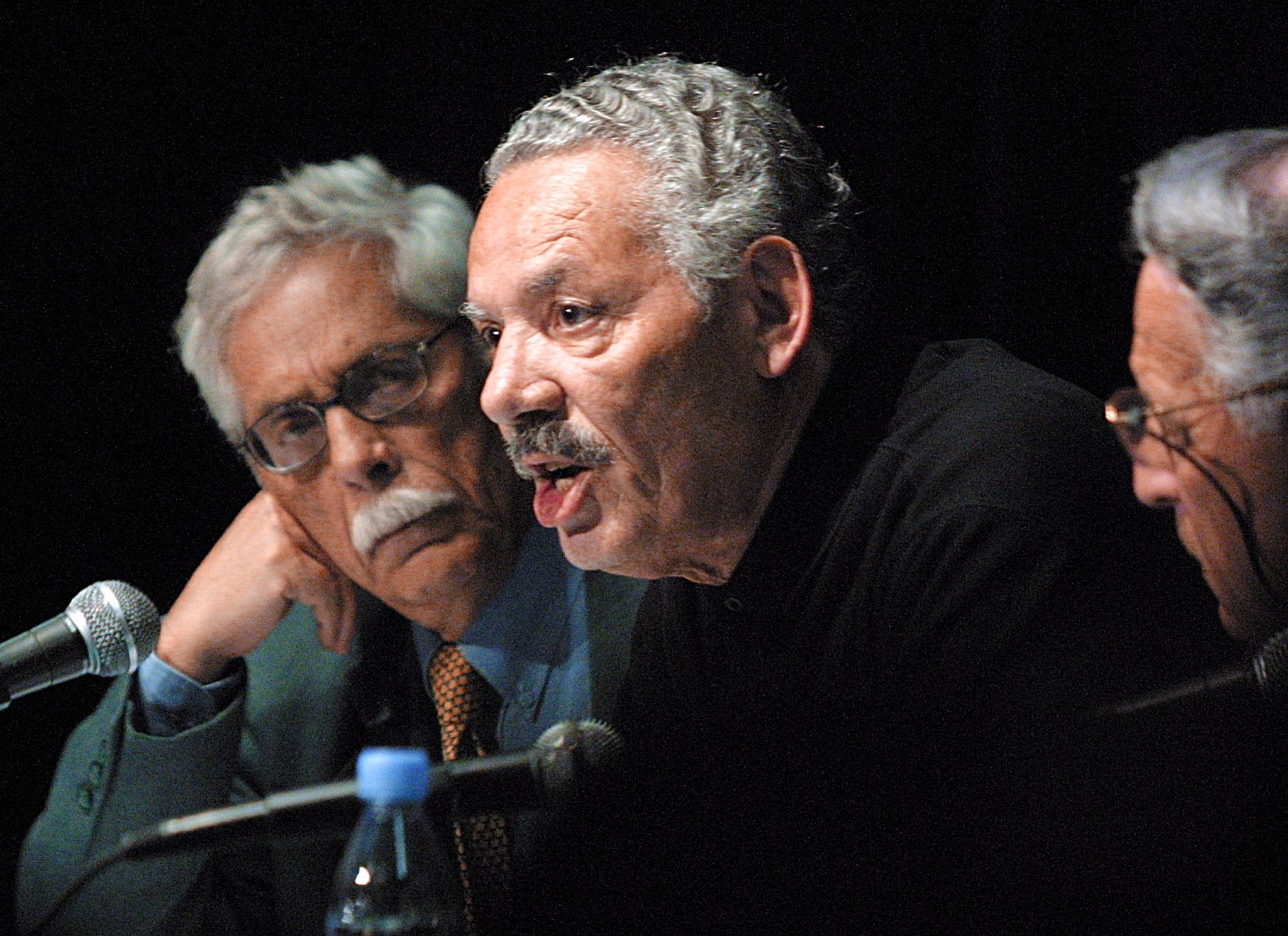
The procedure, which in itself lasted longer than the actual Algerian civil war, has been made possible thanks to the courage of the victims and the presence of TRIAL International as well as committed lawyers at their side. However, worrying rumors on the health of the soon-to-be 85-year-old Khaled Nezzar raise the concern that he may never be held accountable before Swiss courts.

According to Benoit Meystre, legal advisor at TRIAL International, “in the event of Khaled Nezzar’s death, the closure of the proceedings would be devastating news for all the victims of the Algerian black decade and would be perceived as a failure of the Swiss prosecution authorities.

If the road to justice can often be long, this is all the more true in this case. The victims of the so-called dirty war have now been waiting for more than 30 years for justice. TRIAL International and the victims continue to believe that an indictment will be issued soon and do not lose hope of seeing Khaled Nezzar sitting in the dock of the Federal Criminal Court.

At the beginning of the “black decade” in Algeria, which allegedly left 200,000 people dead or missing between 1992 and 2000, Khaled Nezzar was leading the army as Minister of Defense and de facto leader of the military junta, hence leading the troops that committed so many atrocities. Grave human rights violations were widespread, and the use of torture was systematic. Total impunity unfortunately prevails up to this date for these crimes.

Stronger than crime: “We are not victims, we are survivors!”

For the International Day for the Elimination of Sexual Violence in Conflict,  wich is today, the 19th of June, we are looking back at the past 30 years since the war started in Bosnia and Herzegovina (BiH). What progress has Bosnia and Herzegovina made in providing justice and reparations for survivors of conflict related sexual violence? How do survivors feel after all this time? This year their message is clear ― despite all the obstacles and challenges, and there are many, they are willing, more than ever to continue the fight. They are stronger than crime.

In May 1992 in Lozje – Kokino Selo, Midheta Kaloper forever lost a part of herself: her mother was killed, her brother is still missing. Her youth was stolen by the brutality, the violence, the rage, and the wave of killings that the war brought to Foča. Though she was held captive and abused, she refuses to let the injustice and the crimes which she has survived mark the rest of her life. Today, she is a mother and an activist who helps other victims of war crimes.

“It takes a lot of courage to speak about these crimes. God forbid it happens again. I have two beautiful daughters at home who I would not want to go through what we went through from 1992 to 1995. We are survivors, today we stand tall and proud. Survivors are sharing their stories so that it does not happen again and to encourage all those who have kept quiet. Many survivors are fearing the judgement of the society, as we often see that they are made to feel guilty for the sexual violence they have survived.” Said Midheta Kaloper.

“Until I realised that the perpetrator is the one who should be ashamed, I did not speak out. I felt ashamed, and it took me a long time to realise that I should not be. We do not want to be called victims, we are survivors.” Said one survivor who wishes to stay anonymous.

This year, survivors of conflict related sexual violence are going back to one of the most notorious places where this crime was committed ― Partizan Sports Hall in Foča -, to speak their truth.

“All changes, from legislative to judicial practices, including  the behaviour toward survivors start with us-individuals, our willingness to understand our responsibility to contribute to the solving of a heavy burden which these brave women and men have stoically endured in recent decades. That is why it is very important to support them not only on this important date, but continuously during their daily struggle for justice. “ Said Selma Korjenić, Head of the TRIAL International’s Program in Bosnia and Herzegovina today in Foča.

It is estimated that approximately 20,000 women and men were raped or sexually abused during the 1992-1995 war in BiH, of which only 1,000 survivors have obtained, or are in the process of obtaining, some form of reparations. Our newest study on reparations for conflict related sexual violence survivors conducted in BiH “We raise our voicesfinds that this inadequacy can be attributed to a multitude of obstacles that discourage or hinder survivors from accessing their rights to reparations.

“Thirty years have passed since the war started. BiH did not do much for us, we feel forgotten. “Said the survivor.

Pillaged timber between Senegal and The Gambia: The criminal denunciation filed by TRIAL International leads to the opening of a criminal investigation in Switzerland

In June 2019, TRIAL International filed a criminal denunciation with the Office of the Attorney General of Switzerland (OAG), against Nicolae Bogdan Buzaianu, a Swiss businessman close to former Gambian president Yahya Jammeh. The organisation suspected him of pillage, a war crime under Swiss law.

Bois de rose

According to the detailed file submitted to the OAG by TRIAL International, the Westwood company presumably owned by this Swiss businessman along with former president Yahya Jammeh was involved in the illegal exploitation and the export of the precious and protected rosewood in Casamance from 2014 to 2017. For several decades, large areas of the region were in conflict and under the control of armed separatist groups, including the Mouvement des Forces démocratiques de Casamance (MFDC). Yet, the illegal exploitation of natural resources in conflict areas can be considered as an act of pillage, which is a war crime under international and Swiss law.

According to information gathered by TRIAL International, the OAG has formally opened a criminal investigation regarding the alleged illegal exploitation and export of rosewood between Senegal and The Gambia. The opening of the proceeding follows the above-mentioned criminal report filed with the OAG by TRIAL International in June 2019.  It should be specified that as of today, TRIAL International has no official information on the offense(s) and the person(s) – natural or legal – targeted by the criminal investigation.

This criminal investigation is the third one opened by the OAG following investigations and cases filed by TRIAL International against economic actors suspected of pillage. The two other criminal cases concern the illegal trade of minerals from Eastern Congo in the DRC and the plundering of Libyan fuel. For TRIAL International, these cases not only have the potential to lead to jurisprudence that would clarify the obligations under international humanitarian law of economic actors operating in conflict zones or occupied territories. They can also put an end to the widespread impunity of economic actors who destroy the environment and illegally exploit natural resources, thereby fueling the causes of conflicts.

To watch the report “Trafic de bois, les criminels de l’environnement”, broadcasted on Temps Présent, 16 June 2022 on the swiss television RTS:

Respect for international humanitarian law must prevail over the quest for profits!

According to information gathered by TRIAL International, the Office of the Attorney General of Switzerland (OAG) has formally opened criminal proceedings for the war crime of pillage in a case concerning the alleged plundering of Libyan fuel. The opening of these proceedings follows a criminal report filed with the OAG by TRIAL International in May 2020. Currently, TRIAL International has however no knowledge of the persons – natural or legal – targeted by the investigations nor of the criminal offence(s) being investigated.

After a year-long investigation, TRIAL International and Public Eye published a joint report in March 2020 concerning a case of alleged pillage of smuggled gasoil belonging to the National Oil Corporation, a Libyan state-owned company. The investigation alleged that the Swiss-based trading company had purchased the smuggled gasoil from Libya in 2014 and 2015, a time period which coincided with the Second Libyan Civil War. TRIAL International analysed the evidence gathered during the investigation and concluded that the Swiss trader may have been complicit in the war crime of pillage. The NGO therefore filed a criminal denunciation in May 2020.

The OAG will therefore have to determine whether the facts brought to its knowledge complied – or not – with the law. The initiation of proceedings in such a case is an important step forward in the pursuit of accountability for economic actors who are active in conflict zones. According to Philip Grant, Executive Director of TRIAL International, “the OAG sends a strong signal to all actors operating in conflict zones that their activities must respect international humanitarian law.” TRIAL International points out that the courts rarely deal with such cases. The NGO has also filed two other criminal denunciations against Swiss businessmen for acts of pillage possibly committed in two other contexts, the Democratic Republic of the Congo and The Gambia/Senegal, which are currently being processed by the OAG. For the organization, these cases have the potential to lead to jurisprudence that will clarify for all actors operating in conflict zones or in occupied territories their obligations under international humanitarian law and thus contribute to putting an end to practices that, all too often, directly fuel conflicts.

It is a giant step forward in the fight against impunity. The Swiss Office of the Attorney General (OAG) has conducted the final hearing of Khaled Nezzar. The OAG holds that numerous war crimes and crimes against humanity were committed while Mr. Nezzar was leading the military junta and serving as Minister of Defense at the beginning of the Algerian civil war. After more than 10 years of investigation and numerous judicial twists, the end of the proceedings paves the way for Mr. Nezzar to be sent to trial before the Federal Criminal Court (FCC) for serious offences constituting complicity in war crimes and crimes against humanity, including extrajudicial executions, torture and enforced disappearances.

© AFP / Thomas Coex


A historical universal jurisdiction case

After conducting a three-day final hearing of Mr. Nezzar in Bern between 2 and 4 February, the OAG is about to finish its investigation. This decisive step now allows for Mr. Nezzar to be tried before Swiss courts. The OAG accuses Khaled Nezzar of having participated as an accomplice in the commission of multiple war crimes (murder, torture, inhuman treatment, arbitrary detention) as well as killings in the context of a systematic and widespread attack against the civilian population between January 1992 and January 1994, when he was the strongman of the High State Council and served as Minister of Defense. A formal decision by the OAG to refer him to the FCC for trial could be issued very soon.


A complaint filed by TRIAL International in 2011

TRIAL International is at the origin of the case, having filed a criminal denunciation against Mr. Nezzar in October 2011, while he was staying in Geneva. “We welcome the fact that this long investigation has come to an end, paving the way for justice for the countless victims of the Algerian civil war,” said Giulia Soldan, head of the organization’s International Investigations and Litigation program. Sending Mr. Nezzar to trial would set a historic precedent: it would be the first time in the world that such a high-ranking person would be held accountable for war crimes and crimes against humanity before an ordinary national court.

However, at the end of his final hearing, Mr. Nezzar was not detained. This is a cause of concern for the organisation, as the risk of flight, collusion and pressure on witnesses and victims remains important.


A strong signal from Switzerland in the fight against impunity for international crimes

In Switzerland, the trial of Khaled Nezzar would only be the second to be held before the FCC in application of the principle of universal jurisdiction. In June 2021, a Liberian warlord was sentenced by the FCC to 20 years in prison for war crimes.
Philip Grant, Executive Director of TRIAL International, said: “It is high time that Khaled Nezzar’s case be brought to trial. The OAG has a unique opportunity to send a powerful message to dictators around the world. Regardless of the country, regardless of how long ago the crimes were committed, those responsible for atrocities, including former heads of state, should start to worry that universal justice can catch up with them.”

The organisation, which has been fighting for 20 years alongside victims against impunity for the most serious crimes, welcomes the fact that a growing number of states are now taking their obligations under international law seriously, and are beginning to bring justice for atrocities committed in Syria, Rwanda, the Balkans, Liberia, now Algeria, and elsewhere.


A much-needed recognition of the suffering of the victims of the Algerian civil war

At the beginning of the ‘black decade’ in Algeria, which is said to have left 200,000 people dead or missing between 1992 and 2002, Khaled Nezzar was the head of the army as Minister of Defense and de facto leader of the military junta, at the head of troops that committed an incalculable number of abuses. Violations of human rights and international conventions were widespread and the use of torture systematic. Impunity for these acts is total to this day. “No one has ever been investigated in Algeria, let alone tried for these crimes. This is the last opportunity to be able to expose before a tribunal the crimes committed during the Algerian civil war”, added Giulia Soldan.

The long procedure against Mr. Nezzar, which lasted longer than the Algerian civil war itself, was made possible by the courage of the victims and the presence of TRIAL International and committed lawyers at their side. For TRIAL International, as for the victims, it was not possible to let these mass crimes committed by the Algerian regime of the time go unpunished.

Orlane Varesano, one of the victims’ lawyers, said: “My clients, who suffered unimaginable torture, have been fighting for 30 years to obtain justice. This news is a long-awaited recognition of their suffering.”

Highlighting the responsibilities and trying the main perpetrator of the atrocities committed during the first years of the Algerian conflict, would allow the victims of torture, enforced disappearances, sexual violence and all other forms of violence perpetrated to be recognized and to take a step forward towards resilience and reconstruction.


Chronology of the case

19 October 2011: Khaled Nezzar is reported to be on Swiss territory. TRIAL International files a criminal complaint with the Swiss Office of the Attorney General, which opens a war crimes investigation.

20 October 2011: Khaled Nezzar is arrested and questioned by the OAG until 21 October, before being released on the promise to appear for the remainder of the proceedings.

January 2012: Khaled Nezzar appeals against the opening of a criminal investigation against him, arguing that his position as Minister of Defense at the time of the events protected him from possible criminal proceedings in Switzerland.

31 July 2012: The Federal Criminal Court renders a landmark decision rejecting Mr. Nezzar’s appeal, considering that it is not possible to invoke immunity for international crimes (war crimes, crimes against humanity or genocide).

2011 to 2016: Six victims file complaints and more than a dozen are heard as part of the proceedings.

4 January 2017: The OAG closes the case on the grounds that an armed conflict did not take place in Algeria in the early 1990s.

16 January 2017: The complainants file an appeal against the closure order before the FCC.

6 June 2018: The FCC makes public its decision to annul the closure of the complaint by the OAG, which must then resume the investigation. The FCC recognizes, inter alia, the existence of an armed conflict during the relevant period in Algeria, and the involvement of Mr. Nezzar in numerous crimes.

4 February 2022: The OAG undertakes the last audition of Mr. Nezzar.


Download the press release in English or in Arabic.

Did Switzerland miss a historic opportunity to judge a potential war criminal? It has been ten years to the day since TRIAL International filed a criminal complaint against the former Algerian Minister of Defense Khaled Nezzar, on 19 October 2011. It has also been a decade since a criminal investigation for war crimes was opened. This was long enough for the accused to return to Algeria without being bothered and probably long enough to doubt that he will ever have to answer for his involvement in the many acts of torture, extrajudicial executions and enforced disappearances that took place during the “Dirty War” that tore Algeria apart between 1992 and 2002.

It has been about a year since the former Minister of Defence returned to Algeria and it is unlikely that he will be held accountable in a Swiss court. © AFP / Thomas Coex

Will Khaled Nezzar have to face judges one day for his involvement in the Algerian civil war? Nothing is less certain, as the procedure opened in Switzerland following the criminal complaint by TRIAL International is dragging on. Since 2020, this senior officer of the Algerian army, former Minister of Defense and de facto head of the military junta that took power in 1991, is back in his country without any chance for Switzerland to obtain his extradition, and without any judicial assistance to be expected. The countless victims of the civil war – which cost the lives of 60,000 to 150,000 people and forced millions more to move – fear that unless the 83-year-old former military leader is brought to trial, he will never have to answer for the war crimes charged against him.

The proceedings initiated in December 2011 by the Swiss Office of the Attorney General (OAG) are officially still ongoing. The legal process has lasted almost longer than the Algerian civil war itself. As time passes, it complicates the outcome of the procedure: material evidence is more difficult to access, the memory of witnesses, victims and survivors are fading and the narrative of the collective memory is evolving.

As with other cases brought by TRIAL International, the slowness of the procedure raises important questions. Does Switzerland lack the means? The number of prosecutors in charge of international crime cases is indeed small, and the Mutual Legal Assistance, Terrorism, International Criminal Law and Cybercrime Division is not specialized enough to deal “only” with war crimes. Does Swiss foreign policy justify granting “de facto” immunity to certain defendants? It is worth recalling that the Federal Department of Foreign Affairs had warned the prosecutor in charge of the case that the Nezzar case risked jeopardizing bilateral relations between Switzerland and Algeria.

The Nezzar case is however a rare opportunity to hear the victims and to render justice. It is also unique because no individual has ever been tried in Algeria or elsewhere for the atrocities committed during the black decade. The Federal Criminal Court had paved the way with an important landmark ruling in 2012 that rejected the immunity of former foreign leaders for international crimes, and then by recognizing in a ruling on 30 May 2018 the existence of a civil war in Algeria, yet denied by Algiers. It is regrettable that the Swiss prosecuting authorities do not carry on this way.

The part played by Switzerland in this affair could be more important than one might think. Algeria has embarked on a pacification without truth and justice. The reconciliation process is not satisfactory, especially because of the amnesties offered both to armed Islamist groups – provided they were not involved in massacres – and to state agents engaged in the fight against terrorism. By bringing Khaled Nezzar to justice, Switzerland would be affirming its commitment by recognizing the responsibilities of the perpetrators of crimes committed at the time. This is a strong signal and an outstreched hand extended to Algerians who have been waiting for justice for almost thirty years.

Could a Swiss businessman be liable for pillage – a war crime under international law – by purchasing minerals from a region of the Democratic Republic of Congo controlled by an armed group? The investigation, opened in March 2018 by the Office of the Attorney General, might be able to answer this question.

© Sylvain Liechti / MONUSCO

In November 2016, TRIAL International and the NGO Open Society Justice Initiative (OSJI) filed a criminal denunciation against Christoph Huber, a Swiss businessman operating in the trade of minerals. During the second Congo war between 1998 and 2003, Huber was allegedly directly linked to the RCD-Goma (Goma faction of the Rassemblement congolais pour la Démocratie), an armed group accused of war crimes that occupied – and de facto administered – large territories in the east of the Democratic Republic of Congo (DRC).

The events denounced occurred in 2001. At that time, Christoph Huber appears to have signed on behalf of a Rwandan company a contract granting several mining concessions from an official body of the RCD-Goma, along with guarantees of protection by troops of the armed group. Huber had also been involved in the mineral trade in the region at least since 1997 on behalf of other companies, some of them Swiss-based.

Commercial documents obtained during the investigation conducted by both organizations between 2013 and 2016 highlight the existence of links between RCD-Goma and the Swiss businessman. “We had no choice but to file a criminal complaint against Christoph Huber as an individual, because the possibility of doing the same against a company is particularly limited under Swiss law”, explains Bénédict de Moerloose, head of the International Investigations and Litigation program at TRIAL International. In this case, however, the problem is even more complex because Mr. Huber’s business ties with the Swiss companies in question have meanwhile been terminated. Through this strategy, the organization therefore hopes to obtain a decision that would set a new precedent. Whether or not the Federal Public Prosecutor’s Office will follow up remains to be seen.

As in many other countries, the legal framework in Switzerland is not very restrictive for companies and relies primarily on their goodwill. There are very few legal avenues to prosecute economic actors potentially involved in the commission of international crimes.

The introduction of a duty of due diligence, coupled with legal liability, should make it possible to hold offending companies accountable, and not only those who work on their behalf.

Visit the website of the Responsible Business Initiative

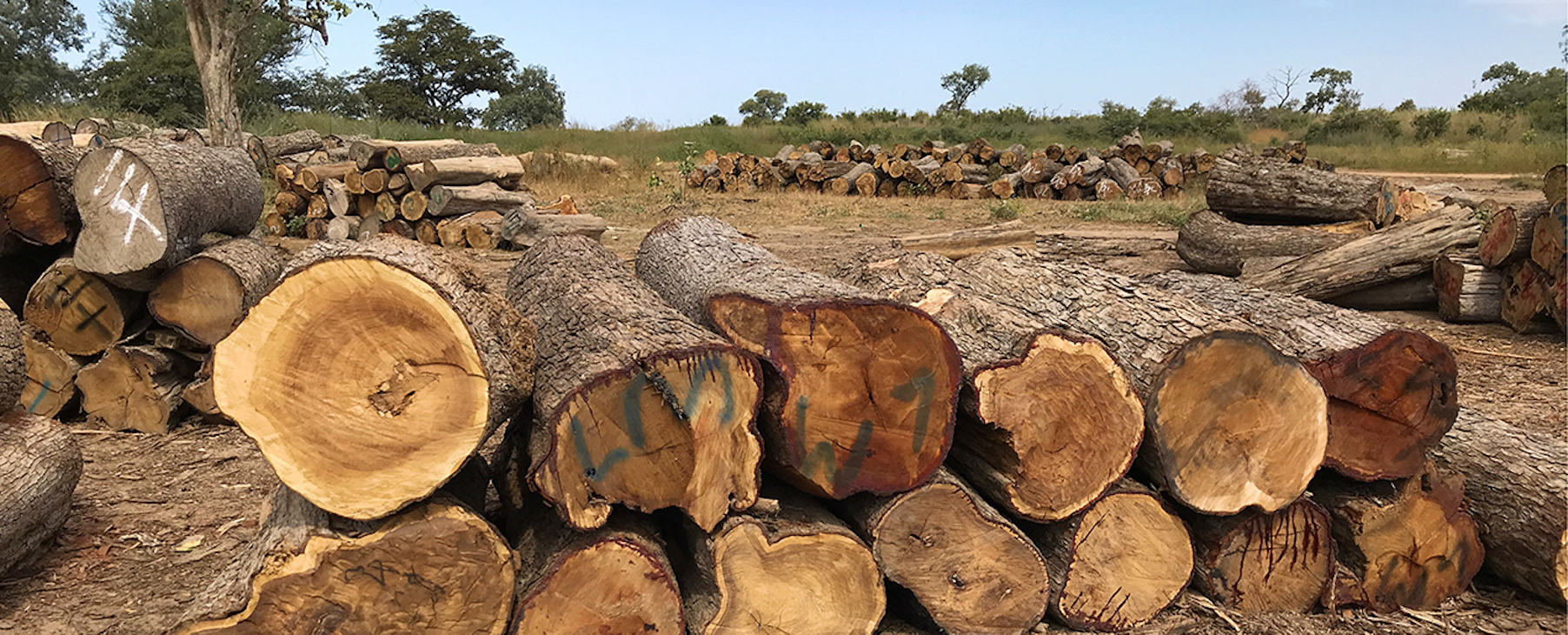
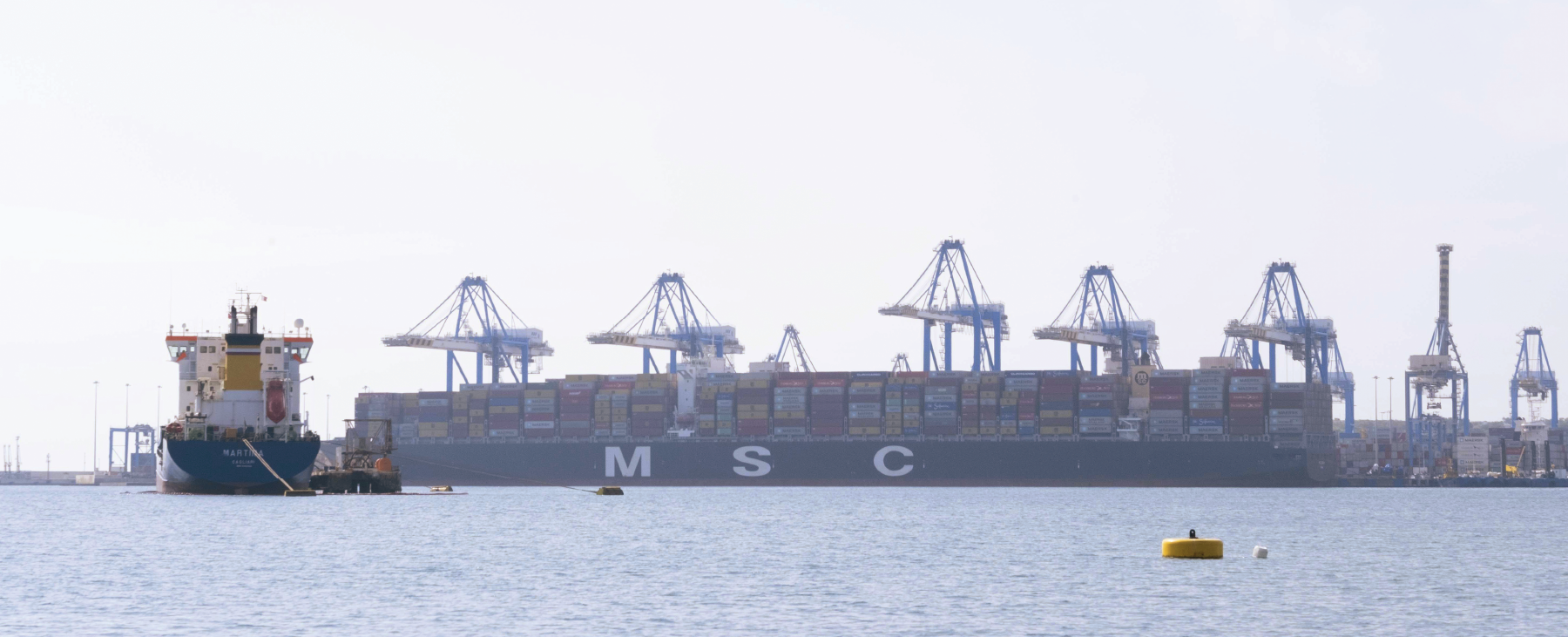
Between 2014 and 2017, The Gambia exported nearly 163 million US dollars-worth of rosewood, a rare and precious tree species, to China. During this time, Westwood, a Gambian company presumably owned by Swiss national Nicolae Bogdan Buzaianu and former Gambian President Jammeh, had the exclusive license to export rosewood. The timber it exported was illegally felled in neighboring Casamance where the separatist armed group has been fighting the Senegalese army for decades. TRIAL International filed a criminal complaint with the Swiss Office of the Attorney General against Mr. Buzaianu accusing him of having pillaged conflict timber.

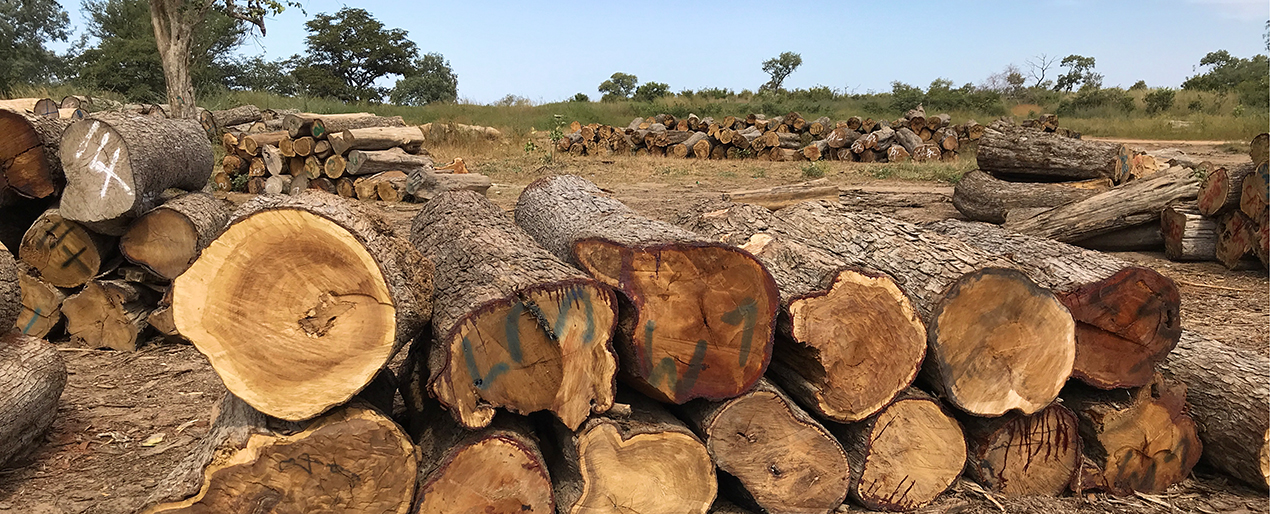
The logs felled in the Senegalese region of Casamance were smuggled across the Gambian border and left in open depots before being sold to traders. ©TRIAL International

According to the criminal complaint (dénonciation pénale) filed by TRIAL International, Swiss businessman Nicolae Bogdan Buzaianu’s company was involved in the pillaging of precious rosewood from Casamance between 2014 and 2017. During this period, Westwood Company Ltd – which, according to TRIAL International’s findings, Mr. Buzaianu co-founded with former Gambian President Yahya Jammeh – had a monopoly on the export of rosewood, a precious tropical wood from The Gambia. But with Gambian rosewood nearly depleted since 2011, most of the timber was actually imported from Casamance, a region in southern Senegal that borders The Gambia. For several decades, large areas of this region have been under the control of the separatist armed group, the Mouvement des forces démocratiques de Casamance (MFDC).

“Exploiting natural resources from a conflict zone is a war crime that must be punished. Without the pillaging of natural resources, many armed groups would have no means of financing their wars’, said Montse Ferrer, Senior Legal Advisor and Corporate Accountability Coordinator at TRIAL International. ‘Despite numerous documented cases of pillage, not a single conviction has been made since the end of World War II.’”

TRIAL International filed a criminal complaint for pillage against Mr. Buzaianu in Switzerland with the Office of the Attorney General (OAG) in June 2019. ‘We have waited until today to go public because we wanted to give the Swiss prosecutorial authorities sufficient time to review the evidence and, as the case may be, take decisive action against Mr. Buzaianu. We are hopeful that these steps have been taken and that the OAG is investigating the matter’, she added.

LOGGING THAT BENEFITS AN ARMED GROUP

Some estimates suggest that Senegal loses the equivalent of 40,000 hectares of forest per year, several dozen hectares of which are lost due to the illegal exploitation of rosewood in Casamance. This selective deforestation has led to a decrease in rainfall and increased desertification in the region. It has also led to conflicts between rebels and communities who can no longer use the forests for sustainable livelihoods.

Illegal logging of precious woods is problematic, as it undermines reforestation efforts in the region. According to the International Institute for Environment and Development (IIED), “in the village of Koudioube, the restoration of the community forest has helped to overcome conflicts.” Illegal logging has stopped, fruits and wildlife are abundant, and local people are once again able to sell forest products. Communities that used to fight each other are now working together.

A large share of the trafficking and logging has been taking place directly in the territory controlled by the MFDC for almost thirty years. ‘Westwood’s illegal activity is all the more serious because it contributed to an illegal timber trade that has historically financed the MFDC. Equally striking is that this trade has had such a negative impact on the lives of local people contributing directly to the deforestation of the region’, said Jennifer Triscone, Legal Advisor at TRIAL International. The armed group exercises de facto control over the precious wood industry by issuing logging authorizations and transport permits, and by ensuring the security of the latter. The rebels also illegally exploit and sell precious hardwood timber to finance their armed struggle: an illegal trade fueled by demand from the global tropical hardwood market.


  Read the full press kit

TRIAL International and the Open Society Justice Initiative (OSJI) welcome the opening of a formal criminal investigation by the Office of the Attorney General of Switzerland, following the filing of their denunciation against Christoph Huber, a Swiss national active in the mining sector. Backed by numerous pieces of first-hand evidence collected during their investigation of the case since 2013, the criminal  denunciation filed in November 2016 by both organizations suspects Huber of having been involved in pillage in the Democratic Republic of the Congo (DRC), a war crime under Swiss law.

© GuyOliver/IRIN

In March 2018, the Office of the Attorney General (OAG) decided to investigate the alleged illegal trade of minerals in the DRC during the armed conflicts of the Second Congo War (1998-2003), following TRIAL International and OSJI’s criminal denunciation.

“At a time when the public increasingly demands from corporate actors that they respect and protect human rights, the opening of an investigation presumably in connection with the conduct of illegal trade in a conflict zone potentially involving a Western businessman sends a strong signal to the whole mining sector”, said Bénédict De Moerloose, Head of the International Investigations and Litigation Program at TRIAL International.

APPARENT BUSINESS WITH AN ARMED GROUP

During their investigation, the organizations uncovered, among other evidence, elements highlighting the existence of a business relationship between M. Huber and the RCD-Goma (Goma faction of the Rassemblement congolais pour la Démocratie), an armed group accused of war crimes and controlling large portions of Eastern Congo during the Second Congo War. In 2001, the company represented by Huber would have been granted four mining concessions by an official body of RCD-Goma, whose armed forces were militarily occupying the area where the relevant mines were located. According to the agreement granting these mining concessions, their award involved protection guarantees by troops of the armed group.

According to Ken Hurwitz, head of OSJI’s Anticorruption program, “Too many conflicts around the world are fueled by the illegal sale of pillaged resources into global markets. Yet the international businesses and business people involved are rarely, if ever, prosecuted. The Swiss are to be applauded for taking on the hard work of pursuing this complex and important case.”

If the ongoing investigation was to establish the involvement of Mr. Huber in the illegal exploitation and appropriation of natural resources from a conflict area, he could be held liable for the war crime of pillage, a crime prohibited by international humanitarian law, and punishable under Swiss law by a prison sentence of no less than three years. Both organizations call upon the OAG to promptly complete its investigation.

Should this investigation lead to a trial, it would constitute a historical precedent. Indeed, it might be the first time in Switzerland that an economic actor would be on trial for accusations of the war crime of pillage, although this practice, in particular the looting of raw materials in conflict zones, has in the past decades reached alarming proportions.

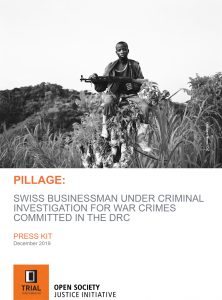
Press kit on criminal investigation for war crimes committed in the DRC

The Swiss Federal Criminal Court (FCC) has overturned a decision of the Office of the Attorney General (OAG) to dismiss the case of former Algerian minister Khaled Nezzar, who is suspected of war crimes. In a landmark 50-page decision, the FCC rules that an armed conflict did exist in Algeria in the early 1990s and that General Nezzar was aware of the countless crimes committed under his command. Consequently, the case is referred back the OAG, who will have to resume the investigation.


Was there an armed conflict in Algeria before 1994? By answering in the negative in January 2017, the OAG had closed the investigation into General Khaled Nezzar, the former Algerian Minister of Defence, suspected of war crimes during his time in office. According to the OAG, without an armed conflict, there cannot be any war crimes; without war crimes, there cannot be any prosecution.

The FCC overruled the OAG. Following a detailed legal reasoning, it concluded that “the requirement of a non-international armed conflict in Algeria between January 1992 and January 1994 is fulfilled”. The Court judged that the crimes were indeed committed in the context of such a conflict, and that the former minister could therefore face charges of war crimes, and even potentially charges of crimes against humanity.

For Bénédict De Moerloose, Head of TRIAL International’s Investigations and Criminal Law Division, “this historic decision now forces the OAG to address the issue of Khaled Nezzar’s personal responsibility. Especially as the Court affirmed that he could not have ignored the abuses committed by his subordinates.”

Indeed, according to the FCC, “there is no doubt that [Khaled Nezzar] was aware of the acts committed under his orders”. Extrajudicial executions, enforced disappearances and acts of torture, the list of abuses is long. The description of some of these acts is chilling: beatings with sticks, wire and belts, nail pulling, cigarette burns, etc. According to the FCC, the widespread and systematic nature of such acts could qualify as crimes against humanity.

“The OAG’s arguments were fully dismissed,” according to Pierre Bayenet, one of the plaintiffs’ lawyers who appealed against the dismissal. “In five years of investigation and after hearing dozens of witnesses without ever raising the issue of the existence of an armed conflict, the decision to shut down the case was just incomprehensible.”

“It is an immense relief for the victims who finally see their suffering recognized,” said Damien Chervaz, the other lawyer defending the plaintiffs. “The OAG must now resume the investigation and quickly decide if Khaled Nezzar should stand trial.”


The Nezzar case at a glance

Khaled Nezzar was Minister of Defence and a member of the High Council of State in Algeria from 1992 to 1994. In October 2011, following the filing of a criminal complaint by TRIAL International, he was taken into custody and questioned in Switzerland. Khaled Nezzar was suspected of having authorized or incited his subordinates to commit acts of torture, murder, extrajudicial executions, enforced disappearances and other acts constituting war crimes. He was released in exchange of a promise to comply with subsequent court summons.


Context

The “Black Decade” in Algeria (1992-2002) is believed to have resulted in some 200,000 deaths or disappearances. Human rights violations were widespread in the country and the use of torture was systematic. As head of the army and de facto leader of the regime, Khaled Nezzar was in charge of troops who committed countless abuses. Those crimes were left unpunished. Nobody has ever been prosecuted in Algeria, let alone convicted for those crimes.


Chronology of the case

19 October 2011: Khaled Nezzar is reported to be present in Switzerland. TRIAL International files a criminal complaint with the Swiss Office of the Attorney General (OAG), which opens an investigation.

20 October 2011: Khaled Nezzar is taken into custody and questioned by the OAG until 21 October, before being released in exchange of the promise to participate in subsequent proceedings.

January 2012: Khaled Nezzar files an appeal against the opening of the investigation, arguing that his position as Minister of Defence at the time protected him from criminal prosecution in Switzerland.

31 July 2012: The Swiss Federal Criminal Court (FCC) issues a landmark decision following the appeal and rejects Khaled Nezzar’s claim, considering that immunity cannot be invoked for crimes under international law (war crimes, crimes against humanity or genocide).

2011 to 2016: Five victims file complaints and sixteen people are heard in the proceedings.

16 to 18 November 2016: The OAG hears Khaled Nezzar once again.

4 January 2017: The OAG dismisses the case.

16 January 2017: The plaintiffs file an appeal before the FCC against the dismissal order.

6 June 2018: The FCC overturns the decision of the OAG, which must now resume the investigation.

Rifaat Al-Assad is a career military man and a Syrian politician. He is the younger brother of the former president of Syria Hafez Al-Assad, to which he has largely facilitated the ascension to power in 1970. He is the uncle of the current president Bashar Al-Assad.

A member of the highest political circles in the 1980s, he was part of the regional commandment of the Baath party and has led the “Defense Brigades” (Saraya al-difaa an al thawara), Syria’s elite commando troops, from 1971 to 1984.

Thought by many to succeed to his elder brother as president, he was then suspected of preparing a coup against the latter. He was subsequently forced into exile in 1984. Since then, he has lived in various European countries where he has invested his substantial personal fortune.

In June 2016, he was indicted in France for embezzlement of public funds and undeclared labour. Some of his assets, worth several million euros, were seized in France, in Spain and in the United Kingdom.


The facts

Under Rifaat Al-Assad’s command, the Defense Brigades could have participated in two infamous slaughters.

Firstly, the massacre in the prison of Tadmor (or Palmyra), probably perpetrated by the Defense Brigades in retaliation to the attempted murder of President Hafez Al-Assad.

On 27 June 1980, the Defense Brigades led by Rifaat Al-Assad attacked the prison of Tadmor, around 200km North-East of the capital. As soon as they arrived, the soldiers barged into the cell and killed almost every prisoner. About 1’000 people suspected of being members of the opposition could have been slaughtered.

Secondly, the martyrdom of the city of Hama in February 1982. Following the takeover by the Fighting Vanguard of the city of Hama, the government sent in thousands of men, including the Defense Brigades.

Government forces surrounded and shelled the city with heavy artillery and tanks. The Vanguard and many individuals who had spontaneously taken arms tried to resist, in vain. Very quickly, the civilian population was trapped in its own city, cut off from supply, food and electricity for almost 4 weeks.

Depending on the sources, 10’000 to 40’000 people – mainly civilians – have died. Whole areas of the city were destroyed, including the shelling to the ground of a part of the old town.

Both at Tadmor and in Hama, testimonies and historical sources concur on the implication of the Defense Brigades in the crimes committed. Several sources point directly at Rifaat Al-Assad in the planning and carrying out of these massacres.


Procedure

In November 2013, TRIAL International was made aware of the presence in Switzerland of Rifaat al-Assad. After conducting research, the NGO filed a complaint before the Office of the Attorney General of Switzerland (OAG), asking it to determine the responsibility of Rifaat Al-Assad in the massacre of Hama. The OAG opened a criminal investigation for war crimes in December 2013. In August 2014, a victim joined in the proceedings.

In September 2015, Rifaat Al-Assad came back to Geneva. TRIAL International and the victim’s lawyer asked the authorities to arrest him. They refused, and the victim’s lawyer filed for provisional measures before the Federal Criminal Tribunal. Two days later, the OAG was ordered to audition Rifaat Al-Assad.

In 2016 and 2017, TRIAL International filed several more complaints, including for the crimes committed in Tadmor. It also brought to the case ample evidence and a list of witnesses ready to testify.

As the proceedings continued, six more victims joined the case. Some of them have directly witnessed the atrocities. Given the total impunity reigning in Syria, the investigation in Switzerland could be their only chance to obtain justice.

In June 2020, Rifaat al-Assad was convicted in France and sentenced to four years in jail, notably for money laundering and embezzlement of Syrian public funds. French authorities also confiscated several properties worth millions. Al-Assad appealed the decision.

On 9 September 2021, the Paris Court of Appeals upheld the conviction of Rifaat al-Assad to four years in prison for fraudulently building up assets in France valued at 90 million euros.

In October 2021, Rifaat al-Assad fled Europe to return to Syria despite the ongoing proceedings against him and the judicial surveillance he was under in France. The investigation before the OAG continues regardless.


Context

From 1979 to 1982, the Al-Assad regime fought the Fighting Vanguard of the Muslim Brotherhood. Founded at the end of World War II and emanating from the Egyptian party, the Syrian branch of the Muslim Brotherhood became the first opposition force after Hafez Al-Assad’s accession to power.

The regime, including under the influence of Rifaat Al-Assad, set up a policy of repression that evolved into open conflict with the Muslim Brotherhood. At the end of the 1970s, their clashes led to an armed conflict which culminated in the destruction of Hama in 1982.

The crimes committed in Hama and Tadmor are directly linked to that non-international armed conflict in Syria. The following acts must therefore be qualified as war crimes:

  • murder
  • collective punishments
  • bombardment of civilians
  • collective executions
  • acts of torture
  • rape
  • looting
  • destructions of religious buildings and hospitals


Geneva, 18 January 2017 – The case against Khaled Nezzar was opened by the Office of the Attorney General (MPC) of Switzerland in 2011 for alleged war crimes. Five years later, however, the MPC concluded against all expectations that the alleged acts by the former Minister of Defense could not be considered as war crimes on the grounds that there was no war in Algeria when the facts occurred. TRIAL International, the NGO that filed a criminal complaint with Swiss authorities against Khaled Nezzar, believes this ruling is incomprehensible and supports the civil parties in their appeal before the Swiss Federal Criminal Court.

It took the arrest of the accused, several years of proceedings and numerous hearings of witnesses and victims for the MPC to consider that the classification of the crime did not, in the end, justify holding a judgment. A decision by the Federal Criminal Court (TPF) could, however, reset the case in motion.

We have filed an appeal before the Federal Criminal Court in Bellinzone. It is indeed incomprehensible that the MPC has investigated for five years, questioned some fifteen witnesses and even went so far as to send an International Letter Rogatory to Algeria without ever questioning the existence of an armed conflict, before abruptly concluding that that was not the case”, says Pierre Bayenet, one of the civil parties’ attorney-at-law contacted by TRIAL International.

According to the NGO, ample evidence indicates that the numerous acts of torture reported by the victims were indeed committed by the army as part of a particularly deadly armed conflict. “The “Black Decade” has resulted in 200,000 casualties and many sources illustrate the intensity of the combats between armed groups and the Algerian army after the coup d’état. In spite of that, there is a quasi-total impunity for these facts. It is high time this changes”, says Philip Grant, Director of TRIAL International.

Civil parties agree with this view: “The reason why the case was dismissed is an insult to victims who were tortured during the dirty war. They have experienced that war in their flesh and denying its existence is a new form of violence towards them”, says Damien Chervaz, another attorney-at-law for the civil parties.

TRIAL International supports their appeal and hopes that the TPF confirms the existence of an armed conflict in Algeria at the time of the events. It will then be incumbent upon the MPC to rule on the charges against Khaled Nezzar for numerous acts of torture.

____

THE NEZZAR CASE AT A GLANCE

Khaled Nezzar was Minister of Defense and President of the High Council of State in Algeria from 1992 to 1994. In October 2011, following a criminal complaint filed by TRIAL International, he was taken into custody in Switzerland for having authorized or incited his subordinates to commit acts of torture, murder, extrajudicial executions, enforced disappearances and other acts constituting war crimes. He was released in exchange for promising to participate in subsequent proceedings.

BACKGROUND INFORMATION

The “Black Decade” in Algeria (1992-2002) caused between 60,000 and 200,000 deaths or disappearances. Human rights violations were widespread in the country and the use of torture was systematic. As head of the army and Number 1 in the regime, Khaled Nezzar could not have been unaware of his troops’ actions. The impunity for these events is total. Nobody has ever been prosecuted, let alone sentenced, for these crimes in Algeria.

FACTS AND EVIDENCE

The evidence against the accused includes testimonies of victims and witnesses, among whom former members of the security forces calling him directly into question; reports from NGOs, the United Nations and the United States Department of State, stating the systematic practice of torture and other crimes committed by the regime.

CHRONOLOGY OF THE CASE

19 October 2011: Khaled Nezzar is reported to be present in Switzerland. In accordance with its mandate, TRIAL International files a criminal complaint with the Swiss Office of the Attorney General (MPC), which opens an investigation.

20 October 2011: Khaled Nezzar is taken into custody and questioned by the MPC until 21 October, before being released in exchange for promising to participate in subsequent proceedings.

 January 2012: Khaled Nezzar files an appeal against the prosecution of his case, arguing that his position as Minister of Defense at the time protected him from criminal prosecution in Switzerland.

July 2012: The Swiss Federal Criminal Court makes a historical decision following the appeal and rejects Khaled Nezzar’s claim, considering that immunity could not be invoked for international crimes (war crimes, crimes against humanity or genocide).

13 August 2014: The MPC sends a draft of an International Letter Rogatory to the Federal Office of Justice, but it was not forwarded to the Algerian authorities until 7 April 2015.

 2011 to 2016: Five victims file a complaint and sixteen persons are heard in the proceedings.

 November 2016: The MPC hears Khaled Nezzar once again.

January 2017: The MPC dismisses the case.

18 January 2017: The civil parties announce they will appeal the decision before the Federal Criminal Court.

Lack of identity protection for victims filing compensation claims poses serious threats to their security and well-being. Last month, TRIAL International stepped up its advocacy efforts in favor of better protection.

Identity protection in criminal proceedings is crucial to prevent retaliation against victims speaking up, but also to protect them from additional trauma and isolation. It is particularly important for vulnerable groups, such as sexual violence survivors, who already face acute social, economic, and psychological hurdles when seeking justice.

While victims are guaranteed identity protection in war crimes cases, they are all too often redirected to civil proceedings to claim reparation – where no law protects their anonymity. As a consequence, many victims give up their claims altogether.

Throughout the month of May, TRIAL International has focused its advocacy efforts on this issue. Its Sarajevo-based team has met with national legal experts, including Ombudswoman for Human Rights Jasminka Džumhur and Supreme Court judge Goran Nezirović. Together, they will work to facilitate the reform of civil and enforcement proceedings, offering better protection to the tens of thousands of victims still awaiting justice.